
There are cities you visit. And then there are cities that stay with you, that work their way quietly into your thinking long after you have left, appearing unexpectedly in the middle of an ordinary Tuesday, making you wish, with a particular and inexplicable ache, that you were still there.
Porto is one of those cities.
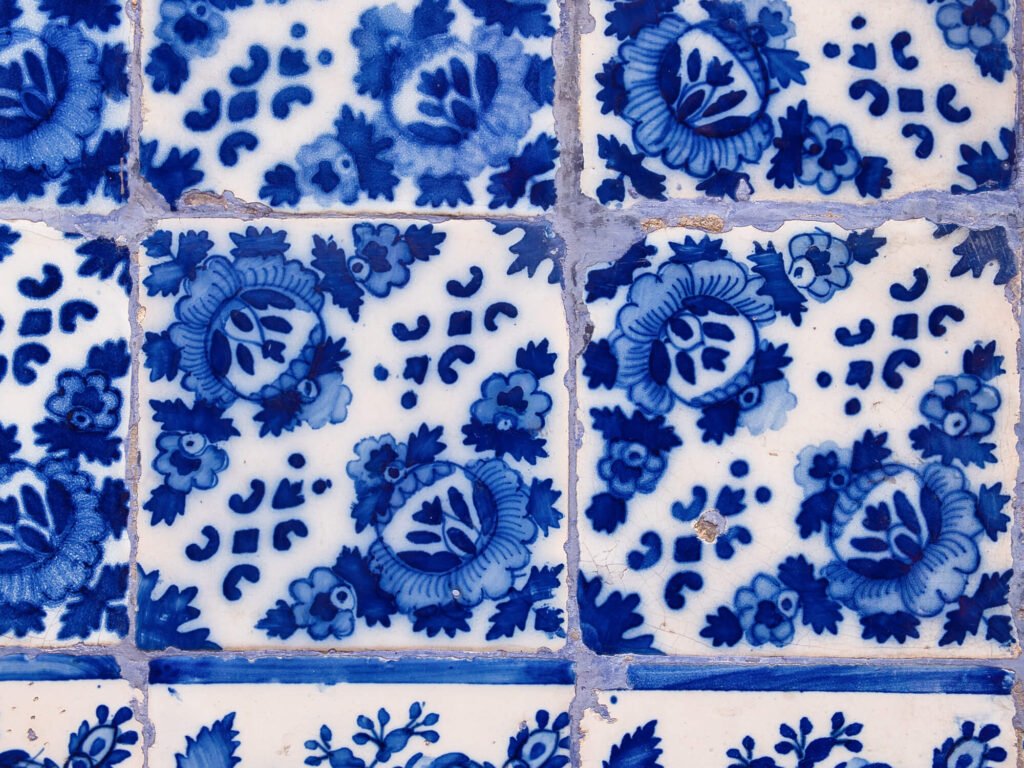
It does not dazzle you immediately. It does not try to. Instead, it reveals itself slowly, around a corner where a centuries-old azulejo facade catches the morning light, in the particular amber of a glass of wine held up against a Douro River sunset, in the sound of *fado* drifting from an open doorway on a steep cobblestone lane that seems to lead somewhere and nowhere all at once.
Porto is a city that rewards the traveler who arrives without a checklist. Who walks without a fixed destination. Who understands that the most beautiful things here are not found on a map, they are found in the quality of your own attention.
This is your slow travel guide to Porto, Portugal. A personal invitation to experience one of Europe’s most extraordinary cities the way it was always meant to be experienced, deeply, unhurried, and with all of your senses open.
Porto’s Soul, Understanding the City Before You Arrive
A City Built on Granite, River and Resilience
Porto is Portugal’s second city, but it has never felt like a second anything.
Perched above the Douro River in the country’s rugged northwest, Porto is a city of granite and azulejo, of steep hills and sudden views, of ancient wine cellars and baroque church facades encrusted with blue and white tiles that have been telling stories since the 18th century. It is a working city, proud, unpretentious, and genuinely itself in a way that few European cities still manage to be.
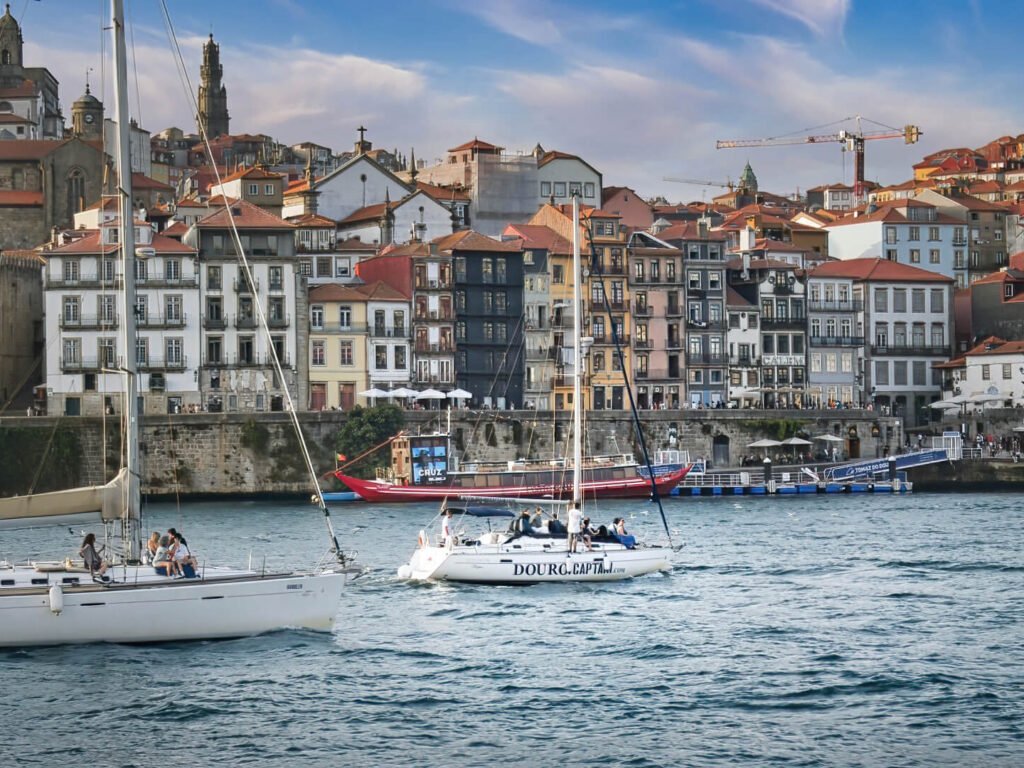
The Romans were here. The Moors were here. The medieval merchants who funded Portugal’s Age of Discovery were here, and left their mark in the extraordinary Gothic architecture of the Sé Cathedral and the ornate Manueline carvings of the Igreja de Santa Clara. The British wine traders who gave Port wine its name were here, building lodges in Vila Nova de Gaia across the river that still produce some of the world’s most celebrated fortified wines.
All of it is still here. Layered, visible, and remarkably alive.
Why Porto Rewards the Slow Traveler
Porto is not a city that gives itself to the rushed visitor. Its greatest pleasures are not the ones that appear in the first hour, they are the ones that reveal themselves gradually, to those who are willing to walk a little further, wait a little longer, and look a little more carefully.
The miradouros the city’s extraordinary hilltop viewpoints, require a climb to reach them, but what waits at the top is a panorama of terracotta rooftops, church towers, and the wide silver ribbon of the Douro that makes every step worthwhile. The finest azulejo facades are not always on the main streets, some of the most breathtaking are on quiet side lanes where the light falls differently in the early morning. The best *pastel de nata* is not necessarily in the most photographed café.
Porto gives its best to those who give it time. Two days here will show you the surface. Three days will show you something closer to the truth.
How to Experience Porto Authentically in Three Days
Day One, Arriving Into the City’s History
Begin, as all honest Porto mornings should begin, with a galão, Portugal’s answer to a latte, served in a tall glass, warm and golden, and something freshly baked from a local padaria (bakery). Sit outside if you can. Watch the city wake up. There is no rush here, and the morning light on the granite facades is one of Porto’s quieter pleasures.
From there, let the historic architectural walking tour unfold naturally.
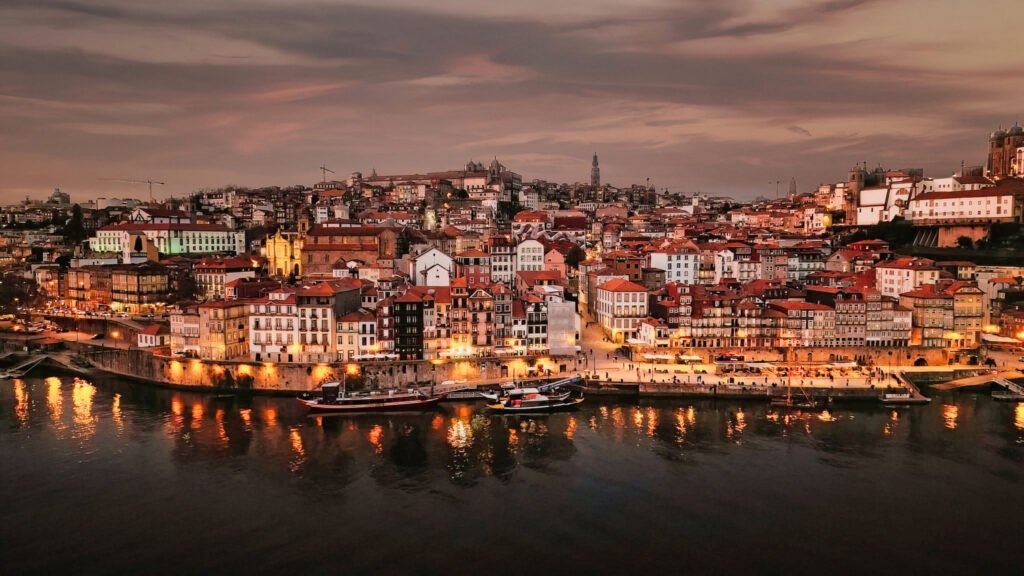
The Ribeira district, Porto’s ancient riverside quarter and a UNESCO World Heritage Site, is the natural starting point. Its narrow medieval lanes, strung with laundry and painted in faded ochre and terracotta, tumble down toward the river in a series of steps and sudden drops that feel more like a painting than a neighborhood. Linger here. Sit at a riverside table. Order whatever the kitchen suggests.
From Ribeira, walk up through the lanes toward the Sé Cathedral, Porto’s oldest building and one of its most quietly powerful spaces. The Romanesque exterior, austere and fortress-like, gives way inside to an extraordinary Gothic cloister tiled entirely in azulejos, blue and white panels depicting scenes from classical mythology, dating from the early 18th century. In the early morning, before the day warms up and the tour groups arrive, this cloister is one of the most serene and beautiful spaces in Portugal.
Continue toward Livraria Lello one of the world’s most celebrated bookshops, and genuinely worth the modest entry fee, before wandering through the Cedofeita neighborhood, Porto’s most quietly fashionable quarter, where independent design studios, natural wine bars, and small gallery spaces share cobblestone streets with old family-run bakeries and the occasional faded tasca that has been serving the same lunch special since 1987.
End the day at one of the city’s great miradouros (viewpoints). Jardim das Virtudes is less visited than most and all the more beautiful for it, a terraced garden above the river where, in the early evening, Porto students gather with wine and conversation as the light turns everything the color of old honey.
Day Two, Azulejos, Architecture and the Art of Looking
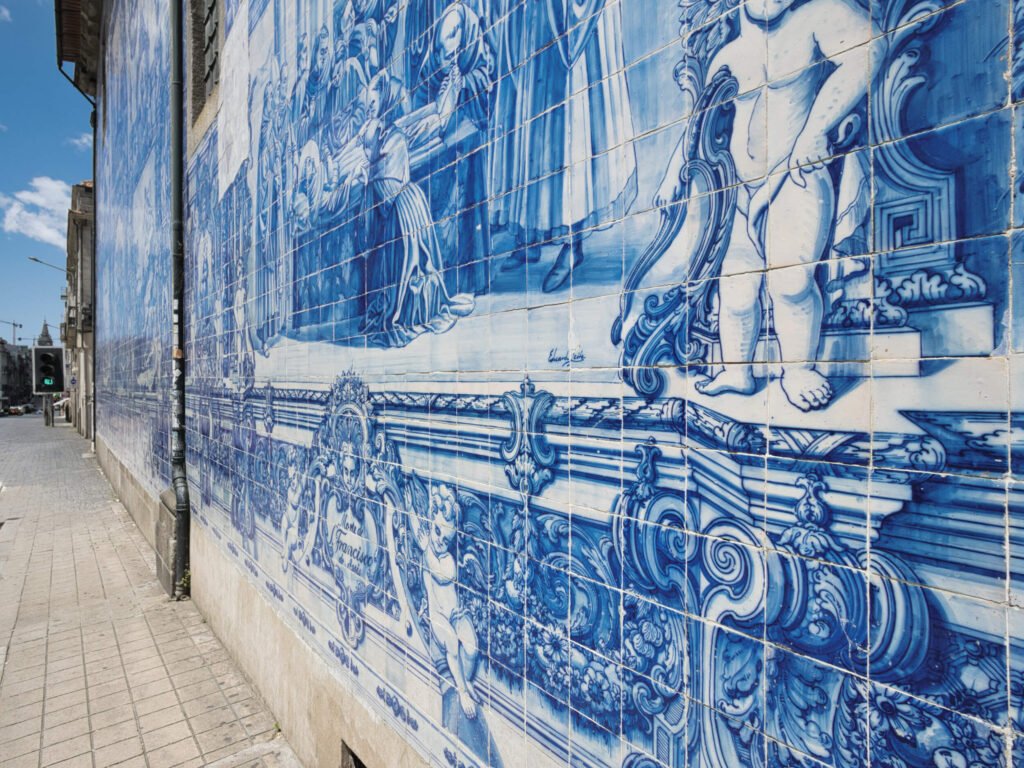
If Day One belongs to the river and the medieval quarter, Day Two belongs to Porto’s extraordinary visual language, the azulejo tilework that covers its facades, stations, churches, and chapels in scenes of breathtaking narrative complexity.
The Most Beautiful Azulejo Photography Spots in Porto
For those who travel with a camera, or simply with eyes willing to slow down and look, Porto’s azulejo facades are among the most photographically rewarding subjects in Europe. The key is timing and patience. The early morning, before 9am, offers the best light and the quietest streets.
Igreja do Carmo — The exterior facade of this 18th-century church, entirely covered in blue and white azulejos depicting scenes from Carmelite history, is one of Porto’s most iconic images. Come early, when the light rakes across the tiles at an angle and the street below is still quiet.
São Bento Railway Station — The entrance hall of Porto’s central station is covered in over 20,000 hand-painted azulejo panels depicting scenes from Portuguese history. It is, quite simply, one of the most beautiful interiors in Europe, and it is a working train station, which makes it somehow even more extraordinary. Arrive early on a weekday morning and you will have large sections almost entirely to yourself.
Capela das Almas — On the Rua de Santa Catarina, this chapel’s exterior is entirely tiled in vivid azulejo panels depicting the lives of Saint Francis and Saint Catherine. Less visited than São Bento, and all the more rewarding for it.
The streets of Bonfim — Porto’s Bonfim neighborhood, just east of the city center, contains some of the most beautiful and least-photographed azulejo facades in the city. There is no specific address to give you here. Simply walk slowly, look up, and pay attention. The best ones will find you.
Day Three, The Douro, Port Wine and Leaving Slowly
Save the third day for the river.
Cross the Dom Luís I Bridge on foot, the upper deck offers one of the most spectacular urban views in Europe, with Porto rising on one side and Vila Nova de Gaia’s famous wine lodge rooftops spreading across the opposite hillside, and descend into Gaia for a morning among the Port wine cellars.
Authentic Porto Wine Tasting Experiences Along the Douro
The wine lodges of Vila Nova de Gaia are where Port wine has been aged and blended for centuries, long, cool cellars stacked with barrels, tended by people who have spent their lives in quiet, serious devotion to what is inside them.
A guided tasting here is one of the finest things you can do in Porto. The best experiences are unhurried, a knowledgeable guide, a small group, a selection of wines that moves from the lighter and fruitier to the aged and complex, with time to ask questions and understand what you are drinking.
Look for cellars that offer small group tastings with a guided component rather than the self-service counters that have proliferated in recent years. The difference in quality and depth of experience is significant.
The finest places to sip Port wine along the Douro River are, in my own experience, not necessarily inside the cellars themselves, but on the terraced riverside decks of Gaia, with a glass of chilled 10 Year Tawny and the late afternoon light turning the water gold and the bridge above you a deep rust red. Order a plate of local cheese and presunto (ham) if they offer one. Sit for longer than you planned.
This is Porto at its most itself.
Scenic Douro River Sunset Viewpoints, Where to Be When the Light Changes
Porto’s relationship with light is one of its great, underappreciated qualities. The city faces west across the river, which means that on clear evenings, the sunsets here are long, dramatic, and painted across the entire sky in colors that feel almost implausible.
The finest viewpoints for watching the Douro River at sunset:
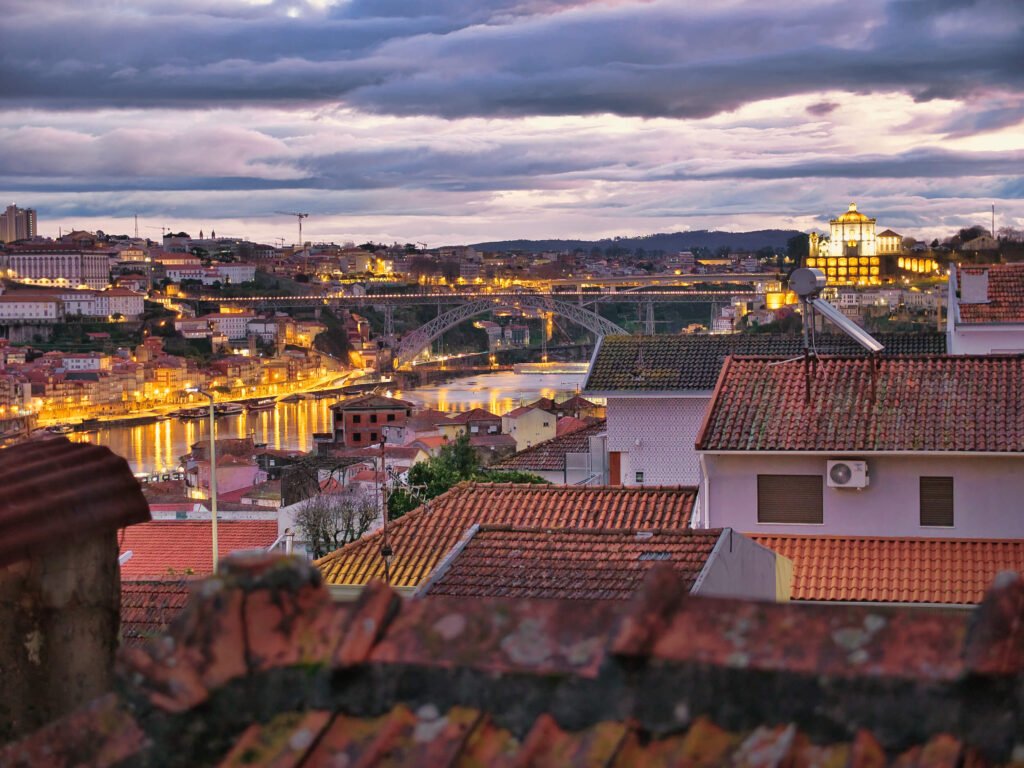
Jardim do Morro — Directly above the Gaia end of the Dom Luís I Bridge, this garden offers an unobstructed view across the river to Porto’s illuminated hillside. Arrive 30 minutes before sunset and find a spot on the grass. Bring wine if you can.
Miradouro da Serra do Pilar — Adjacent to the Jardim do Morro, this elevated terrace beside the Serra do Pilar monastery is arguably the single finest viewpoint in the greater Porto area. The panorama encompasses the entire Ribeira waterfront, both bridges, and the wide curve of the Douro heading toward the sea. It is worth every step of the climb.
The Ribeira waterfront itself — Sometimes the best view is not from above but from beside. As the sun descends, the western facades of the Ribeira buildings catch the last light and glow in shades of amber and rose that no filter can replicate. Walk slowly. Stop often.
A Scenic Slow-Travel Day Trip from Porto, Into the Douro Valley
On the morning of your fourth day, or, if you are staying only three, consider rearranging your schedule for this, take the road east into the Douro Valley.
The journey itself is part of the experience. The landscape changes gradually as you leave Porto’s granite suburbs behind and the terrain rises and opens into the wide, terraced valley that produces some of the world’s most celebrated wines. By the time you reach Pinhão, the heart of the upper Douro, you will understand, viscerally, why people who come here struggle to describe it to those who haven’t.
A slow-travel day trip from Porto into the Douro Valley is, for many visitors, the single most memorable day of their entire Portugal journey. The key is not rushing it, not trying to tick off a list of Quintas (wine estates) or viewpoints, but simply arriving into the landscape and letting it show you what it wants to show you.
This is precisely the kind of day that our small group Douro Valley tour partner does beautifully. Small groups, intimate minivans with A/C, local guides who know which bend in the road to stop at and which Quinta pours the Tawny that will make you want to stay forever. If you are going to do this day trip, and you really should, this is how we would do it.✨ Click here and use the discount codes on link page for booking ✨
Boutique Luxury Weekend in Porto, Where to Stay
Hotels That Feel Like Porto
The finest places to stay in Porto are not the large international chains, they are the boutique hotels with historical charm that have been carved, carefully and lovingly, out of the city’s extraordinary architectural heritage. Converted merchant townhouses, restored azulejo-fronted palaces, intimate guesthouses on cobblestone lanes where the owner brings breakfast personally and knows your name by the second morning.
Porto’s most characterful neighborhoods for boutique accommodation:
Ribeira and Baixa — Staying in the historic heart of the city means waking up to the sound of the river and the particular quality of morning light that filters through the old lanes. Several beautifully restored boutique properties sit within the UNESCO heritage area, intimate, atmospheric, and genuinely connected to the city’s soul.
Bonfim — Porto’s most quietly fashionable neighborhood offers some of the city’s most interesting boutique stays, smaller, more personal, and often housed in beautifully restored 19th-century townhouses. The neighborhood itself rewards wandering, with its azulejo facades, independent wine bars, and the kind of local restaurant that has no online presence but a queue at the door every evening.
Foz do Douro — Where the river meets the Atlantic Ocean, Foz is Porto’s most elegant quarter, wide avenues, Art Nouveau villas, and a handful of exceptionally beautiful boutique hotels that offer ocean views, proximity to the beach, and a quieter, more residential Porto that most visitors never discover.
Finding Your Perfect Porto Stay
Whether you are drawn to a room with a Douro River view, a converted merchant’s townhouse in the medieval quarter, or a design hotel tucked into a Bonfim side street, Porto has accommodation that will feel like a genuine part of your experience rather than simply a place to sleep.
Explore available stays across Porto below and find the one that fits the journey you have in mind.
A Few Practical Notes for the Porto Traveler
1. Three nights is the honest minimum. Two will leave you with the feeling that you have only just arrived when it is time to leave.
2. Porto is a walking city, but it is also a hilly one. Comfortable shoes are not optional. They are essential.
3. The best restaurants have no English menu, and fill up early. Ask your hotel host where they eat. This question, asked sincerely, will take you somewhere wonderful.
4. The metro is excellent and connects the city center to the airport and to Foz do Douro efficiently. But walk whenever you can, the best things in Porto are found on foot, at eye level, moving slowly.
5. Book popular wine tastings and restaurant tables in advance, particularly during summer and harvest season.
Frequently Asked Questions About Visiting Porto
“How do I experience Porto authentically in three days?”
Three days in Porto is enough to move beyond the surface and begin to feel the city’s genuine character. Spend your first day in the Ribeira and historic center, walking slowly and eating at riverside “tascas” (traditional portuguese restaurants). Dedicate your second day to azulejo photography, the São Bento station, and the neighborhoods of Bonfim and Cedofeita. Save your third day for the Dom Luís I Bridge, the Port wine cellars of Vila Nova de Gaia, and a long, unhurried afternoon on the Douro riverfront. The key throughout is pace — Porto reveals itself to those who are willing to slow down.
“Where can I photograph Porto’s famous blue tiles without the crowds?”
The most beautiful azulejo facades in Porto are not always on the most visited streets. São Bento Railway Station is extraordinary early on a weekday morning before the tour groups arrive. The streets of Bonfim offer some of the city’s finest and least-photographed tilework. The exterior of the Igreja do Carmo is best in the early morning light, before 9am. And the Capela das Almas on Rua de Santa Catarina rewards those who seek it out on a quiet afternoon.
“Where is the best place to sip Port wine along the Douro River?”
The terraced riverside decks of Vila Nova de Gaia — directly across the Douro from Porto’s Ribeira quarter — are the finest setting for a glass of Port wine in the city. The combination of the river view, the bridge above, and a well-chosen Tawny or White Port served at the right temperature is one of the great simple pleasures of Porto. For a more guided and in-depth experience, the wine lodge cellars of Gaia offer tastings that put the wine in its full historical and sensory context.
“What are the best boutique hotels in Porto with historical charm?
Porto’s most characterful boutique accommodation is concentrated in three areas: the Ribeira and Baixa historic center, where converted merchant townhouses sit within the UNESCO heritage zone; the Bonfim neighborhood, with its beautifully restored 19th-century properties and genuine local character; and Foz do Douro, where Art Nouveau villas and elegant boutique hotels meet the Atlantic. In all three areas, the best properties are small, personal, and deeply connected to the city’s architectural heritage.
“How do I take a scenic slow-travel day trip from Porto into the Douro Valley?”
The Douro Valley is approximately two hours from Porto by road, or reachable by one of Europe’s most scenic train journeys from Campanhã Railway Station along the river. For the most immersive experience, a small group guided tour removes every logistical concern and replaces it with something far more valuable, local knowledge, insider access to non-commercial Quintas, and the freedom to simply be present in one of the most extraordinary landscapes in Europe. ⭐ CoolTour Oporto offers award-winning small group Douro Valley tours of maximum eight people, with private options available, widely considered the finest way to experience the valley from Porto. ⭐Click this link for direct booking and use available Go travel Planet discount codes on link page.
Keep exploring. Keep discovering. Keep choosing the journey over the destination. We would love to hear your thoughts, drop a comment below. 🌍
All photography © Go Travel Planet. All rights reserved.
Disclaimer: Some of the links in this guide are affiliate links. If you choose to book a tour through these links you get a discount by using the codes at the top of the link page and Go Travel Planet will earn a small commission at no additional cost to you. Thank you for supporting our independent travel blog!