
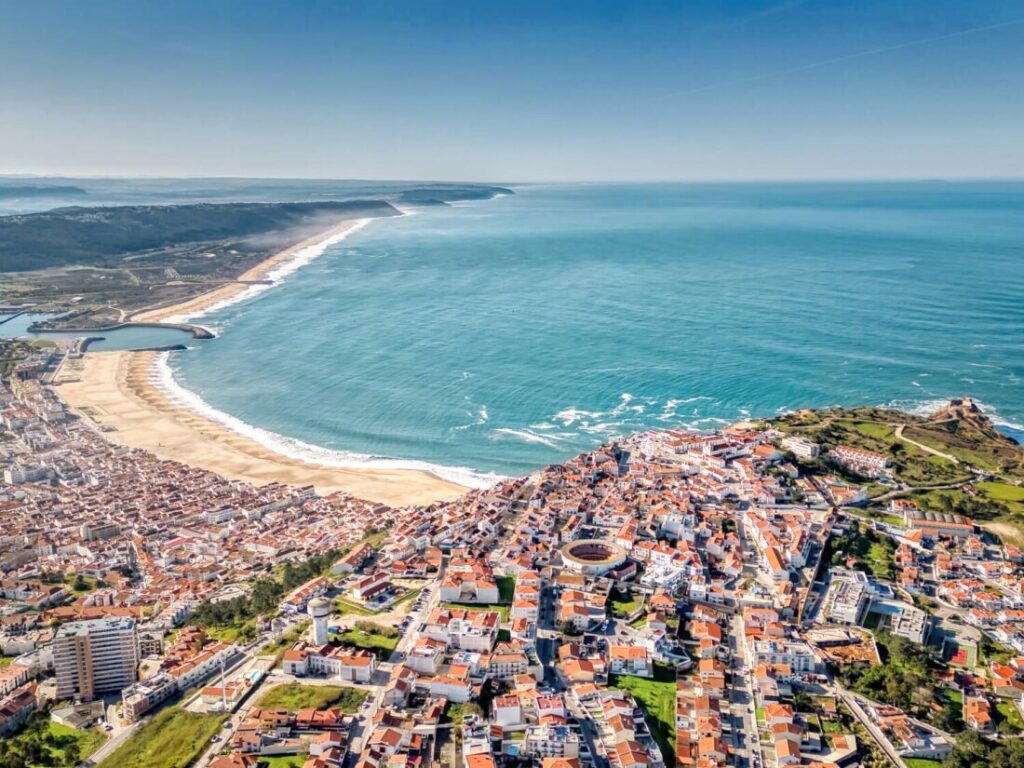
There are places that reveal themselves slowly, and then there is Nazaré, a town that announces itself with a sudden, breathtaking clarity the moment the high limestone cliffs come into view and the vast horizon of the Atlantic opens wide beneath them.
I have lived here for four years now, watching the town shift seamlessly through the quiet, misty rhythms of the winter big-wave season and the sun-drenched, bustling energy of the summer months. Still, on some mornings, I walk down to the edge of the water, and completely forget to breathe for a second. You hear the deep rumble of the massive waves breaking against the cliffs, but it is the sheer power of the shore break, the heavy, towering waves slamming directly onto the sand right in front of you, that truly takes your breath away. This is not an exaggeration for the sake of a good sentence. It is simply what the raw, untamed energy of this place does to you, no matter how many years you call it home.
Over time, you begin to realize that Nazaré is not just one cohesive town, but three distinct worlds stitched together (Praia, Sitio and Pederneira) by history and ocean air. Each neighborhood carries its own unique rhythm, its own micro-climate, and its own secrets, together holding a different piece of what makes this rugged stretch of the Silver Coast so quietly extraordinary.
—
Praia — The Heart at Sea Level
This is where most people arrive first, and it makes sense why. Praia is the old town, the beach, the pulse of everyday life. Narrow streets wind between whitewashed houses crowned with red tile roofs, the kind of architecture that feels lived-in rather than staged for a postcard. Walking through the maze of the Bairro dos Pescadores (the fishermen’s quarter), the air smells of sea salt and charcoal grills. This grid of narrow alleys is alive with the chatter of neighbors, laundry flapping gently from wrought-iron balconies, and tiny, hidden bars where locals duck in for a quick morning espresso or a late-afternoon glass of wine.
The beach itself stretches wide and golden, dotted with colourful fishing boats that still speak of a maritime tradition older than tourism itself. It serves as an open-air museum where Nazaré’s soul is on full display. Right on the sand, you will pass the Estendedouro de Peixe, where local women dressed in traditional multi-layered skirts still salt and dry horse mackerel and octopus under the Atlantic sun. It is a beautiful contradiction: locals sunbathe beside visitors, fishermen mend their nets a few steps from sunbathers, and rows of vibrant, striped fabric beach tents stretch across the shore. Somehow none of it feels out of place. This is simply how Nazaré breathes.
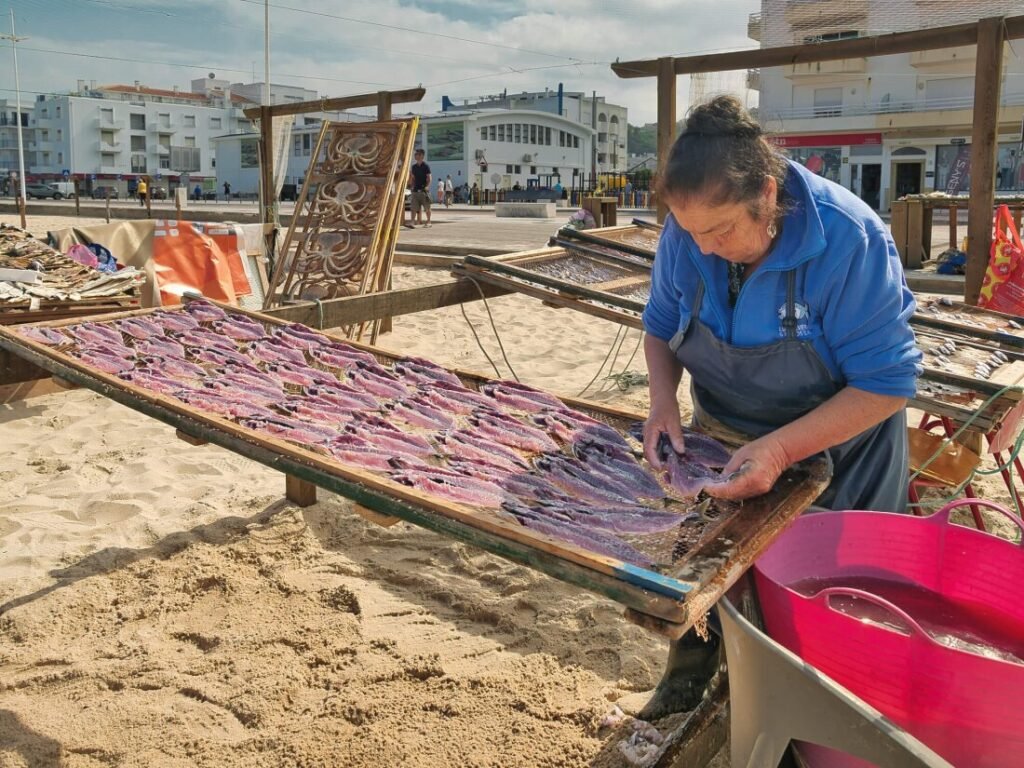
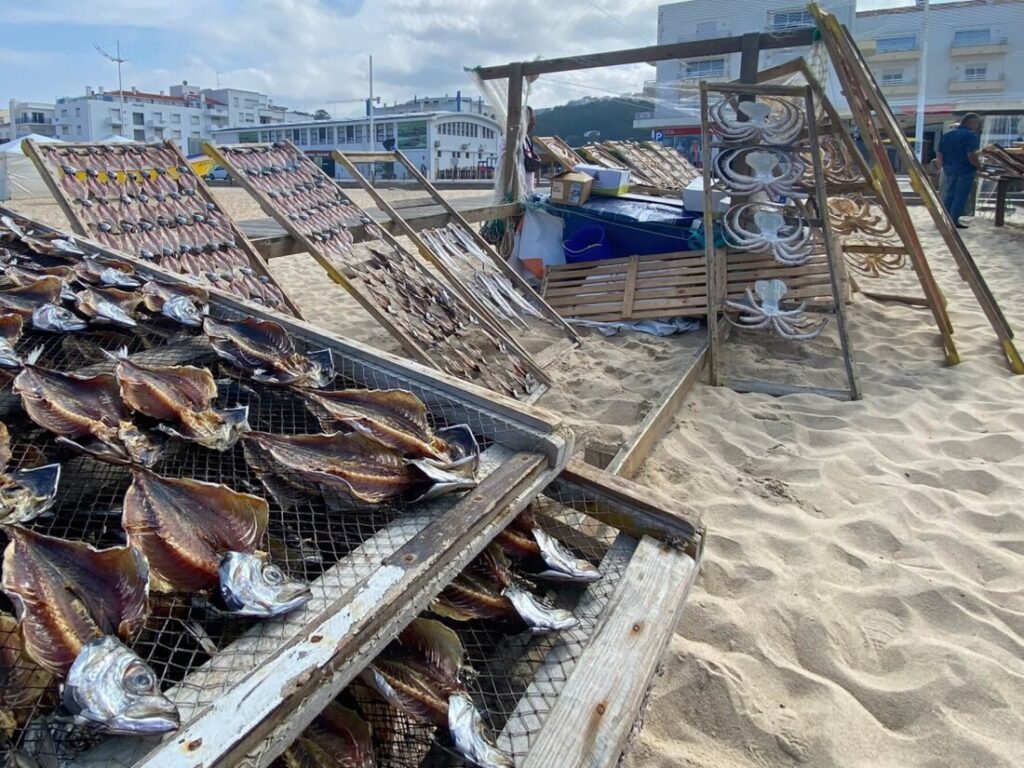
As daylight fades, the energy shifts seamlessly into the beachfront avenue and parallel backstreets. The neighborhood transitions into a lively hub of open-air terraces, seafood tascas, and cozy pubs. It is the perfect place to wander without a plan, listening to the hum of conversation and the steady crash of the shore break just a few metres away.
Mercado Municipal — Where Nazaré Feeds Itself
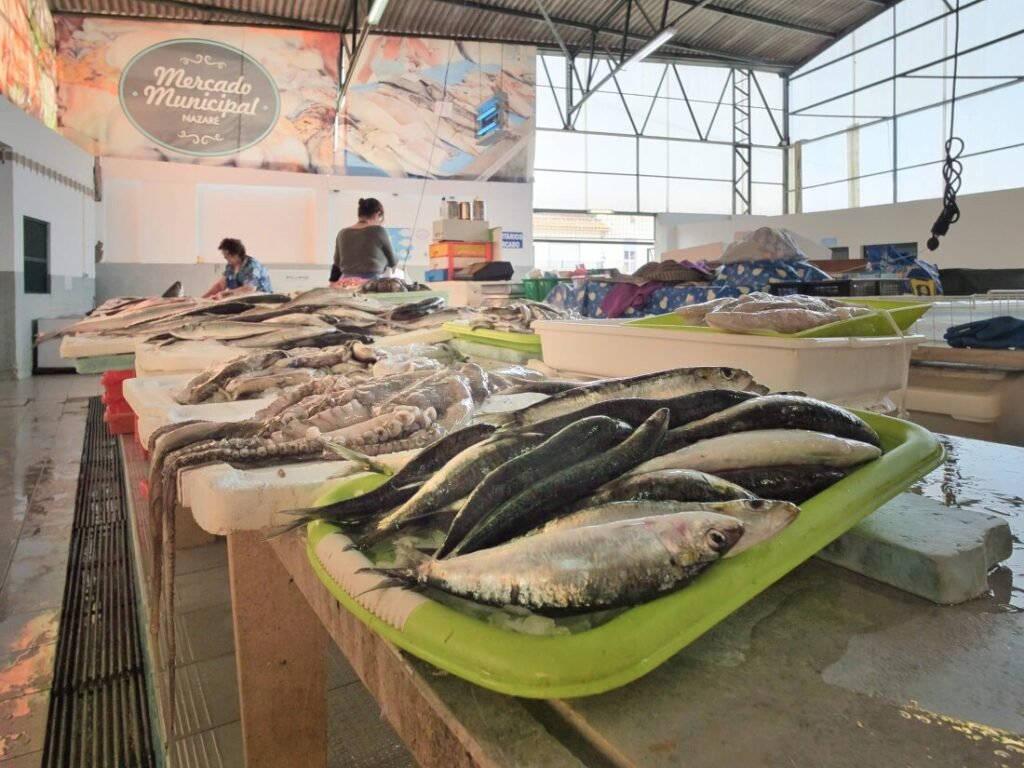
If you want to understand a place, visit its market. The Mercado Municipal, open daily except Mondays, is where Nazaré’s everyday life continues quietly beneath the tourism. Here you will find fruit and vegetables grown in the surrounding countryside, alongside fresh fish and seafood pulled from the very waters you can see from the cliffs above. It is simple, unpretentious, and entirely real.

The Catch of the Day: Seafood, Culture, and Sustainability in Nazaré
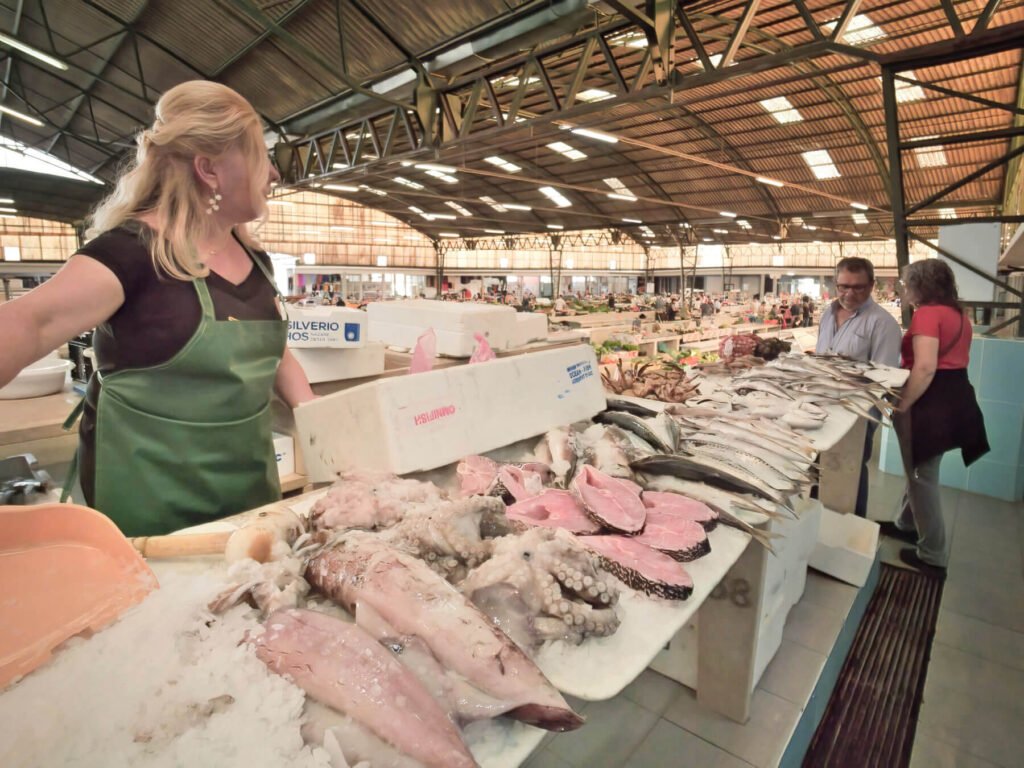
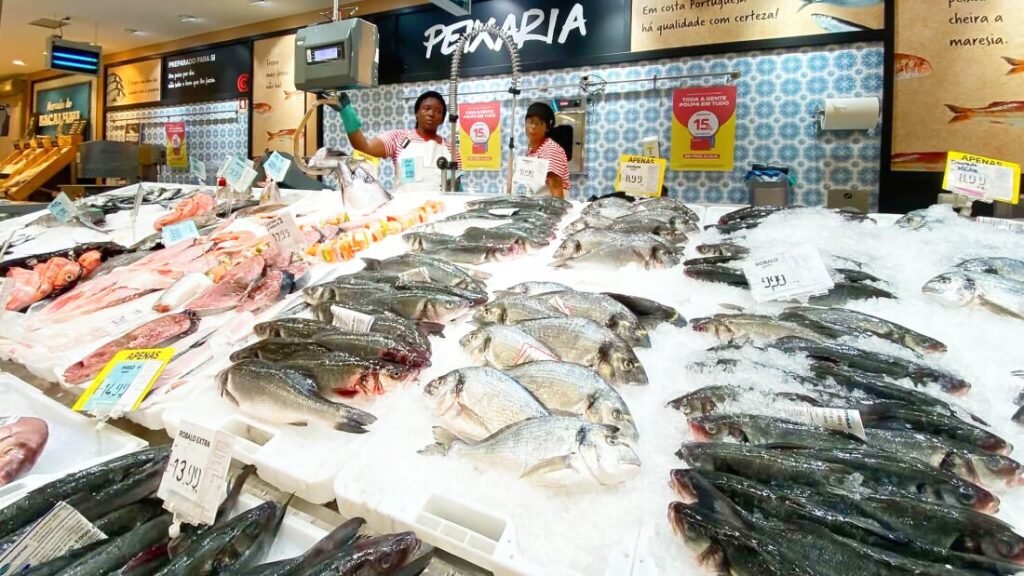
Fresh fish and seafood aren’t a novelty in Nazaré, they’re simply how life works here. At the Mercado Municipal, mornings begin with crates of glistening sardines, robalo (European seabass), and polvo (octopus), sold by fishermen whose boats you’ll have seen bobbing in the harbor just hours before. But the abundance doesn’t stop at the market stalls, walk into any local supermarket and you’ll find the same freshness, the same catch-of-the-day mentality, stocked right alongside the everyday groceries. This isn’t a coincidence; it’s culture. In Portugal, fish and seafood are woven into daily life the way bread is elsewhere, a staple, not a luxury, passed down through generations of coastal communities who’ve always looked to the Atlantic for sustenance. Much of what lands on Nazaré’s tables comes directly from these waters, hauled in by small, local fishing fleets that still operate much as they did decades ago, ensuring that what you eat here didn’t travel far to reach your plate it simply came home.
There’s a quiet respect for the sea here that goes beyond tradition, it’s survival, and the fishermen of Nazaré know it. Portugal has some of the strictest fishing regulations in Europe, with quotas, seasonal bans, and size limits designed to let fish populations recover and thrive. Walk along the harbor and you’ll notice it in small details: nets with legally mandated mesh sizes to let juvenile fish escape, boats returning undersized catches to the water without hesitation, and a general understanding that overfishing today means empty nets tomorrow. Many local fishermen have fished these same waters for generations, and that history breeds a kind of stewardship, you don’t exhaust the resource that has fed your family for a hundred years. It’s not always easy; rules mean smaller catches some seasons, tighter margins, harder choices. But there’s a shared belief here that respecting the ocean isn’t optional, it’s the only way this way of life continues for the next generation.
Of course, not every fish on the plate was caught by a local boat that morning, some travel down from Galicia in northern Spain, and from all along Portugal’s own Atlantic shoreline. But on a global scale, that’s still remarkably local: fish that swam in neighboring waters just days ago, not frozen cargo shipped from across the world. It’s a small distinction that makes a big difference, proximity, freshness, and a shared Atlantic heritage that Portugal and Galicia have always had in common.
The Walk That Never Feels the Same Twice
There is a stretch of sand and sea air that I return to almost daily, and it never quite feels the same way twice. From the foot of Sítio’s cliffs, the beach and boardwalk stretch south for nearly two kilometres, all the way to Porto de Abrigo, a soft golden line that begs to be walked slowly, coffee in hand, before the day properly begins. Some mornings the tide leaves the sand smooth and empty, footprints from early fishermen the only mark upon it. Other evenings, as the light softens, I follow that same path in reverse, watching the cliffs of Sítio rise ahead as the sky shifts into its evening colours. It is not a long walk, but it is one that never asks to be rushed. This is not a walk you take to reach somewhere. It is a walk you take to feel something.
—
Sítio — Where the Cliffs Hold the Sky
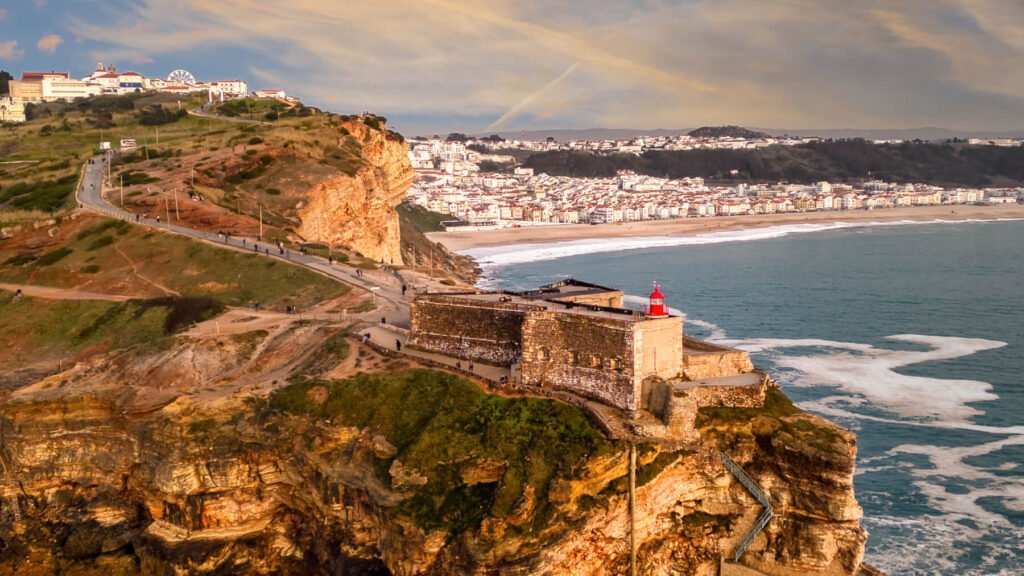
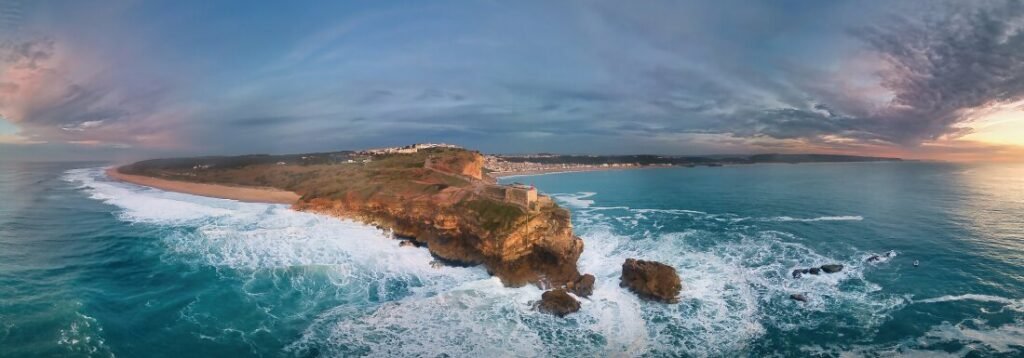
High above Praia, perched precariously at the very edge of a sheer 110-metre cliff, sits Sítio, and the climb, whether you choose the winding stone steps on foot or board the century-old funicular that departs every fifteen minutes, is worth every single heartbeat of the ride. Stepping off the tracks and into the wide, stone-paved plaza feels like transitioning from a lively beach resort to an ancient, windy outpost where the sky feels vast and the horizon limitless
The views here are the kind that make conversation unnecessary. From the Miradouro do Suberço, the Atlantic unfolds in every direction, offering a vertiginous perspective of the crescent shoreline below, where the red tile roofs look like a miniature toy town. Standing at this exact viewpoint, you begin to understand why this towering headland has magnetically drawn pilgrims, defensive soldiers, and modern daredevils for centuries
Sítio’s spiritual roots run deep, anchored by a legendary miracle. It was right here on the cliff’s edge in 1182 that the Portuguese knight Dom Fuas Roupinho was hunting in a blinding fog. As his horse chased a deer toward the abyss, he cried out to the Virgin Mary, and his mount miraculously locked its hooves at the precipice, saving his life. To honor this, the tiny Ermida da Memória chapel was built directly over the spot. By the fourteenth century, the influx of royal and humble pilgrims required something grander. The current Sanctuary of Our Lady of Nazaré rose to meet that deep devotion, its magnificent twin bell towers and blue-and-white tiled interior standing today as a silent, majestic counterpoint to the thunderous roar of the ocean below.
A short walk along the windy promontory leads to the Forte de São Miguel Arcanjo, which holds the town’s most iconic landmark—the vibrant red lighthouse locals simply call o Farol. Built in 1577 to defend against pirates, this stone bastion is where Nazaré cements its global reputation. Inside its ancient rooms, you can wander the Surfer Wall, a unique museum showcasing the actual, battle-tested boards donated by legendary big-wave riders like Garrett McNamara and Sebastian Steudtner. Looking out from the fort’s roof, you peer directly down onto the churning waters of Praia do Norte, where a massive, 5,000-metre-deep underwater canyon acts as a geological megaphone, amplifying autumn and winter swells into terrifying, skyscraper-sized walls of water. It is a place of raw, untamed energy where the ancient past and extreme modern sports collide perfectly
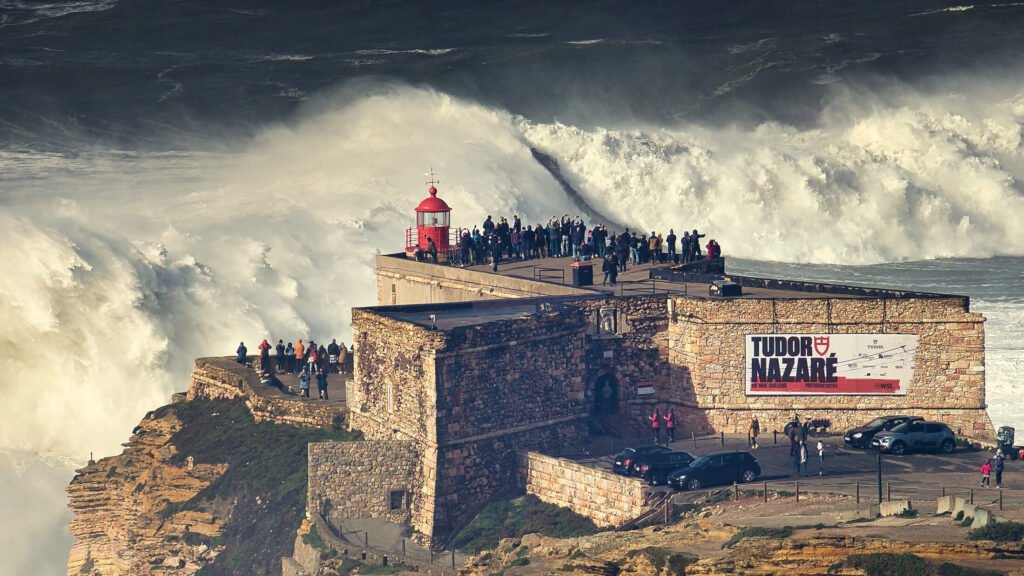
Just offshore lies the Nazaré Canyon, a submarine trench plunging to nearly 5,000 metres, funnelling deep ocean energy directly into the coastline and creating some of the largest waves ever surfed on the planet. Between late October and March, with January and February typically bringing the biggest swells, this stretch of water transforms into something almost otherworldly. When conditions align, the world’s best big wave surfers arrive, towed in by jet ski teams navigating waters that can reach heights few places on Earth can rival. When the swell is right, the World Championship heats bring an electricity to the town unlike anything else on this coast, and watching from the cliffs of Sítio, with the Farol behind you, is an experience that stays with you long after you leave. We’ll talk about the Giant Waves in another dedicated article.
—
Pederneira — The Village That Slows Time
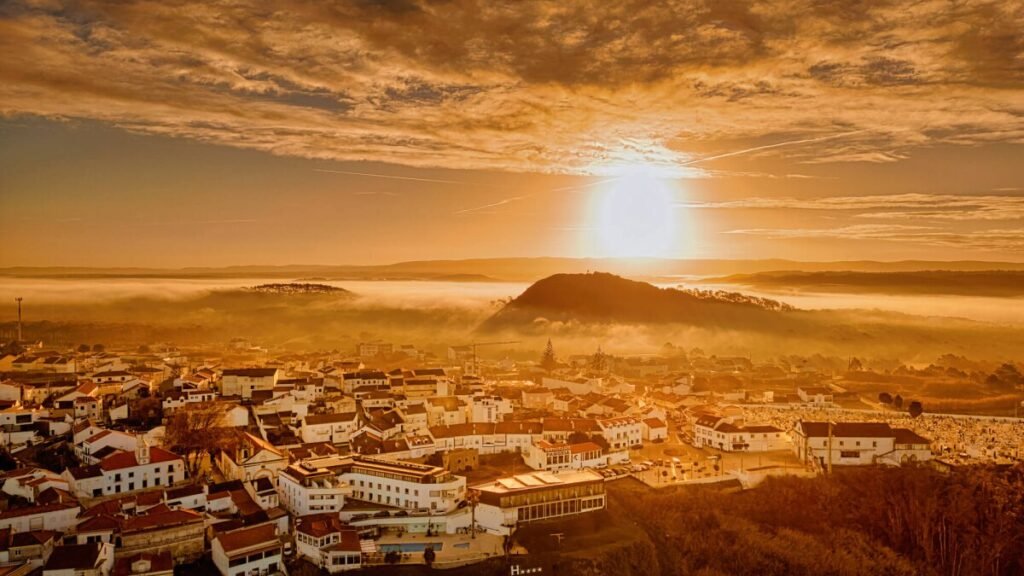
A short fifteen-minute walk up from the bustle of the beachfront avenue, scaling the not so gentle hill, Pederneira feels like stepping into a completely different century. While most visitors associate the town’s origins with the high cliffs of Sítio, Pederneira is actually Nazaré’s true historical cradle. Its roots trace back to the twelfth century when it flourished as an ancient, bustling medieval fishing port, long before the coastline shifted and left the old harbor dry. Walking its quiet, winding cobblestone streets and past whitewashed houses today, you can still feel that same unhurried, independent pace of a bygone era.
At almost 100 metres above sea level, the Miradouro da Pederneira offers one of the most quietly moving sunset views in Portugal. Framed by the old municipal palace and the striking stone silhouette of the 18th-century pillory (Pelourinho), the view expands dramatically across the entire crescent of the bay. As the sun lowers, the sky shifts through deep gold, orange, pink, and violet, casting a warm glow over the red clay roof tiles of the lower town and the modern harbor below. The scale of the Atlantic seems to soften from this height. This is not a place you photograph and leave. It is a place you sit at the Miaradouro and let the view sink in..
In a matter of weeks Pederneira will become even easier to reach, with a new funicular almost completed to connect the Miradouro directly to the main bus station at beach level, a welcome addition for those who want to reach this stillness without the climb.
Our Hand-Picked Nazaré Stays
- Aloha Apartment -Positioned just a short stroll from the rhythmic shores of Nazaré Beach, this expansive two-bedroom apartment holds a deeply personal connection for us—our founder was the original photographer commissioned to shoot its design lookbook. Because we have stood behind the lens in every corner of this light-filled, 1,000-square-foot space, we can personally vouch for its exceptional architectural character. The true crown jewel of the property is its spectacular rooftop terrace and outdoor swimming pool, which frame dramatic panoramic views over the Atlantic Ocean—a scene we spent hours capturing in its perfect golden light. Complete with private parking, a fully equipped kitchen, and airy balconies, it serves as a flawless, secure base for soaking in regional traditions at your own pace.
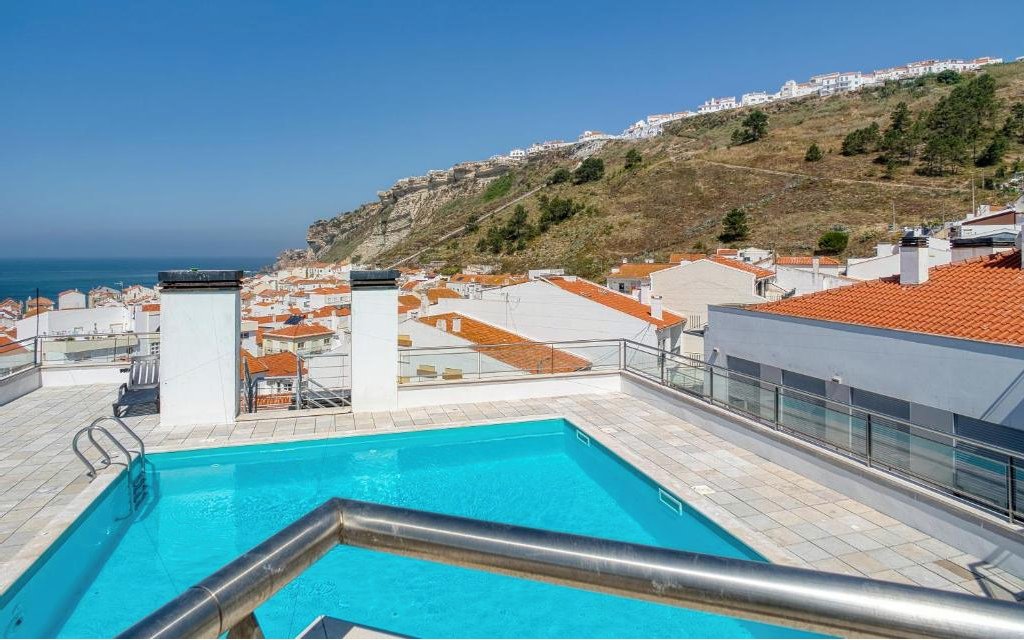
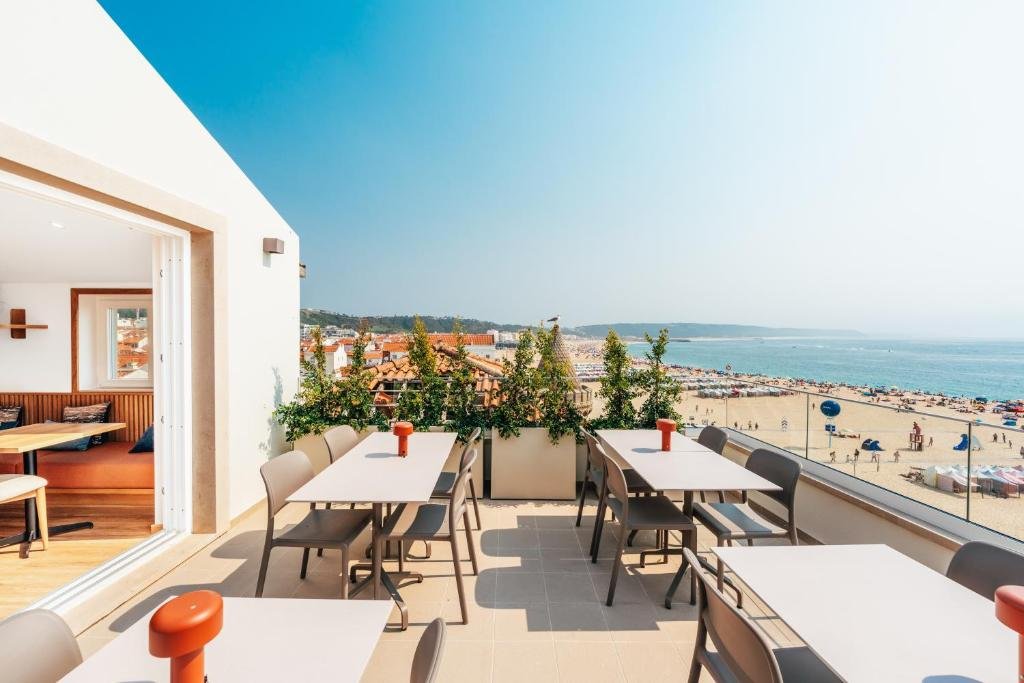
- ALLUZ – Boutique Chalet by the Sea – A masterclass in modern coastal restoration. Located right on the iconic main beachfront avenue, ALLUZ is a freshly opened premium boutique chalet that captures spectacular, unobstructed vistas of the crashing Nazaré shoreline. Blending historical seaside character with sharp contemporary finishes, its standout feature is a breathtaking rooftop terrace where travelers can watch the sunset over the massive rolling waves
- Miramar Hotel Spa & Apartments – The absolute highlight of this hillside retreat is its spectacular, panoramic vantage point overlooking the rooftops of Nazaré and the vast Atlantic coastline. Perched high in the Pederneira neighborhood, it offers exceptional space and value, pairing bright guest rooms with a collection of incredibly large, independent apartments. The property is designed around these elevated coastal vistas, featuring scenic outdoor pools and wide windows that frame the ocean horizon perfectly. For slow travelers prioritizing grand viewpoints and generous room layouts as a base for coastal exploration, the setting here is tough to beat.
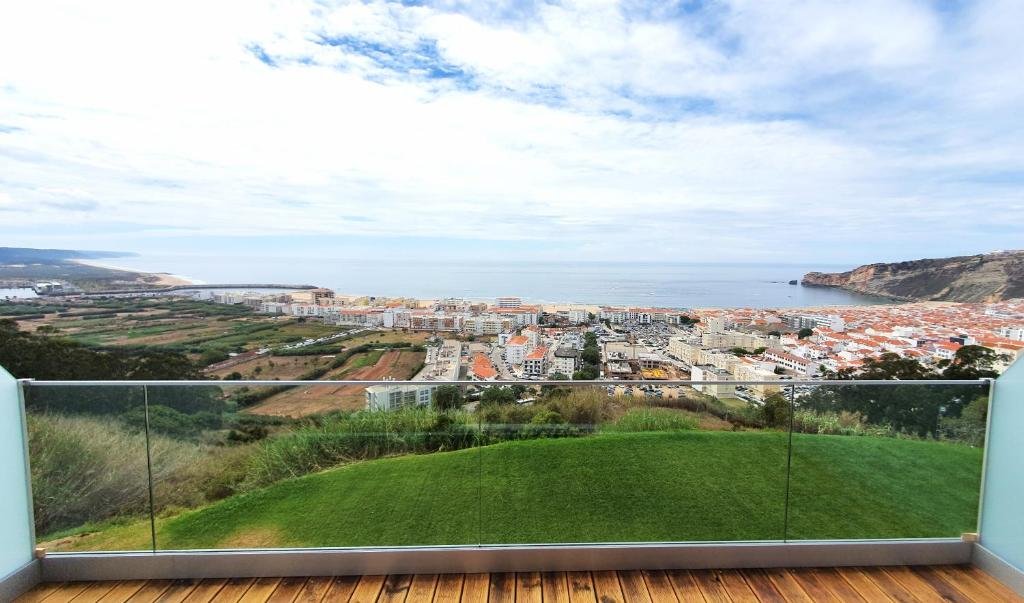
- Villamar Style Maison – A beautiful and intimate boutique sanctuary tucked slightly away from the heavy tourist avenues but still within an effortless walk to the sea. Villamar Style Maison feels like checking into a stylish private estate. It pairs modern, airy rooms and private balconies with a gorgeous outdoor swimming pool area. Under the exceptionally warm hospitality of its local owner, it serves as a peaceful, slow-paced refuge for travelers wanting to unwind away from the raw Atlantic winds
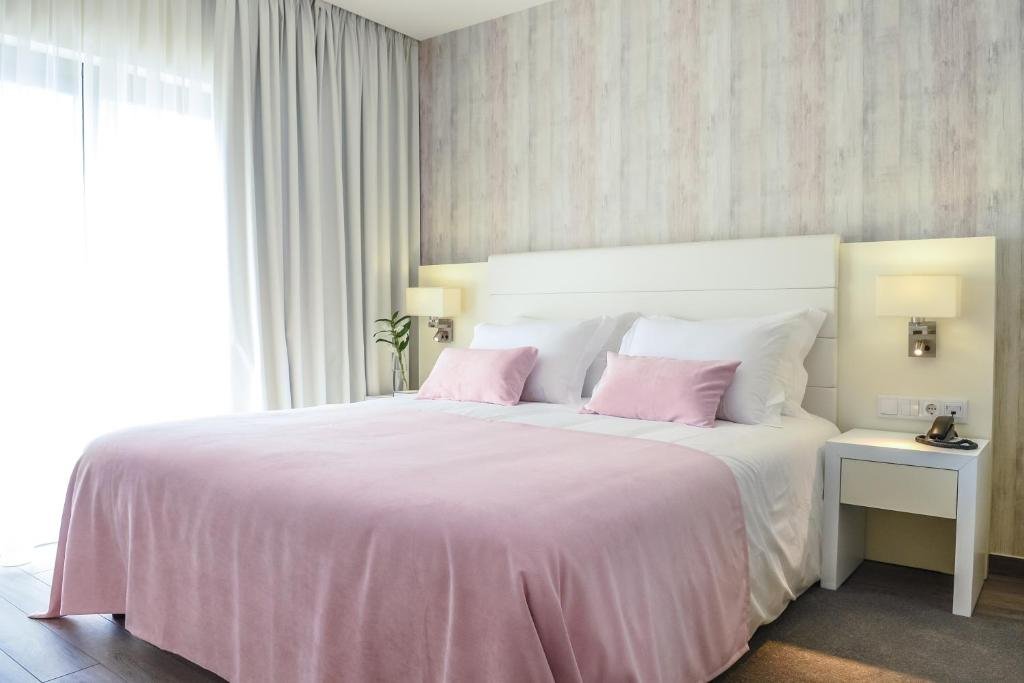
- Sitius 5B – A modern cliffside apartment located in the historical Sítio district of Nazaré, offering a private balcony and a rooftop terrace with a panoramic swimming pool and sea views. The property combines contemporary, air-conditioned living with the traditional charm of the coastal area.
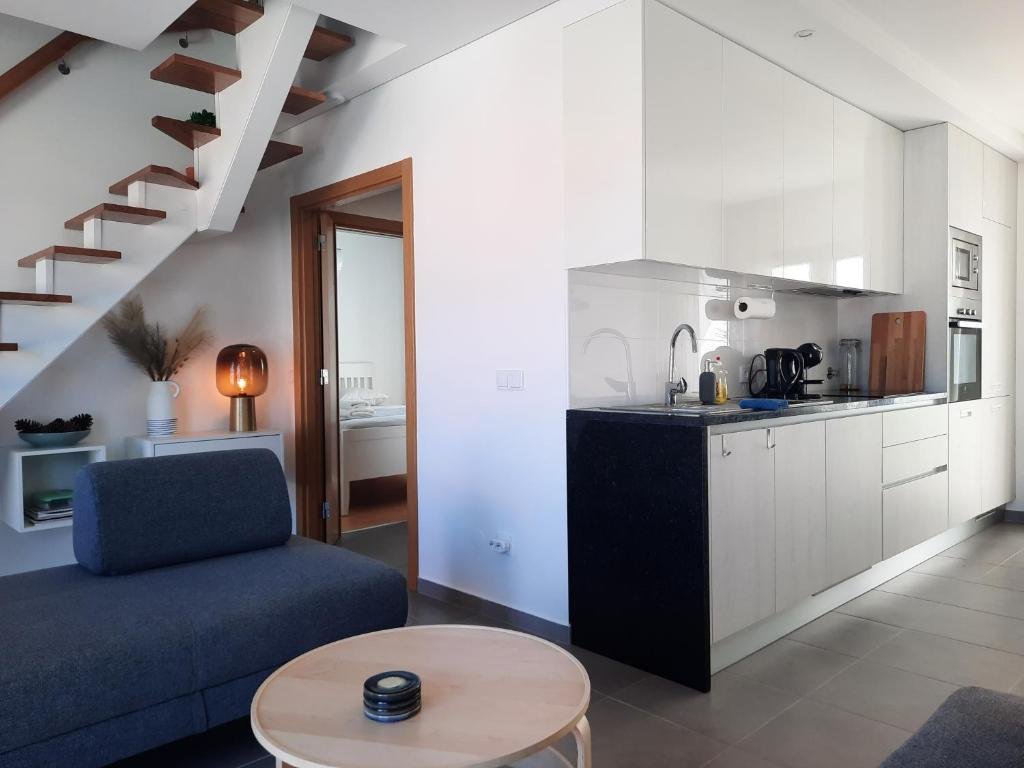
- Feel Nazaré, Abegoarias 44 – Set inside a characterful, typical building right in the heart of Nazaré’s historic center, Feel Nazaré – Abegoarias 44 perfectly balances traditional seaside charm with modern luxury. Located just fifty meters from the crashing waves, these bright, air-conditioned apartments feature fully equipped kitchens, stylish living areas, and quiet balconies. The true design highlight is an elegant, freestanding soaking tub beautifully built directly into the bedroom layout, offering mindful travelers a private, sensory sanctuary to unwind to the sound of the Atlantic breeze.
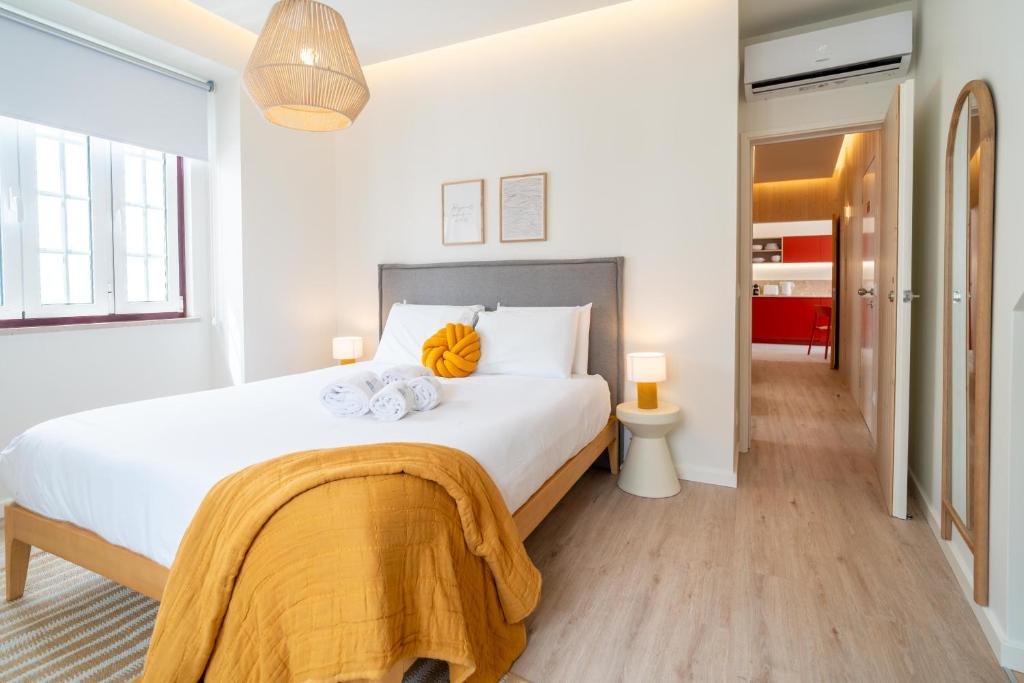
Find Your Perfect Stay in Nazaré
If you want to look at more options or compare prices, you can use our interactive map below to find the perfect accommodation for your trip:
—
My Favourite Restaurants
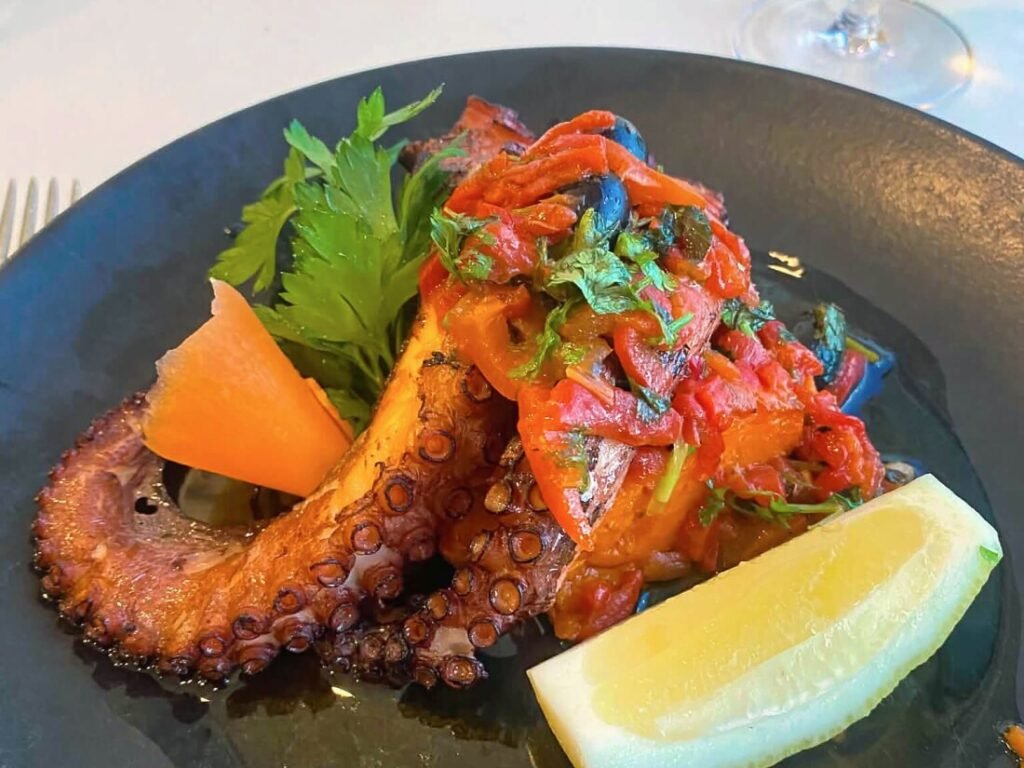
Over these four years, a handful of restaurants have become part of my own rhythm here, the places I return to, again and again, not because they are the most photographed, but because they feel honest. Check the map below with My Favorite Restaurants
- Adega João Clau remains one of my go-to spots for fish and seafood, cooked simply and well. Getting a table in their glass-enclosed terrace is a treat, it is a small, intimate space that makes the restaurant feel beautifully integrated into the neighborhood cobblestone streets. The owner, João , is incredibly nice and runs the floor with a personal charm that immediately makes you feel welcome. Everything here is mostly focused on the grill, and you cannot go wrong ordering their exceptional seafood espetadas (skewers), like the squid and prawn, which are packed with flavor.
- Pangeia Restaurant offers a setting as memorable as its plates. Perched up in Pederneira looking right over the Atlantic, it is one of the most remarkable dining addresses on the Silver Coast. While the floor-to-ceiling sunset windows draw you in, it’s their exceptional culinary focus specifically their famous Octopus Trilogy, which reimagines Portugal’s favorite ingredient three ways, that makes you stay.
- A Tasquinha feels like eating in someone’s home. Tucked into the narrow side streets just a short walk from the sand, it skips any modern pretense for checkered tablecloths and dynamic, old-school hospitality. It is the kind of local institution where you order the flawlessly charred grilled squid or their white clam tomatada, completely trusting the hands that made it.
- Sitiado, up in Sítio, pairs its food with those same breathtaking views. Operating out of a cozy, vintage-styled space between the church square and the bullring, this casual tavern specializes in sharing-style petiscos (Tapas) like garlic prawns and their comforting Patarroxa, a traditional regional fish stew served up in rustic ceramic pots with toasted bread.
- Taberna d’Adélia has that unmistakable warmth of a family-run kitchen that has never needed to try too hard. Preserving the memory of the local fishing community since 1987, you walk past old neighborhood photos and the fresh catch displayed on ice to your table, where the day’s fresh wild sea bass or golden bream is grilled whole over open coals with nothing more than coarse salt and olive oil.
- Restaurante António Padeiro is a very special exception to my usual footprint. Located just about 15 minutes away from Nazaré in the historic heart of Alcobaça, this Michelin-recommended gem is an absolute must-visit for a standout meal. While they serve exceptional coastal seafood, like their famous bass and shrimp rissoles or baked cod topped with broa (cornbread), it is their meat that truly blows me away. From their incredibly tender Bife à António Padeiro to their signature Black Iberian pork loin prepared with bacon and sweet Alcobaça apples or their perfectly prepared Chuletón (best I’ve had in a long time), everything feels like a masterclass in regional cooking. It is a stunning, historic space that feels incredibly cozy and well worth the short drive out of town.
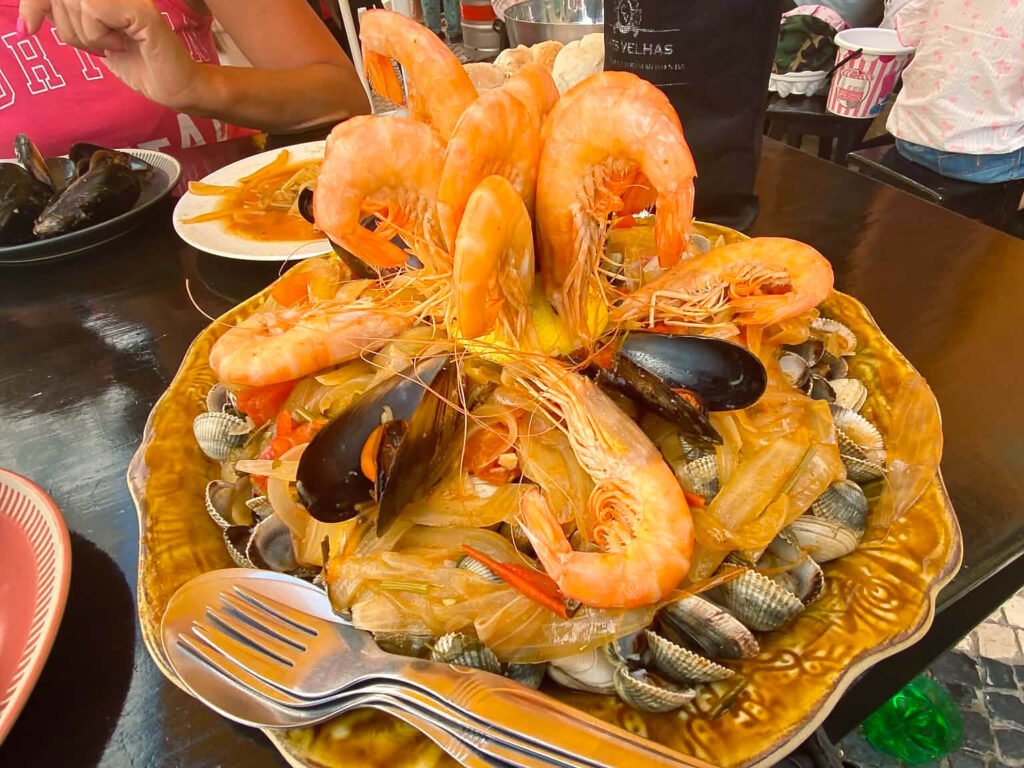
Where I Go to Watch the Sun Fall Into the Sea
If you ask me for just one place, it would be Taberna do T’Zelino. A glass of wine, sometimes a pint instead, and a front-row seat as the sun sinks into the Atlantic. Tucked away on the northern edge of the beachfront avenue, this tiny, 200-year-old tavern skips the classic tourist-trap setup in favor of authentic Portuguese character. The family cooks up whatever comes fresh off the boats each morning, their sautéed spicy squid, pica-pau (savory pork pieces), and cockles are legendary. It operates at a blissfully unhurried pace, making it the perfect casual sanctuary to watch the day fade. Some evenings I go there simply to remember why I moved here. (Just remember to bring euros, as it’s a cash-only local treasure!)
—
Beyond Nazaré — Worth the Detour
Part of what makes living here so rewarding is everything within easy reach. On days when I want a change of scenery, these are the places I return to.
São Martinho do Porto feels like Nazaré’s calmer cousin. Its bay curves into an almost perfect shell shape, sheltering the water into something closer to a lake than the open Atlantic. It is where I go when I want to swim without fighting a current, and where families spread out along the sand without a single wave to worry about. If you walk all the way to the northern side of the bay, you can pass through a pedestrian tunnel cut straight through the rock; standing inside it is incredible, with the perfectly still water of the bay on one side and the violent, unprotected ocean waves crashing against the cliffs just steps away on the other.
Alcobaça carries its history quietly. The Monastery of Santa Maria de Alcobaça, a UNESCO World Heritage Site, rises with a kind of restrained grandeur that takes you by surprise. Wandering its stone halls, past the tombs of Pedro and Inês, feels like stepping into a chapter of Portugal’s past that still lingers in the air. Beyond the tragic love story of the tombs, the true engineering marvel is the 18th-century monastery kitchen. It features a massive, 26-metre-tall central chimney tiled entirely in white, and a specially engineered canal system that diverted fresh river water and live fish directly from the River Alcoa straight into the monks’ washing basins.
Foz do Arelho, where the Óbidos Lagoon meets the sea, offers one of the most striking landscapes on this stretch of coast. I love arriving in the late afternoon, when the lagoon turns still and mirror-like, just before it opens into the restless ocean beyond. To truly take it in, head to the wooden clifftop walkways (passadiços) designed by landscape architect Nádia Schilling. They thread carefully along the fragile dune eco-system to seven distinct, elevated circular viewpoints. Each features unique rotating benches that allow you to sit and spin a full 360 degrees to track the Atlantic horizon or catch a glimpse of the Berlengas islands on a clear day.
Batalha holds one of the most breathtaking examples of Gothic architecture in the country. The Monastery of Santa Maria da Vitória seems almost impossibly intricate up close, its stone carved with a patience that modern life rarely allows for anymore. While the massive nave is stunning, the real showstopper is found around the back at the Capelas Imperfeitas (The Unfinished Chapels). Left roofless and open to the blue sky since construction permanently halted in 1533, the soaring stone pillars and raw, exposed Manueline arches create a hauntingly beautiful, roofless stone skeleton that feels more like an open-air art installation than a mausoleum.
Óbidos is the kind of town that makes you slow your pace without meaning to. It is entirely encircled by a 1.5-kilometre perimeter of imposing medieval walls, its whitewashed houses trimmed in vibrant yellow and blue, and its narrow streets built for wandering rather than walking with purpose. For an adrenaline rush, you can climb the stone steps and walk the loop along the very top of the 13-metre-high battlements, just watch your step, as there are no handrails! Afterward, I always head back down to the cobblestones to leave with something sweet in hand, usually a shot of tart ginjinha cherry liqueur served in a little edible chocolate cup.
Caldas da Rainha is where I go when I want a dose of vibrant, artistic energy. Founded around the world’s oldest continuously operating thermal hospital (built by Queen Leonor in the 15th century) the town manages to feel both deeply historic and wonderfully quirky. My perfect morning here always starts at the lively Praça da Fruta, Portugal’s only daily open-air farmers’ market, where colorful stalls of fresh local produce and flowers are backdropped by stunning Art Nouveau buildings. The city is a designated UNESCO Creative City of Crafts, entirely shaped by the legacy of the mischievous 19th-century ceramicist Rafael Bordallo Pinheiro. As you wander the streets, you will spot his whimsical, oversized pottery sculptures, from giant frogs to swallows, tucked onto walls and train stations. It is a place that doesn’t take itself too seriously, making it an incredibly fun detour.
Peniche For a raw dose of maritime energy, the wave-carved headland of Peniche offers a striking contrast to the quiet stone streets of the interior. This historic fishing outpost is completely surrounded by crashing Atlantic breaks and dramatic sea cliffs. Take a slow drive out to Cabo Carvoeiro to see the jagged rock formations, or head to the harbor to catch an morning boat over to the wild, fortress-crowned Berlengas Islands. It adds a beautiful, rugged chapter to your regional loop.
How to Rent a Car for Your Day Trips from Nazaré
While navigating between the immediate neighborhoods of Praia and Sítio is easy on foot, fully exploring the vast wonders beyond town requires absolute vehicular freedom. To map out the fragile clifftop loops of Foz do Arelho or trace the ancient stone paths of neighboring Alcobaça, securing a private vehicle is essential. For independent road-trippers who want to bypass corporate rental counters and high price tags, utilizing a peer-to-peer car marketplace is a total game-changer. This transparent platform connects you with verified local owners and regional fleets who bid for your specific itinerary, driving base rental metrics below standard industry averages. It gives you ultimate flexibility to secure a sleek sedan for tight mountain lanes or a spacious van to safely secure heavy camera gear. It represents a beautifully authentic, budget-friendly strategy that lets you track the shifting Atlantic horizon completely on your own clock.
⭐ Skip the corporate car rental lines and click here to find your perfect regional road-trip vehicle on GetRentacar today ⭐
When you secure your coastal transit using our verified partner links, you directly support our independent travel safety journals at absolutely zero additional cost to you.
Common Questions About Nazaré
✨What is Nazaré famous for?
Nazaré is world-renowned for its record-breaking big waves. The massive swells are drawn in by the deep underwater Nazaré Canyon. Beyond the surf, the town preserves its rich, soulful fishing traditions. Witness women wearing traditional seven-layered skirts curing fish along the shore. Dramatic limestone cliffs frame a sweeping golden beach, creating an unforgettable coastal contrast
✨ How do you get from Praia to Sítio in Nazaré?
You can challenge the steep, winding hillside on foot via scenic cobblestone pathways. Alternatively, ride the historic funicular railway connecting the beach to the upper cliffs. The cable car departs every fifteen minutes. Ascending the headland rewards you with a spectacular view of the crashing Atlantic surf.
If you prefer a private ride, note that you cannot hail a cruising cab on the street. Instead, walk directly to the central Praça de Táxis located right next to the Mercado Municipal. Drivers at this dedicated stand provide direct, effortless transit up to Sítio or the historic hillside of Pederneira. A one-way fare costs approximately €5.00, making it a highly affordable local alternative.
✨When is the best time to see the big waves in Nazaré?
The big wave season runs from late October through March. January and February typically bring the most monumental swells. These massive winter storms draw the elite World Surf League championship heats to Praia do Norte. For crisp, dramatic photography light, plan your cliffside vigil during the clear mornings of early winter.
✨What are the best restaurants in Nazaré?
Experience authentic maritime gastronomy at A Tasquinha or Taberna d’Adélia. These beloved local spots specialize in slow-simmered seafood rice and charcoal-grilled Atlantic fish. For a creative culinary twist paired with striking sunset views, climb up to Pangeia in Sítio. For a quirky, antique-filled atmosphere, seek out the traditional tapas at Sitiado.
Nazaré does not ask to be admired. It simply exists, fully itself, and lets you decide how deeply you want to feel it.
The Final Chapter: Allowing the Tide to Set Your Pace
Living here for four years has taught me that Nazaré’s truest magic doesn’t flash for the cameras during the famous winter swells; it resides in the quiet intervals between the waves. It is woven into the soft, salt-crusted morning walks along the empty sands of Praia, the rhythmic greetings of the heritage vendors inside the Mercado Municipal, and the deep, silent stillness that settles over Pederneira as the horizon dissolves into violet and gold.
This coastline doesn’t ask you to conquer it or rush through its streets with a frantic checklist. It simply asks you to stand at the cliff’s edge, breathe in the sharp Atlantic air, and listen to a rhythm that has remained beautifully unbroken for centuries. When you finally leave our small corners of Praia, Sítio, and Pederneira behind, you will realize that you didn’t just visit Nazaré, you allowed the raw, patient rhythm of the ocean to completely rewrite how you experience time.
Até já,
Marcelo, Go Travel Planet
✨Next Suggested Read: The Medieval Storybook of Óbidos ✨
⭐Click on this link to watch our Nazaré video on YouTube ⭐
Keep exploring. Keep discovering. Keep choosing the journey over the destination. We would love to hear your thoughts, drop a comment below. 🌍
All editorial photography © Go Travel Planet. All rights reserved. Property imagery and architectural photography courtesy of our hotel partners and Booking.com
Disclaimer: Some of the links in this guide are affiliate links. If you choose to book a tour through these links you get a discount by using the codes at the top of the link page and Go Travel Planet will earn a small commission at no additional cost to you. Thank you for supporting our independent travel blog!