
By Go Travel Planet
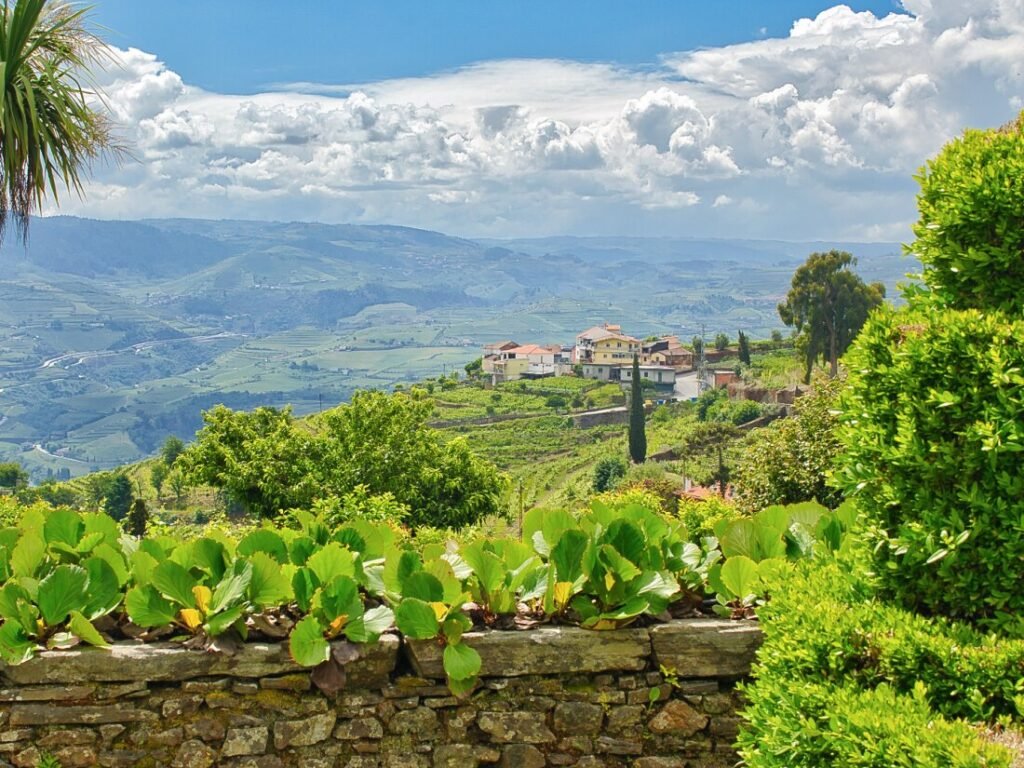
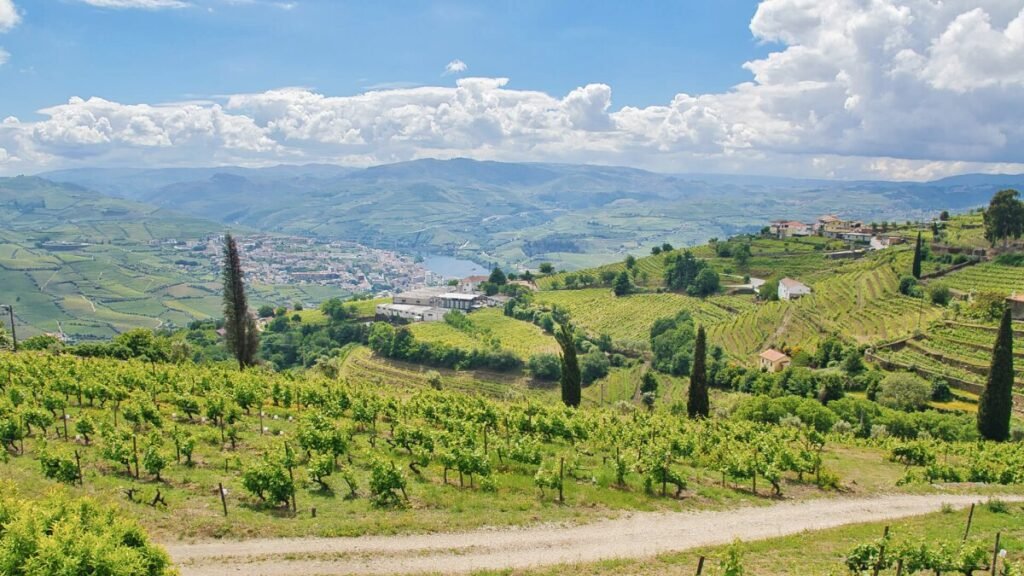
There is a moment, somewhere along the winding road that hugs the Douro River, when you round a bend and the valley opens up before you — and you simply stop breathing. Terraced vineyards, carved by hand into the schist hillsides over centuries, tumble down toward a river that moves slowly, almost deliberately, as if it too understands that there is no reason to rush here. The light in the late afternoon turns everything amber and gold. The air smells of dry earth, wild herbs, and something ancient that has no name in any language you know. This is the Douro Valley. Portugal’s greatest treasure. And it has been quietly waiting for you.
What Makes the Douro Valley One of Portugal’s Most Iconic Wine Regions
A Brief History of Port Wine in Portugal
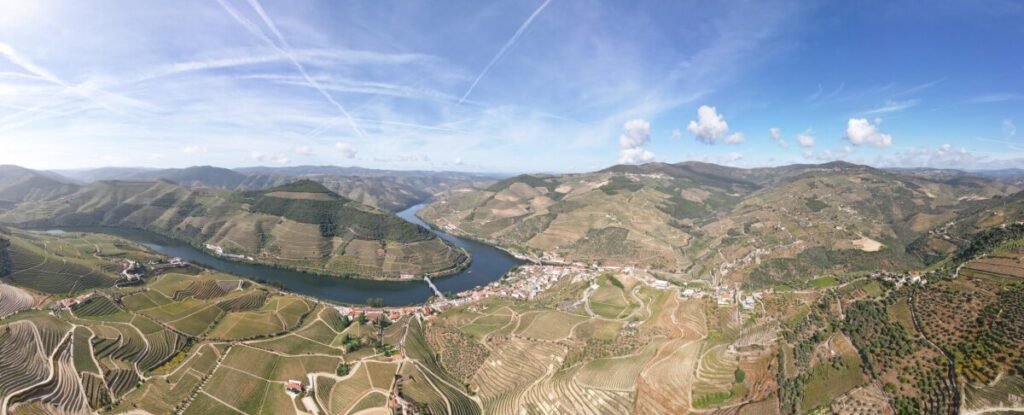
The story of Port wine is, at its heart, a story of place. In 1756, the Marquis of Pombal drew a line around this rugged, sun-scorched valley in northeastern Portugal and declared it the world’s first officially demarcated wine region, a boundary that said, simply: what grows here is unlike anything else on earth. He was right.
For centuries before that declaration, British merchants had been shipping barrels of Douro wine back to England, adding a splash of grape spirit to preserve it on the long sea voyage. What arrived on the other side was something unexpected and extraordinary, a wine that was richer, deeper, and more complex than anything they had tasted before. Port wine was, in a sense, born from a journey. Perhaps that is why it has always called to travelers.
Today, the Douro Valley is a UNESCO World Heritage Site, not only for its wines but for the breathtaking, entirely human-made landscape that produces them. Every terrace, every dry-stone wall, every ancient quinta perched on a hillside is a testament to generations of people who understood that extraordinary things take time, patience, and devotion.
The Douro Valley Landscape
Terraced Vineyards and Breathtaking Views
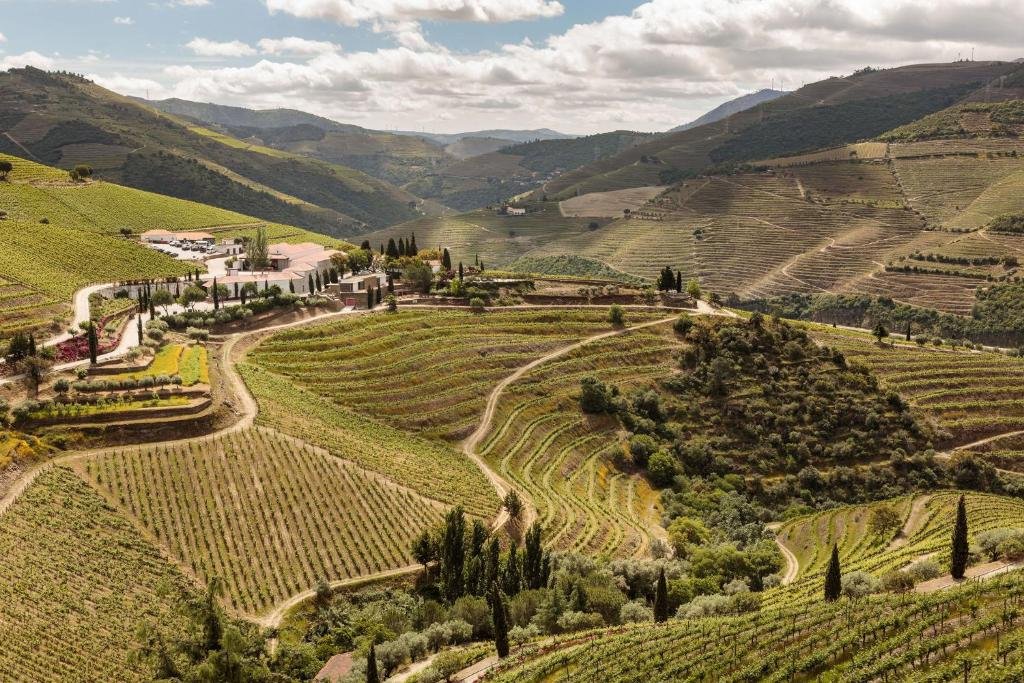
What usually strikes most visitors first is not the wine. It is the landscape itself. The Douro Valley does not look like something that happened naturally. It looks like something that was loved into existence, and in many ways, it was. Over two millennia, farmers carved thousands of narrow terraces into near-vertical hillsides of dark, fractured schist, creating a landscape so singular and so deliberate that UNESCO recognized it not just as a wine region, but as a living monument to human persistence and craft.
The schist itself is part of the story. This dark, flaky rock fractures easily, allowing vine roots to push deep into the earth in search of water and nutrients, producing grapes of extraordinary concentration and character. The same rock absorbs the fierce summer heat during the day and releases it slowly through the night, giving the grapes a long, even ripening that is almost impossible to replicate anywhere else on earth. Stand on any ridge above the river on a clear afternoon and look in any direction. What you will see is not a postcard. It is something older and more alive than that.
Understanding Port Wine
For the Curious First-Time Taster
What Exactly Is Port Wine?
Port wine is a fortified wine, which means that during fermentation, a neutral grape spirit is added, stopping the fermentation early, preserving natural sweetness, and locking in a depth of flavor that regular wines rarely achieve. The result is a wine that is richer, slightly sweeter, and more complex, with an alcohol content that sits between 19% and 22%.
But numbers tell you very little about what it actually feels like to hold a glass of aged Tawny Port up to the light, watch it glow like liquid amber, and let the first sip open slowly across your palate, dried fruits, roasted nuts, a whisper of vanilla, and something warm and enduring underneath it all. That is Port wine. And it is best understood not in a textbook, but in a quinta, with a knowledgeable host, as the sun begins its slow descent over the Douro.
Which are the Main Styles of Port Wine Worth Knowing?
You don’t need to be an expert to find your way through a Port wine tasting in Portugal. You simply need curiosity and a willingness to slow down.
Ruby Port — Deep, vivid, and fruit-forward. Think dark cherries and blackberries with a lush, generous finish. A beautiful introduction for the first-time taster.
Tawny Port — Aged in smaller oak barrels, oxidized slowly over years or decades. Nutty, complex, and silky. The 10-Year and 20-Year Tawnies are particularly extraordinary wines that reward patience in every sense.
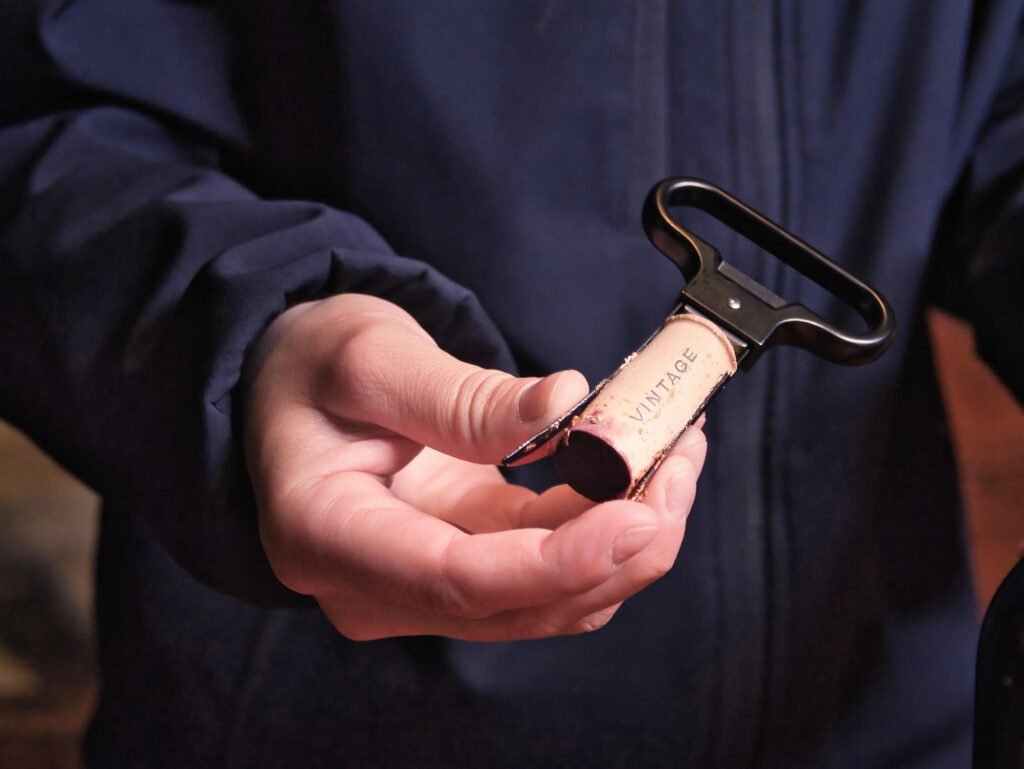
Vintage Port — The rarest and most celebrated. Declared only in exceptional years, these wines are built to age for decades. Opening a bottle of Vintage Port is a quiet ceremony in itself.
White Port — Crisp, floral, and often overlooked. Served chilled over ice with a twist of lemon, it is one of Portugal’s most honest and refreshing pleasures.
Rosé Port — Younger, lighter, and wonderfully approachable. Perfect for a warm afternoon on a quinta terrace overlooking the river, with nothing particular on the agenda.
Decoding the Bottle: How to Read a Port Wine Label
To truly appreciate the diversity of the Douro, one must learn to read the silent language printed on its labels. A Port wine label is not merely branding; it is a legal and historic blueprint detailing the precise style, maturation method, and lineage of the liquid inside. Understanding these key terms is what separates a casual enthusiast from a true connoisseur, guiding your palate to the exact bottle your evening demands.
The Structural Anchors: Age vs. Vintage
When scanning a bottle, the first detail to look for is whether it bears a specific year or a stated age category.
For Tawny Ports, you will often see Indications of Age (such as 10, 20, 30, or 40 Years Old). This number does not signify the exact age of the youngest wine in the bottle; rather, it represents a highly regulated target profile. It means the master blender has artfully married multiple cask-aged vintages together to achieve the specific, complex characteristics—the precise color, body, and oxidation level—associated with an estate’s signature 20-year style.
Conversely, if a single year is prominently stamped on the label, you are holding a time capsule of a single harvest. This brings us to the elite categories of Vintage, LBV, and Colheita:
The Single-Year Prestige Port Wine Categories
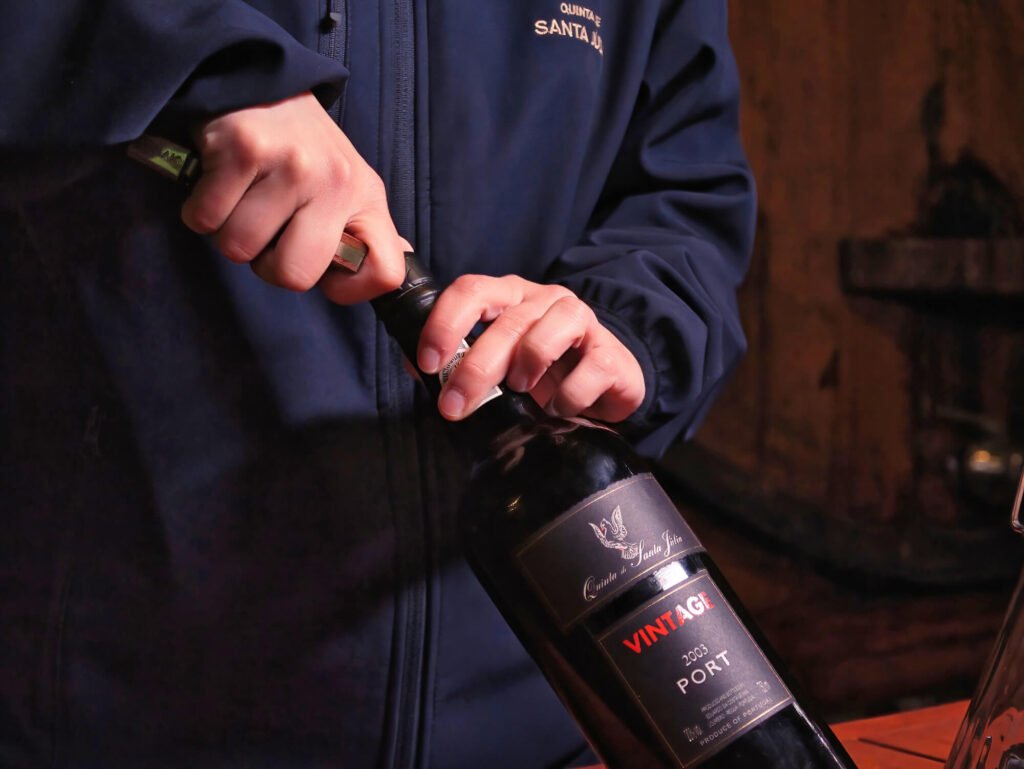
Vintage Port: The absolute pinnacle of the region. The label will feature a prominent year, indicating it was made entirely from the grapes of that specific harvest. These are bottled young—usually after just two years in wood—and are designed to undergo a slow, decades-long evolution inside the glass of your cellar. Look for the phrase “Bottled in [Year]” to verify its timeline.
LBV (Late Bottled Vintage): A magnificent, approachable alternative for those who wish to experience vintage quality without the decades of waiting. An LBV is a wine from a single, high-quality year that stays in massive oak vats much longer than a standard Vintage Port—typically four to six years. The label will clearly display both the Harvest Year and the Bottling Year. Because it spends more time in wood, it is rich, fully mature, and completely ready to be enjoyed the moment you pull the cork.
Colheita Port: A rare treasure for Tawny lovers. A Colheita is, quite simply, a single-vintage Tawny. Unlike a standard aged Tawny which blends multiple years, a Colheita must be harvested entirely within one single year and aged in small oak casks for a mandatory minimum of seven years (though many sit in wood for decades). The label will tell you exactly when it was harvested, offering a beautifully singular snapshot of the Douro’s climate from that specific calendar year.
Colheita Port: The Cask-Aged Pinnacle
If Vintage Port is a monument to a single year matured in the silent darkness of a glass bottle, a Colheita is its golden, wood-aged twin. The word Colheita simply translates to “harvest” in Portuguese. In the context of the Douro, it represents a rare, single-vintage Tawny of extraordinary distinction.
The history of Colheita is deeply tied to the traditional Portuguese wine houses, like Kopke, founded in 1638, who proudly championed this barrel-aged style long before British merchants fully embraced it. While Vintage Ports were historically shipped off to London cellars to age in glass, the master blenders in Vila Nova de Gaia kept specific, exceptional single-harvest years in the cellar, letting them sleep inside seasoned oak casks to age under their own watchful eyes
By law, a Colheita must be harvested entirely within a single year and must age in small oak barrels for a strict minimum of seven years. However, elite winemakers routinely ignore that minimum. It is common for a magnificent Colheita to mature in the wood for twenty, forty, or even sixty years before ever seeing a cork
Inside those porous oak barrels, a quiet alchemy takes place over the decades. The wine breathes. It evaporates slowly, a loss the old cellarmasters poetically call the part des anges, or the “angels’ share.” This continuous evaporation concentrates the liquid, transforming its youthful ruby color into deep shades of amber and liquid gold. The fresh fruit flavors deepen into a complex palette of toasted almonds, warm caramel, dried figs, and exotic spices, all tied together by a crisp, vibrant acidity that keeps the wine incredibly fresh despite its immense age.
When examining a Colheita label, you must look for two distinct dates: the Harvest Year emblazoned on the front, and the Bottling Year usually tucked on the back. This distinction is vital. A 1980 Colheita bottled in 1990 has a completely different maturation history than the exact same 1980 harvest left in the wood until 2026. Unlike bottle-aged wines, a Colheita does not evolve further once it is glassed; it is perfectly preserved at the absolute peak of its barrel maturation, completely ready to be poured and savored the moment you open it
Port Wine Tasting in the Douro Valley
What can I expect during a Port wine tasting in the Douro Valley?
A wine tasting in the Douro Valley is not a formal, intimidating affair. At its best, it feels like being welcomed into someone’s home, a home that happens to sit above one of the most beautiful rivers in Europe, surrounded by vines that have been tended by the same families for generations.
You will be guided through a small selection of wines, each one introduced with the kind of quiet pride that comes from genuine love for the craft. Your host will talk about the soil, the dark, flaky schist that fractures and forces the vine roots deep in search of water, producing grapes of extraordinary concentration. They will talk about the harvest, still done largely by hand in this steep terrain where no machine can follow. They will talk about time, the years, sometimes the decades, that a wine waits before it is ready to be shared. And then they will pour. And the rest is something you simply have to experience for yourself.
Which are the Douro Valley Quintas Worth Visiting?
Short answer: all of them. The Douro Valley is home to hundreds of wine estates (Quintas), each with its own character and story. Among the most celebrated:
Quinta do Crasto — Dramatically positioned above the river, producing some of the valley’s most elegant and age-worthy wines. The view from the terrace alone is worth the journey.
Quinta Nova — A stunning estate that combines exceptional wine with genuine hospitality and one of the most beautiful terraced landscapes in the entire valley. They also welcome overnight guests.
Quinta do Vallado — Family-owned for over three centuries, with a warmth and authenticity that is rare even here. Their unfortified Douro reds are as compelling as their Ports.
Ramos Pinto — A historic producer with deep roots in the region and a cellar that tells the story of Port wine beautifully, through both the wines and the extraordinary Art Nouveau labels that made them famous.
If you would prefer to leave the narrow switchbacks, the navigation, and the intricate planning entirely to someone else—allowing yourself to simply arrive, taste, and be completely present—we gently point you toward our trusted partners at Cooltour Oporto.
Unhurried and Personal. Led by guides who treat the valley not as a backdrop, but as a living story worth telling properly. We know the depth of their itineraries intimately; as their official photographer and videographer, I have spent the last three years behind the lens inside more than 30 unique quintas across the valley, capturing the quiet, hidden corners of the region. Whether you choose to join one of their highly curated small-group journeys or design an entirely bespoke private tour, you will travel in intimate, comfortable minivans alongside experts who genuinely live and breathe the heritage of this riverway. It is, quite honestly, the exact way we choose to experience the Douro.
Douro Valley Wine Tours. Experiencing the Region With Intention
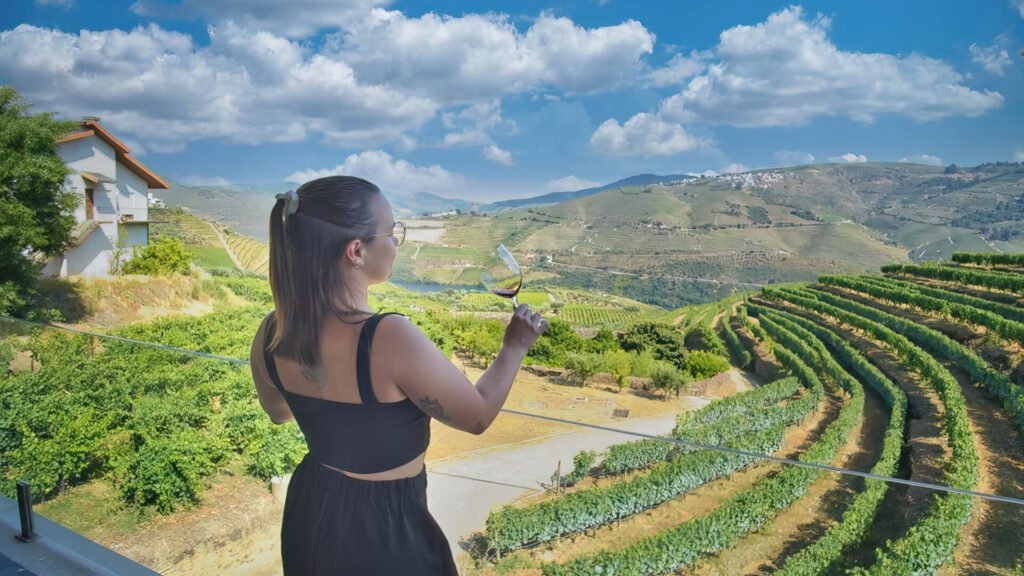
Self-Drive vs. Guided — An Honest Conversation
Self-driving the Douro Valley has its rewards, freedom, spontaneity, and the quiet pleasure of pulling over wherever the light is beautiful. If you are confident on mountain roads and plan carefully, it is absolutely possible and deeply rewarding.
But the honest truth is this: the Douro Valley rewards local knowledge more than almost any destination we know. The best experiences here are not on the public map. They are in relationships, recommendations, and the kind of quiet insider access that a great local guide carries naturally.
For most travelers who want to go deep rather than wide, a small group guided tour is simply the better journey. For those who prefer the freedom of their own pace and their own road, the next section is written for you.
What is the best month to visit the Douro Valley for an authentic wine tasting experience?
Harvest Season — September and October
If there is a single time of year when the Douro Valley feels most alive, it is during the vindima, the grape harvest. From late September through October, the quintas fill with activity. Pickers move through the terraced vines at dawn. The air carries the sweet, yeasty perfume of fermenting grapes. Evenings gather around long tables under old trees, with rough wine and simple food and laughter that needs no translation. To visit the Douro Valley during harvest is to witness something that has happened here, in almost exactly this way, for over two thousand years. It is quietly extraordinary.
Spring and Early Summer — The Quieter, Equally Beautiful Season
The valley in spring is a different kind of beauty, vivid green vines unfurling against the ancient terraces, wildflowers along the riverbank, and a softness in the air that autumn doesn’t carry. Crowds are thinner. Prices are gentler. The quintas are unhurried and generous with their time. For travelers who value depth over spectacle, spring in the Douro is, in many ways, the sweeter season.
Beyond the Vine: The Douro’s Other Stories
The Douro River Itself
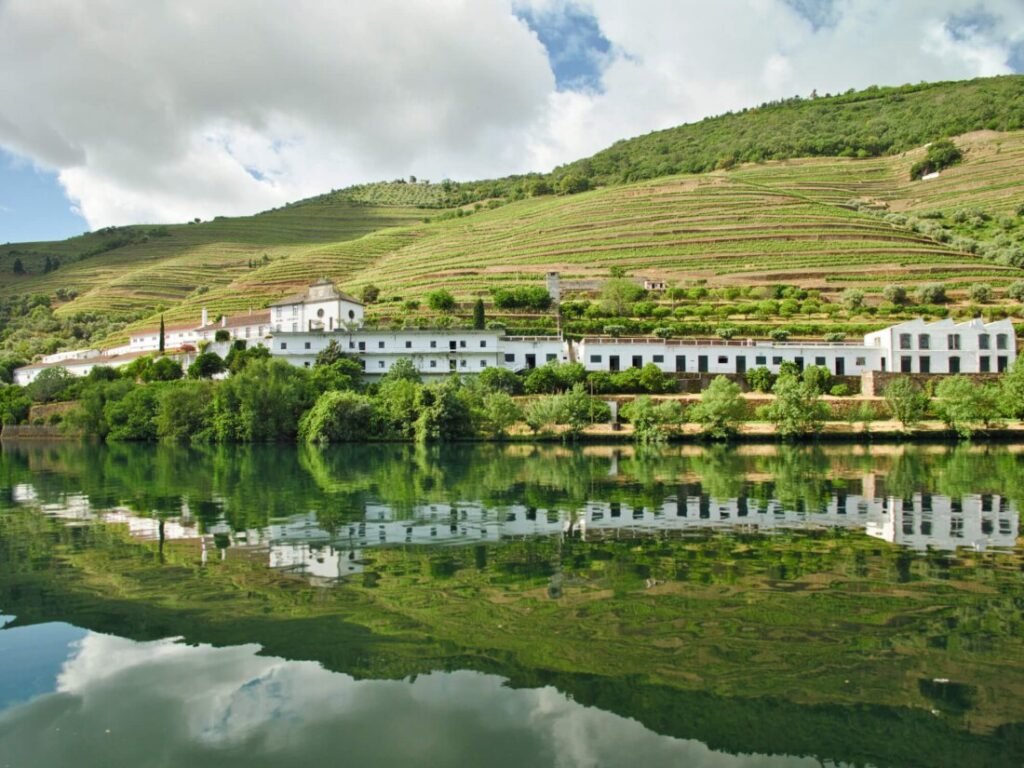
A slow boat journey along the Douro, watching the terraced hillsides slide past in the golden afternoon light, is one of those experiences that resettles something inside you. There is no agenda on the river. Only the water, the landscape, and time moving at the pace it was always meant to.
The Food That Belongs Here
The Douro Valley’s table is as honest and generous as its wines. Bacalhau prepared a dozen different ways. Roasted cabrito (young goat) seasoned with nothing but time and wood smoke. Sheep’s cheese from the high plateau. Pastel de nata eaten warm, still slightly trembling, from a bakery in a village whose name you will never quite remember but will always be glad you found. Pair any of it with a chilled White Port or a glass of unfortified Douro red, and you begin to understand why people come here and find it very difficult to leave.
A Day Trip from Porto — The Perfect Starting Point
Porto sits approximately two hours from the heart of the Douro Valley by road, close enough for a deeply satisfying day trip, rich enough to justify several days on its own. Most travelers use Porto as their base, exploring the city’s extraordinary tile-covered facades, its riverfront tascas, and its famous Port wine cellars in Vila Nova de Gaia before heading east into the valley itself.
If you are planning a day trip from Porto into the Douro valley, our partners at Cooltour Oporto offer highly curated daily departures that handle every single detail, leaving you entirely free to simply look out the window, let the valley arrive, and enjoy the tastings responsibly.
Where to Stay in the Douro Valley?
When Two or Three Days Isn’t Nearly Enough
There comes a point, somewhere around your second evening in the Douro Valley, watching the last light dissolve behind the terraced hills, a glass of Tawny in hand, the river below catching the final gold of the day, when the idea of leaving tomorrow morning becomes quietly unthinkable. This is the valley’s most reliable magic. It slows you down until staying feels like the only reasonable decision.
For those who choose to self-drive and linger, to wake up inside the landscape rather than arrive and depart within a single day, the Douro Valley offers a remarkable range of places to rest. From centuries-old quintas that have opened their doors to guests, to intimate riverside hotels and rural manor houses where breakfast arrives with local honey and freshly pressed juice, accommodation here tends to reflect the same qualities as the wines: unhurried, honest, and deeply rooted in place.
A Few Areas Worth Considering
Pinhão — The Heart of the Valley
Small, unpretentious, and perfectly positioned among some of the Douro’s most celebrated vineyards, Pinhão is where many travelers feel the valley most deeply. Staying here puts you within minutes of the great quintas, with the Douro River running quietly past your window and almost nothing to do in the evenings except eat well and sleep soundly.
Peso da Régua — The Gateway Town
Régua, as locals call it, sits at the western entrance to the upper Douro and serves as a natural base for exploring the wider region. It has more amenities than Pinhão — a wider choice of restaurants, a beautiful riverside promenade — while still feeling genuinely local and unhurried.
Lamego — History, Baroque Beauty and Vineyards
A short drive south of the valley floor, Lamego is one of those small Portuguese cities that rewards the traveler who wanders slowly. Its extraordinary Baroque sanctuary, local sparkling wine, and handful of genuinely beautiful boutique hotels make it a worthwhile addition to any self-drive itinerary.
The Quintas Themselves
Perhaps the most memorable way to sleep in the Douro Valley is to stay on a working wine estate. Several quintas across the region welcome guests into beautifully restored rooms and suites, where the vineyard begins just outside your window and the morning mist rising off the river is the only alarm clock you’ll need. Breakfast tastes different when the vines that made your wine last night are twenty meters from the table.
The Douro Stay Edit: Spaces to Linger
For an intentional journey that honors the unhurried soul of the region, we have curated a small collection of exceptional boutique hotels and working quintas that capture the genuine essence of the valley’s architectural heritage. Listed in no particular order, as each offers its own unique, unranked character, these are elite sanctuaries where design-forward craft meets centuries of winemaking history:
Dajas Douro Valley — Penha Longa
Perched intimately above a quiet stretch of the water, Dajas Douro Valley serves as an exceptional retreat dedicated to contemporary minimalist craft. The architectural villas pair raw concrete and warm wood elements with sweeping, floor-to-ceiling glass walls that welcome the shifting valley landscapes inside. Guests wake up to clean lines, crisp textiles, and automated blinds that slowly unveil the river below. Featuring private direct access to the riverbanks for a slow afternoon swim, a panoramic infinity pool, and a private chef who creates localized epicurean plates, it is a sublime haven for modern design purists.
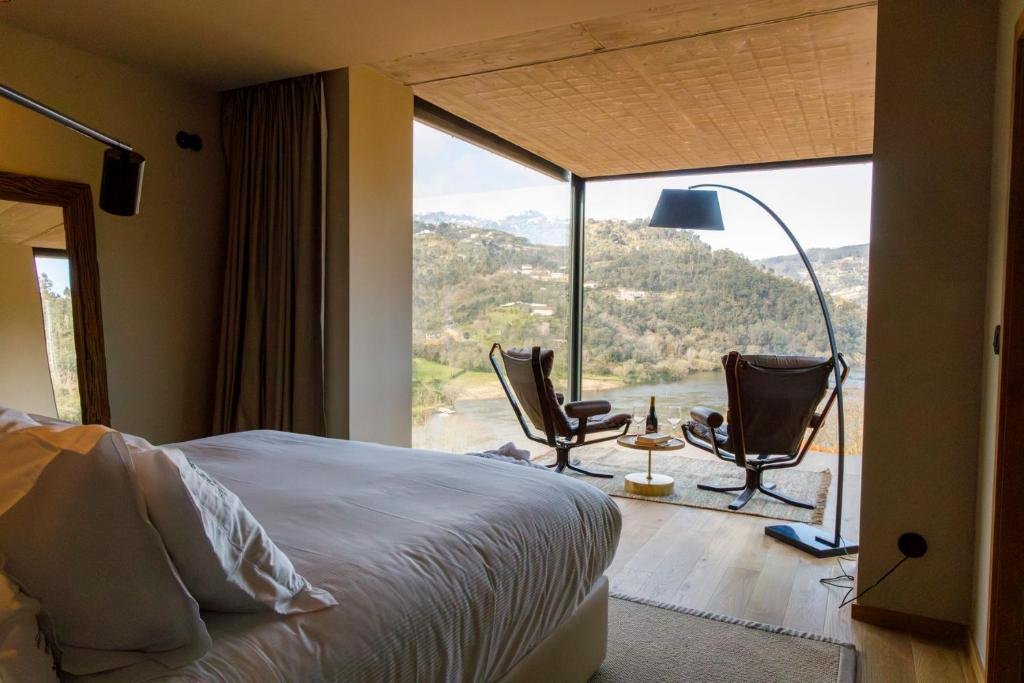
Torel Quinta da Vacaria — Peso da Régua
Surrounded by historic vineyards dating back to 1616, Torel Quinta da Vacaria stands as an exceptional benchmark for heritage wine hospitality. Perched right along the riverbanks in Peso da Régua, this boutique sanctuary masterfully pairs its deep winemaking lineage with sharp, contemporary interior design. The ultra-silent rooms are built for calm, featuring beautiful pale wood floors and private balconies overlooking the water. The heart of the estate is its open-kitchen restaurant, Schistó by Chef Vítor Matos, which holds a Michelin Star for its sustainable, ten-step modern reinterpretation of traditional Douro flavors. Complete with a glass-lined spa and a panoramic infinity pool, it remains an unparalleled haven for design and gastronomy purists.
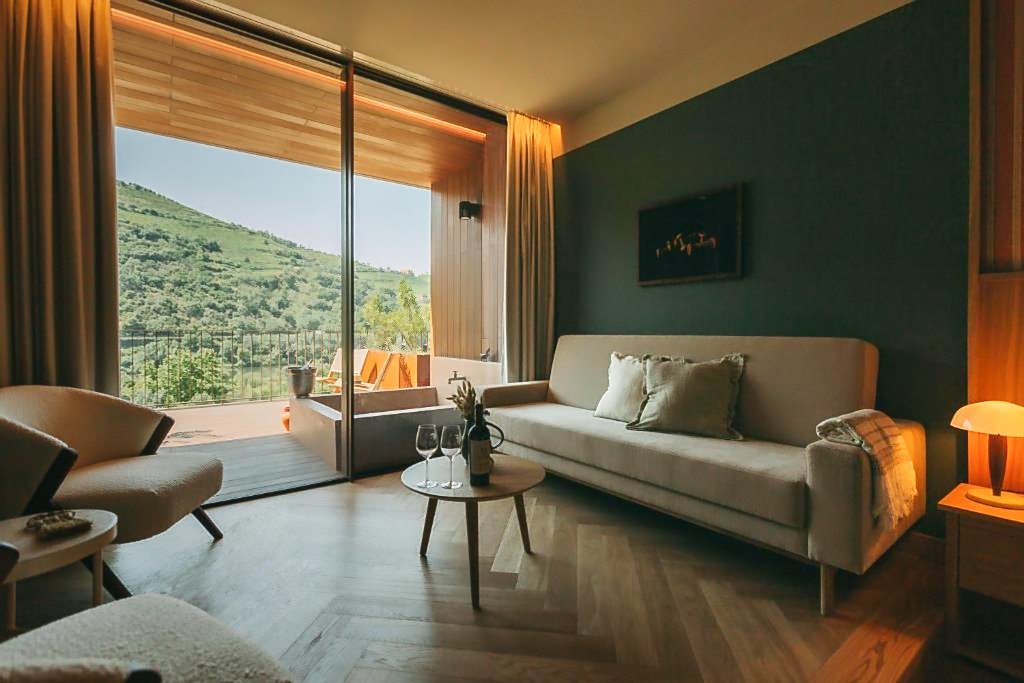
Quinta Nova de Nossa Senhora do Carmo — Pinhão
Dating back over two and a half centuries, Quinta Nova de Nossa Senhora do Carmo stands proudly as one of the most storied, historical winery estates in the entire valley. The beautifully preserved 19th-century manor house features warm, thoughtfully designed rooms that frame sweeping views across the cascading terraced hills and the winding river below. Gastronomy takes center stage at their acclaimed Terraçu’s Restaurant, where guests savor slow, seasonal dishes crafted by local chefs to pair beautifully with the estate’s exceptional vintage block wines. Complete with a panoramic outdoor pool and immersive, hands-on harvest paths, the property feels entirely removed from heavy tourist corridors.
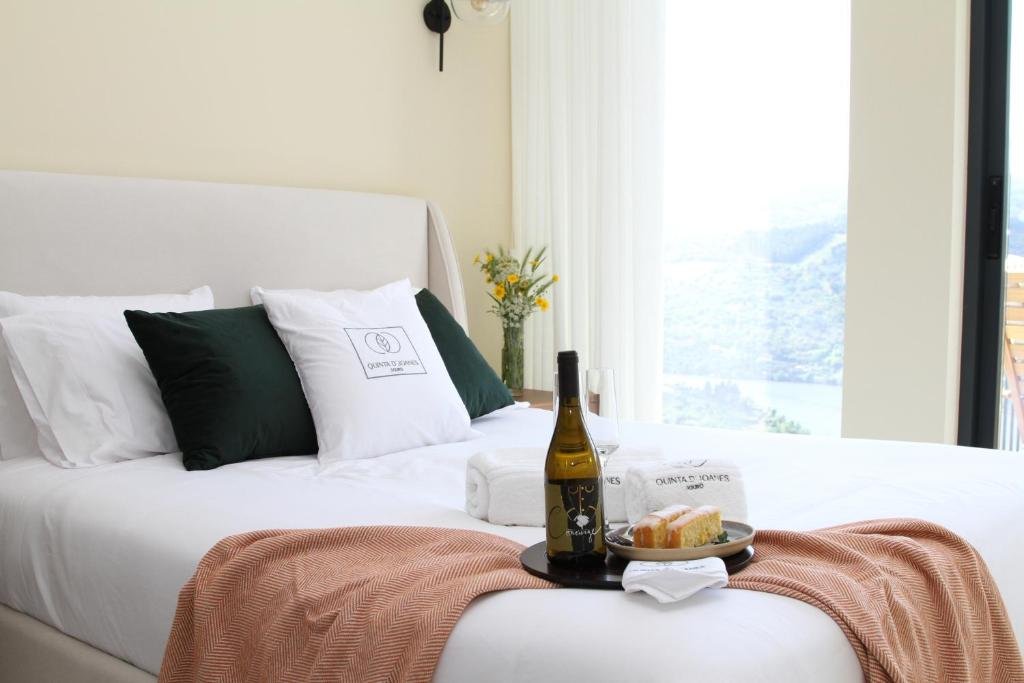
Tucked away along the tranquil hillsides of Resende, Quinta de Joanes is a beautifully preserved heritage estate that invites travelers to experience the region at a profoundly slower pace. This independent boutique guesthouse centers entirely on peaceful observation and unhurried hospitality. The understated rooms feature rich, classic Portuguese textures and private outlooks framing the cascading green terraces. Mornings here begin with exceptional local pastries and fresh regional dishes, while afternoons are best spent sitting quietly by the panoramic pool, watching the river twist through the valley completely removed from tourist corridors. [1]
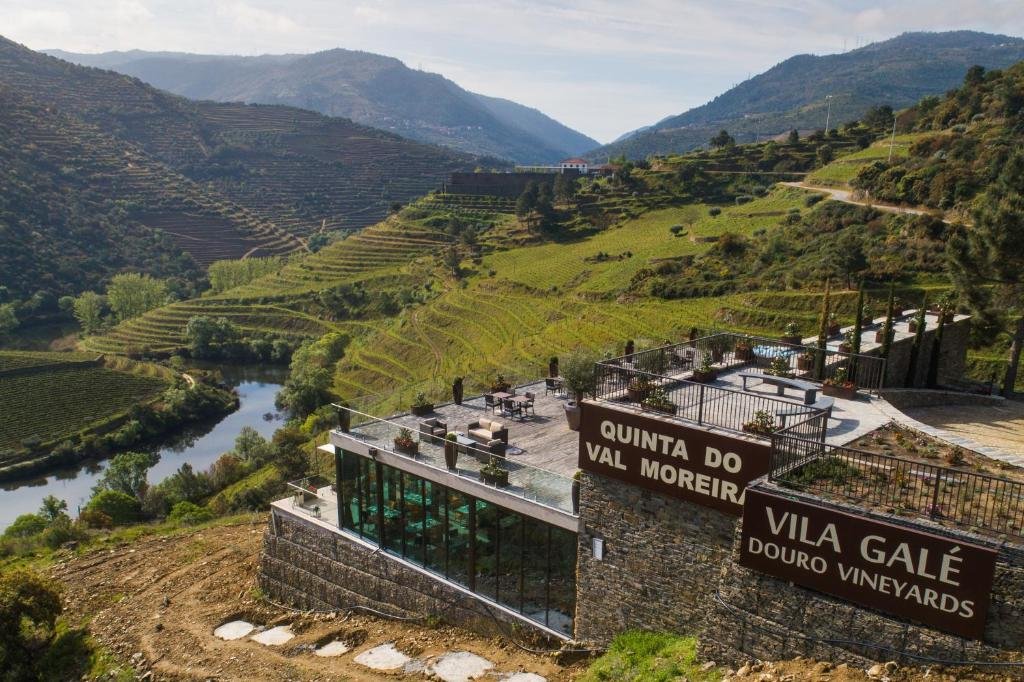
Vila Galé Douro Vineyards — Quinta do Val Moreira
Perched high on a dramatic ridge overlooking the scenic confluence of the Douro and Tedo rivers, Vila Galé Douro Vineyards serves as an immersive, slow-paced haven built within the historic footprint of the centuries-old Quinta do Val Moreira estate. This exceptional boutique escape seamlessly blends contemporary rural architecture with raw winemaking tradition, offering quiet, sun-drenched rooms with private balconies that frame expansive vistas of the terraced vines below. Guests can walk directly out of their rooms to join local estate grape harvesting paths, tour the traditional wine caves, or unwind by the panoramic outdoor pools. Complete with the acclaimed Inevitável Restaurant—which serves fine regional Portuguese cuisine paired with the property’s award-winning private Port harvests on an open-air terrace—it captures the busy, beautiful heart of autumn wine country.
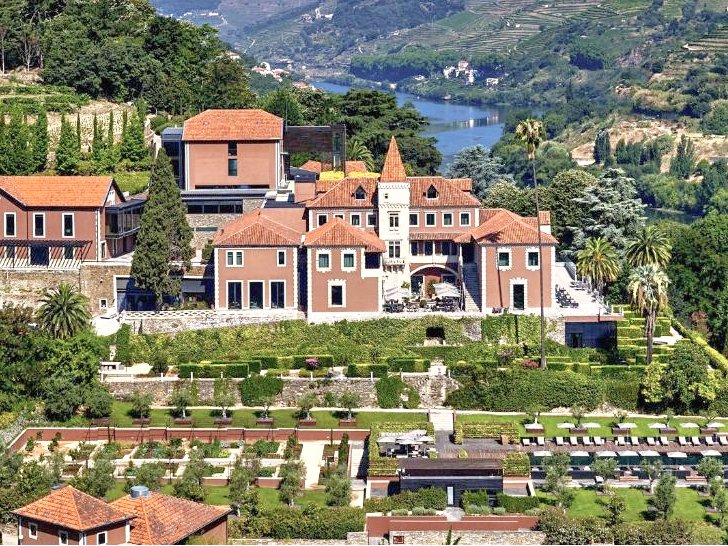
Six Senses Douro Valley — Lamego
Housed within a magnificently restored 19th-century manor house high on a hill overlooking vine-covered terraces, Six Senses Douro Valley functions as a legendary, restorative retreat. The property seamlessly integrates an active working wine estate with an expansive, light-filled wellness infrastructure. The understated, architectural quarters frame serene river and estate views, while the dining scene centers on authentic local gastronomy. During the autumn months, the hotel runs an intimate Greenhouse Table dining series, hosting celebrated culinary voices like the two-Michelin-starred Chef Rui Paula to craft exclusive garden-to-table pop-up menus paired intentionally with the estate’s own private vintage harvests.
Finding Your Place in the Valley
Whether you are drawn to a sun-warmed quinta terrace, a design hotel or a quiet rural guesthouse, the Douro Valley has something that will feel exactly right. If you prefer to chart your own path or explore options you can use our interactive guide map below to discover a space that fits your personal journey:
Practical Notes for the Self-Drive Traveler
– Two nights minimum is what the valley quietly asks of you. Three is what it deserves.
– Book ahead during harvest season — September and October fill quickly, particularly the quintas and smaller boutique properties.
– A small car is your friend on these roads. The valley is beautiful precisely because it is not built for speed or convenience.
– Ask your hosts for recommendations. The best restaurant, the quietest viewpoint, the quinta that opens early on a Wednesday morning — this knowledge lives with the people, not on the popular review sites.
FAQ’s About The Douro Valley
✨What is the Douro Valley famous for?
The Douro Valley is Portugal’s most celebrated wine region and the birthplace of Port wine. Established in 1756, it stands as the world’s first officially demarcated wine region. Today, this UNESCO World Heritage Site is celebrated for its extraordinary terraced landscapes. It remains a premier destination that deeply rewards slow, intentional travel.
✨What is the best Port wine to try for a first-time taster?
A 10-Year Tawny Port is one of the most universally beloved introductions to Port wine. It is complex enough to be interesting, yet approachable enough to be immediately enjoyable. A chilled White Port served over ice is also a wonderful alternative. This offers a surprising, refreshing experience for those who expect something heavier.
✨How do I get to the Douro Valley from Porto?
The Douro Valley is approximately two hours from Porto by car via the A4 motorway east. Alternatively, experience the famously scenic train journey from São Bento station. This route is widely considered one of the most beautiful rail journeys in Europe. For a curated experience, small-group guided tours departing from Porto are highly recommended.
✨Is a guided wine tour in the Douro Valley worth it?
Yes. If you want to go beyond the surface and visit quintas with genuine local access, a small-group guided tour is absolutely worth it. It allows you to understand the wines in their proper context. The Douro rewards local knowledge. The absolute best of what this valley offers is found through relationships, not just reservations.
When is the best time to visit the Douro Valley?
If you want to experience the Douro Valley at its most comfortable and visually captivating, the consensus among slow-travel purists points to two distinct sweet spots in the calendar: late spring (May to June) and early autumn (September to October).
Because the valley undergoes a dramatic visual and energetic transformation throughout the year, the best time to visit depends entirely on the rhythm of the journey you want to experience
Autumn (September to October): The Harvest and Golden Light
For wine enthusiasts, landscape photographers, and culture purists, this is arguably the most magical window of the year.
The valley is alive with the kinetic, buzzing energy of the annual vindima, or grape harvest. Tractors navigate the narrow roads, and locals hand-pick fruit along the near-vertical stone terraces. This is your only chance to witness or participate in the ancestral ritual of grape foot-stomping inside traditional granite lagares. By October, the bustling harvest activity settles, and the entire landscape ignites into deep, cinematic shades of copper, amber, and gold.
The weather drops to a pleasant 25 to 30 degrees Celsius. However, because this is peak travel season, boutique quintas and intimate wine tours must be booked months in advance.
Spring (April to June): Fresh Leaves and Textural Calm
If you prefer a slower, more intimate encounter with the region without the harvest-season crowds, spring is the ultimate choice.
A sense of quiet awakening fills the air as the vines break their winter dormancy, covering the rugged schist hillsides in a vibrant blanket of bright, fresh green. Wildflowers line the banks of the river, and the rhythm at the local wine estates is relaxed and unhurried.
Winemakers and hosts have more time for long, deep-dive conversations during tastings. The mild, comfortable temperatures are perfect for hiking ancient vineyard trails or taking panoramic scenic drives, and you will find excellent availability across the region’s top heritage stays.
Summer (July to August): Intense Interior Heat
Summer brings cloudless blue skies and stunning sunset river cruises, but it comes with a technical challenge: the interior climate.
Protected by the Marão mountain range, the valley traps heat, sending summer temperatures skyrocketing past 35 to 40 degrees Celsius. The environment is sun-drenched and vibrant, but it requires a very specific travel strategy.
The best layout involves planning for long, lazy air-conditioned lunches, private terrace tastings, and spending the baking afternoon hours resting beside a panoramic infinity pool suspended over the river.
The Art of Lingering in the Douro
Final thoughts from the terraces of the Valley
To visit the Douro Valley is to step completely out of ordinary time. It is a place that demands you drop your frantic itineraries, lower your windows, and simply let the ancient rhythm of the river guide your days. Whether you trace the winding water by train, walk the dusty stone terraces during the energy of the autumn harvest, or watch the light change from the quiet balcony of a centuries-old quinta, you will leave with a piece of the valley etched permanently into your memory.
“The Douro does not give up its secrets to those who rush. Pour a glass, watch the sun sink behind the terraced hills, and let the valley tell its story in its own unhurried time.”
The Douro Series: Further Reading
If you wish to submerge yourself deeper into the textures, flavors, and hidden corners of the Douro Valley in northern Portugal, explore our complete collection of intentional dispatches from the riverway:
• Douro Valley: 3 Quintas Worth the Detour
• The Ultimate Douro Valley Travel Guide
• The Douro Valley Harvest: Best Stays & Dining
⭐Experience the Valley in Motion: Watch our full, independent cinematic video from the Douro Valley directly on YouTube Click Here ⭐
Até já,
Marcelo, Go Travel Planet
Keep exploring. Keep discovering. Keep choosing the journey over the destination. We would love to hear your thoughts, drop a comment below. 🌍
All editorial photography © Go Travel Planet. All rights reserved. Property imagery and architectural photography courtesy of our hotel partners and Booking.com
Disclaimer: Some of the links in this guide are affiliate links. If you choose to book a tour through these links you get a discount by using the codes at the top of the link page and Go Travel Planet will earn a small commission at no additional cost to you. Thank you for supporting our independent travel blog!