
By Go Travel Planet
I want to tell you something before we begin.
The Douro Valley has no shortage of wine estates (Quintas) that will welcome you through their gates, pour you something beautiful, and send you on your way with a bottle wrapped in tissue paper and a stamp on your map. There is nothing wrong with that. The wines are real. The landscape is always extraordinary. And any afternoon spent above the river with a glass of Port in hand is, by any honest measure, a good afternoon.
But there is another Douro Valley. One that exists slightly further from the main road, slightly beyond the well-worn tourist circuit, where the quintas are older, the stories run deeper, and the experience of arriving feels less like a scheduled visit and more like being welcomed into something that has been quietly happening here for centuries, entirely indifferent to whether the rest of the world was paying attention.
These are three of those places. I have been to all of them, camera in hand, unhurried, with the particular privilege of someone who gets to arrive early and stay late. What I found at each one stayed with me in the way that only genuinely authentic experiences do.
I should also tell you something practical, something that the most beautiful travel writing sometimes forgets to mention. These three quintas are not easy to find. The roads that lead to them are narrow, unmarked in places, and the kind that reward local knowledge over GPS confidence. They sit deliberately outside the main commercial wine tourism circuit, which is precisely what makes them worth the journey, but it also means that finding them, and finding them well, requires either serious advance planning or the company of someone who already knows the way.
That detail matters. I will come back to it.
This is not a list. It is an invitation.
Quinta de Santa Eufémia — Where the Casks Remember Everything
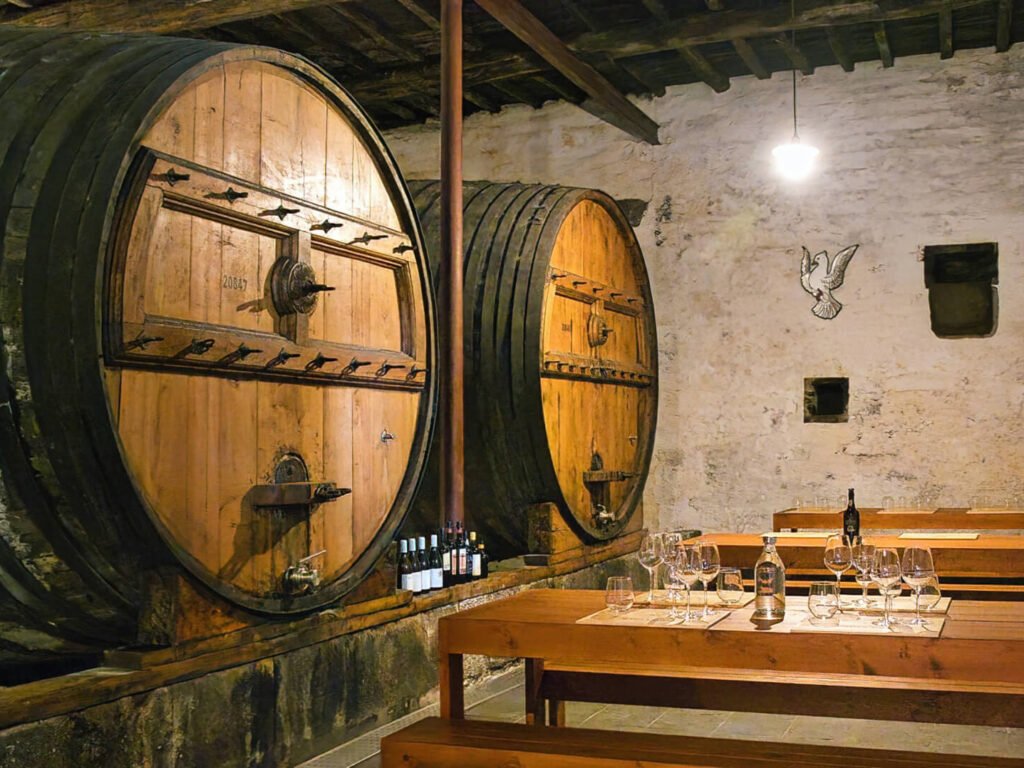
There are buildings that hold history the way old wood holds warmth — quietly, deeply, and in a way you feel before you can explain it.
Quinta de Santa Eufémia is one of those places.
This is a very old estate. The kind of old that reveals itself not in a plaque on a wall or a date on a label, but in the weight of the air inside the adega (the wine cellar) where light falls in long, dusty shafts across stone floors that have absorbed decades of harvest, fermentation, and the slow, patient work of aging.
The detail that stops you completely, the moment your eyes adjust to the interior light, is the casks.
Horizontal, ancient, and of a scale that takes a moment to fully comprehend, these enormous wooden vessels holds thousands of litres of wine and have been doing so for longer than most living things. They do not announce themselves. they simply exist, the way all truly old things exist, with a quiet authority that makes everything around them feel slightly temporary by comparison.
Standing next to these casks, you understand something about Port wine that no tasting note can teach you. That this is not just an industry. It is a continuity. A conversation between generations, conducted in the language of wood and grape and time.
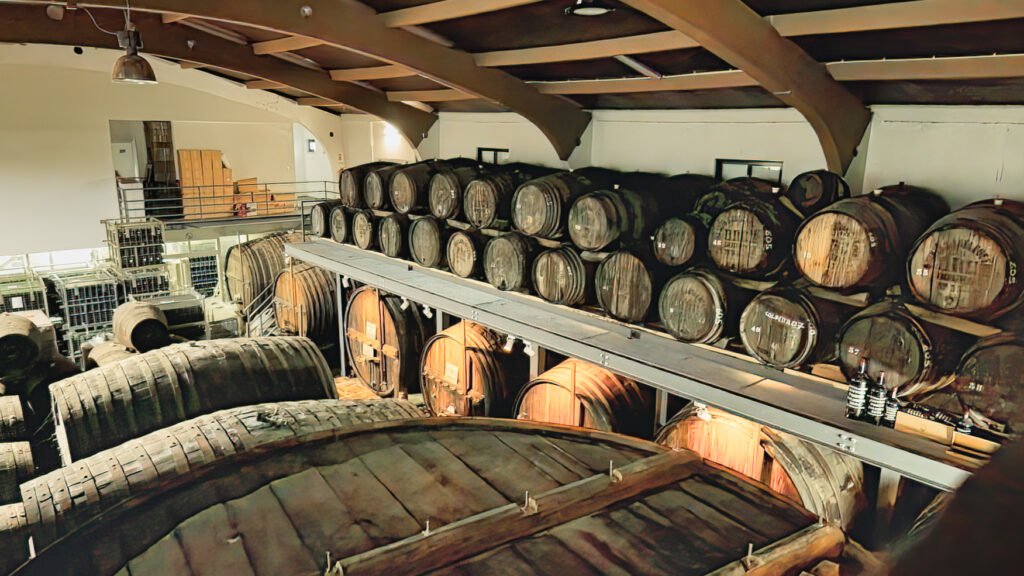
The Museum — Port Wine History in the Place Where It Was Made
What makes Quinta de Santa Eufémia genuinely singular among the quintas I have visited in the Douro Valley is not just the wine, extraordinary as it is. It is the small museum that sits within the estate — a carefully curated collection that tells the history of Port wine and of Santa Eufémia itself, in the place where that history actually happened.
There is something profoundly different about learning the story of Port wine, its origins, its techniques, its centuries of trade and transformation, while standing inside a quinta that participated in that story. The museum is not a reconstruction or an approximation. It is a living archive, surrounded by the evidence of everything it describes.
For the traveler who wants to understand Port wine rather than simply taste it (and I would gently argue that understanding and tasting are, here, completely inseparable) this museum is one of the finest introductions to the subject available in the valley.
The Tasting Room
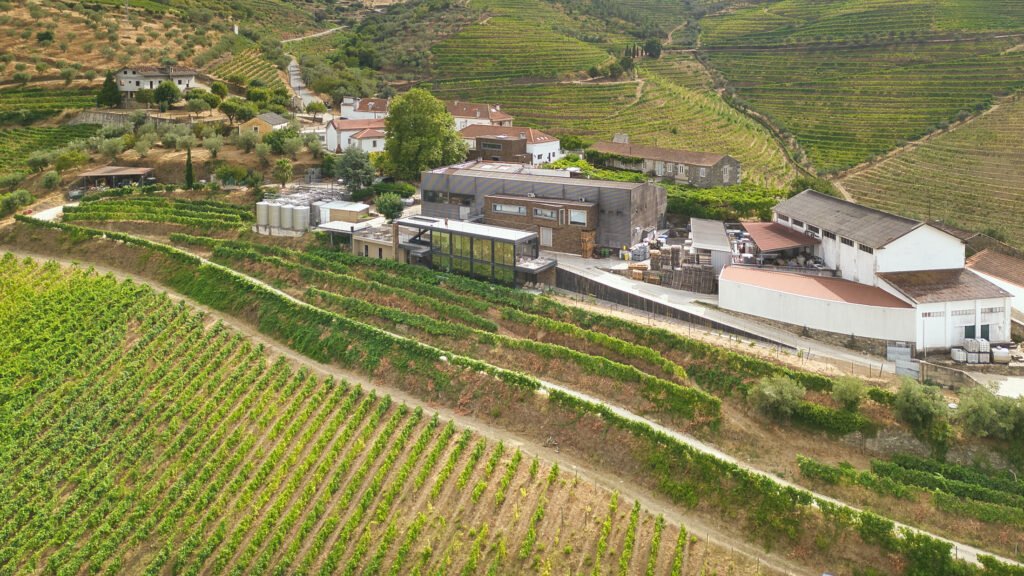
The tasting room at Santa Eufémia, newly completed in 2024 and 2025, with views that make you reach for your camera before you have even sat down, carries the same quality of conviction as the cellar and the museum. It is the kind of space that feels both entirely of this moment and entirely rooted in this place. Like a film set, but real. Like something designed by someone who understood that the wine deserves a setting worthy of its story.
Sit down. Let them pour. And when the Tawny arrives in the glass, hold it to the light before you taste it.
“Aroma complexo a frutas secas, figos, nozes, damascos, notas de café. Na boca ótimo balanço, complexo e muito longo com acidez excelente.”
A complex aroma of dried fruits, figs, walnuts, apricots, notes of coffee. On the palate, perfect balance, complex and very long, with excellent acidity.
That is the Quinta’s own description of their 20 year Tawny, in the language it was written in, and I have left it that way deliberately. Some things translate better when they stay exactly as they are.
Quinta de Santa Júlia — Stepping Back Three Hundred Years
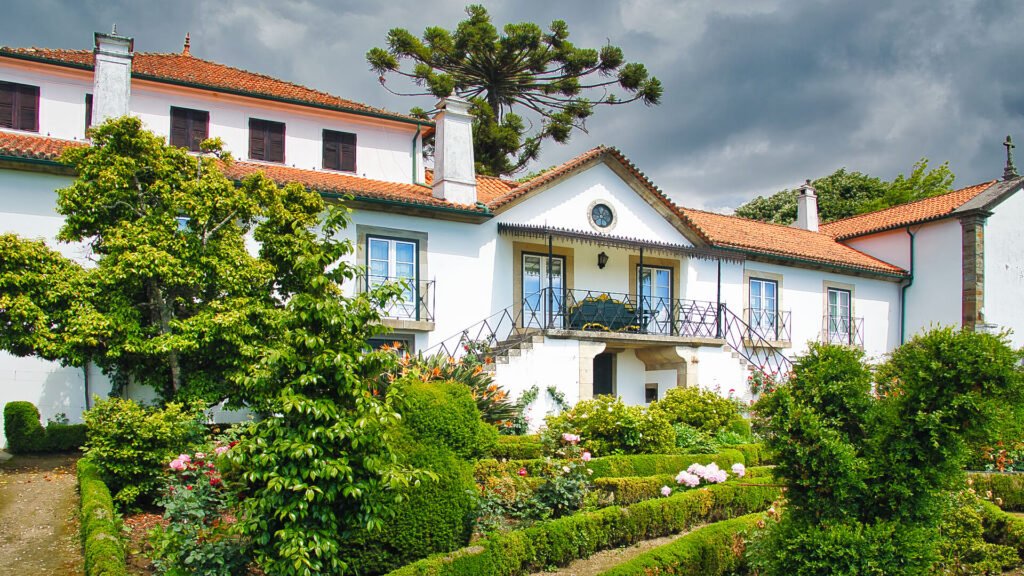
I have visited a great many wine estates across Portugal and beyond. I have stood in cellars that were beautiful, in gardens that were extraordinary, in tasting rooms that were designed with obvious care and considerable investment.
None of them prepared me for walking into Quinta de Santa Júlia.
The space stops you at the threshold. Long wooden tables. Wooden benches. Enormous casks lining the walls like silent witnesses. Tall wooden ceilings rise above, giving the room a medieval atmosphere that feels untouched by time, because, in every meaningful sense, it is.
This is the first of two tasting rooms at Quinta Santa Julia, intimate in size but rich in character. The second, built more recently, opens into a much larger space, yet loses none of that same warmth. Stone walls wrap around wooden tables, cozy despite its scale, and it is here that guests can also enjoy the estate’s food, paired naturally with the wine that started it all.
Standing in this room, you are not in 2025. You are somewhere around the early 18th century, in a Portuguese wine estate that understood, three hundred years ago, that the making and sharing of wine was a serious and beautiful thing worthy of a serious and beautiful setting. The centuries since have changed very little here, and that is not an accident. It is a choice, a quiet, deliberate act of fidelity to what this place has always been.
Santa Júlia is also a very old quinta. And like all genuinely old places, it carries its age not as a museum piece but as a living thing, active, producing, and deeply proud of what it makes.
The 2003 Vintage Port
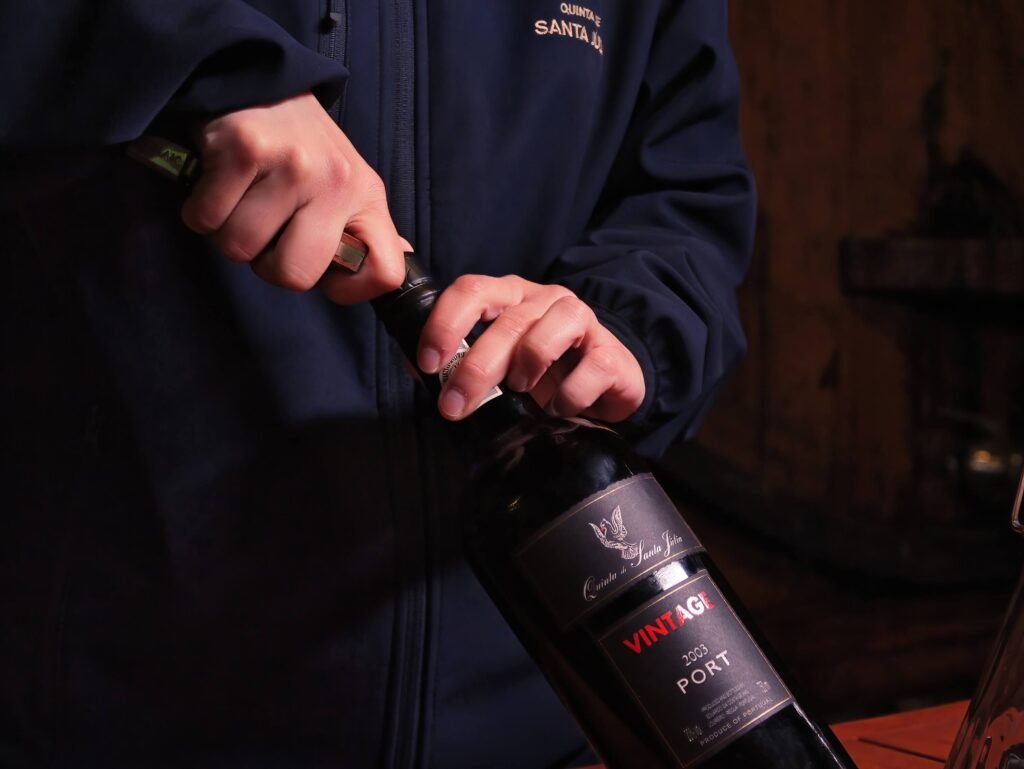
If you visit Santa Júlia, and I hope very much that you do, ask about the 2003 Vintage Port.
A Vintage Port is declared only in exceptional years, when the conditions in the valley conspire to produce grapes of such concentration and complexity that the wine made from them deserves to be aged and celebrated for decades. 2003 was one of those years. And what Santa Júlia produced from that harvest is, in a single word, outstanding.
To taste a wine that was made in a specific year, from a specific place, by specific hands, and to taste it in the room where the decisions about its making were discussed, beneath the same chandeliers that lit those conversations, is one of those experiences that collapses time in the most beautiful way.
A wine like this does not ask to be rushed. It asks to be considered. Pour it. Hold it. Let it open slowly in the glass. And then let it tell you, in the language that only very old, very serious wines speak, exactly what the Douro Valley is capable of producing when everything comes together in a single extraordinary year.
The Medieval Cooking Experience
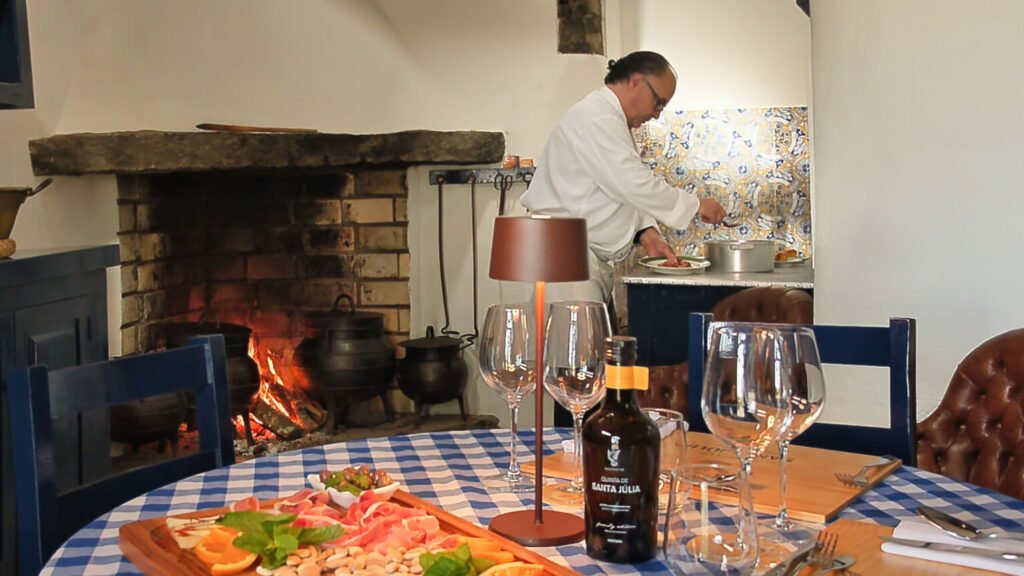
Santa Júlia offers something that I have not encountered at any other quinta in the Douro Valley — and something that speaks directly to this estate’s extraordinary relationship with its own history.
Cooking over iron pots, in the manner of the Middle Ages. An experience that is not a performance or a reconstruction, but a genuine immersion in the culinary traditions that sustained the people of this valley for centuries. The ingredients are local. The methods are ancient. And the result is a meal that tastes, somehow, of the landscape itself — earthy and generous and deeply, honestly Portuguese.
Paired with the wines of Santa Júlia, in that medieval hall, with the chandeliers above and the casks along the walls — it is the kind of experience that reframes everything else you thought you knew about what a winery visit could be.
The Gardens
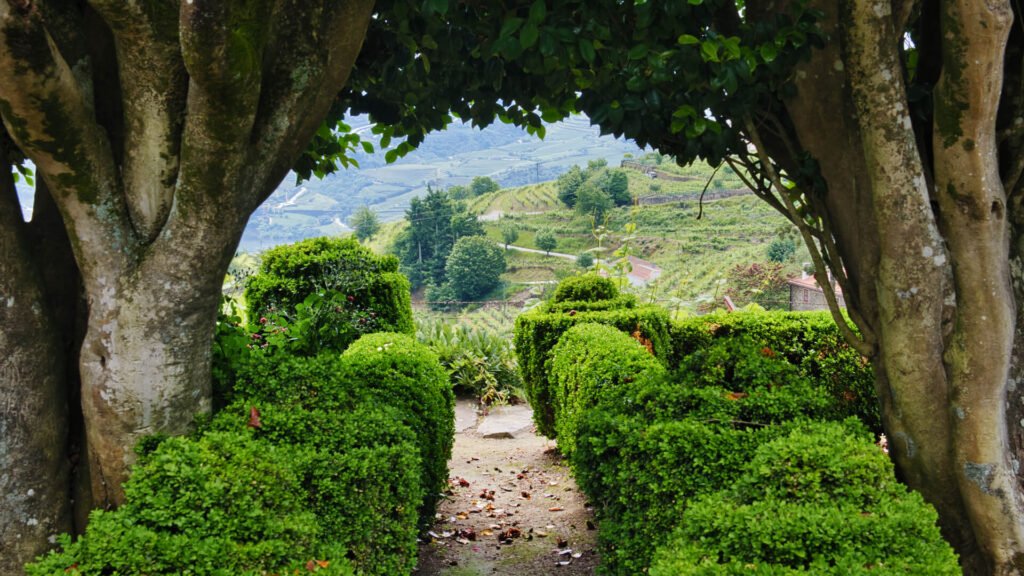
Before you leave — and leaving will feel like a decision you have to talk yourself into — walk through the gardens.
The views from Santa Júlia’s gardens are the kind that make you stop mid-sentence. The Douro Valley spreads below in its full, terraced, ancient glory — the river catching whatever light the sky is offering, the vineyards falling away in every direction toward the horizon. It is, quite simply, one of the finest views I have photographed in Portugal.
And I have photographed a great many.
Stand here for as long as you can. Let the scale of what you are looking at settle properly. And then, when you are ready — and only when you are ready — begin the walk back to the car.
Quinta da Pedra Alta — The Terrace, the Tawny, and the Art of Relaxing
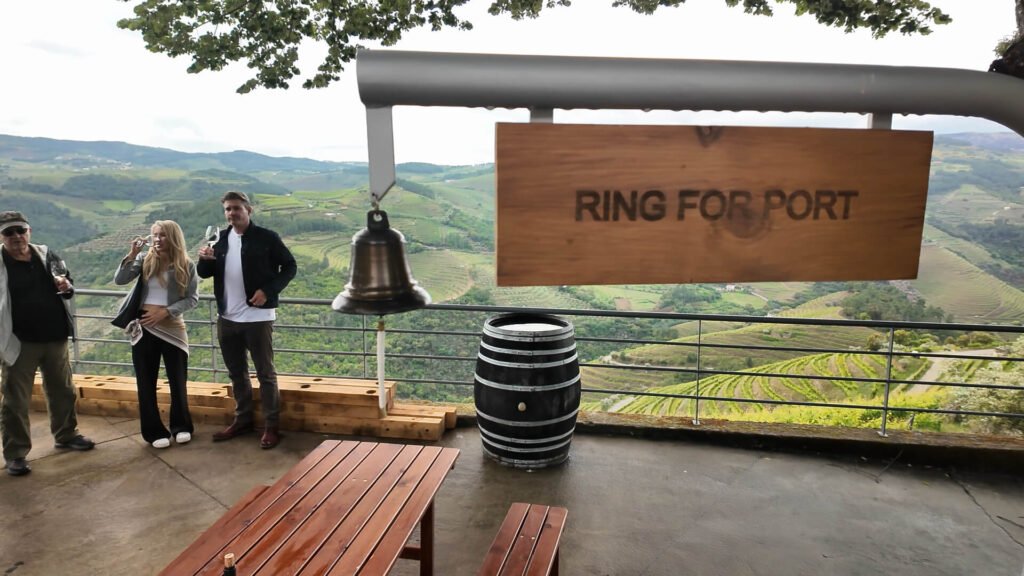
There is a specific kind of travel pleasure that is increasingly rare and increasingly valuable — the pleasure of arriving somewhere with no agenda except to be there. To sit. To look. To drink something excellent and talk, or not talk, as the mood suggests. To feel, without forcing it, that you are exactly where you are supposed to be.
Quinta da Pedra Alta is built for exactly this.
The tasting room is wonderful. The wines are genuinely interesting — their 10-Year Tawny is everything a 10-Year Tawny should be, their White Port is crisp and honest and completely underestimated as an aperitif, and their Ruby is vivid and fruit-forward in a way that reminds you why Port wine became celebrated in the first place.
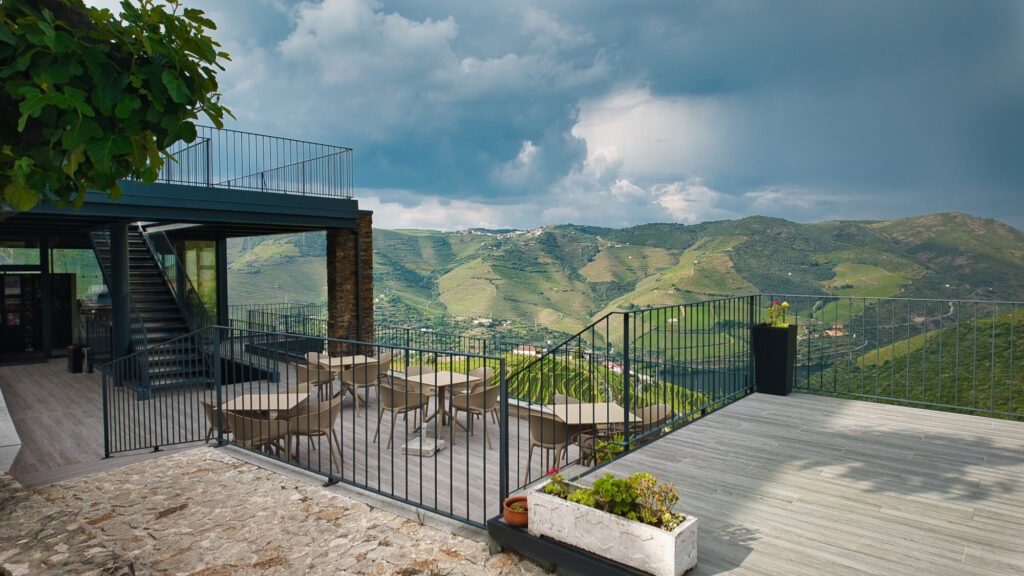
But what I remember most vividly about Pedra Alta is the terrace.
It is enormous. And it overlooks the valley with the kind of unobstructed, panoramic generosity that makes you understand, immediately, why someone decided to build a quinta on exactly this spot. The Douro Valley below is not a backdrop here. It is the main event — terraced hills rolling away in every direction, the river somewhere below catching the light, the particular silence of a place that has been producing wine since before most countries as we know them existed.
This is where you come to slow down completely.
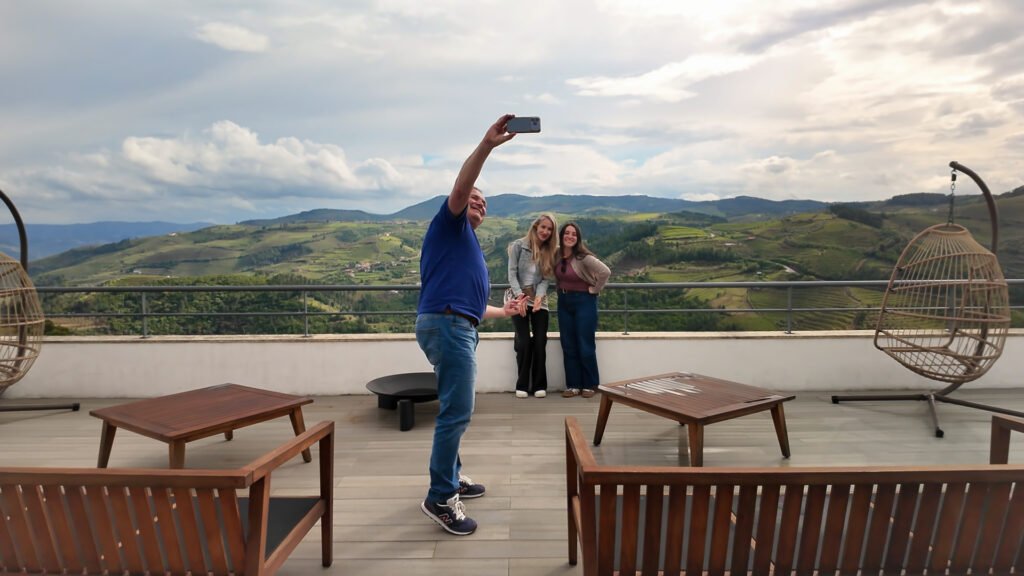
Order the 10-Year Tawny. Find a chair that faces the valley. Let the conversation find its own pace — or let it go quiet altogether, which on a terrace like this is not an awkward silence but an entirely comfortable one, shared between people who have all just seen the same extraordinary thing and understood, simultaneously, that words are not quite up to the task.
If the White Port is available chilled — and I recommend asking — start there. Served cold, with the late afternoon light beginning its long, golden descent toward the hills, a good chilled White Port is one of Portugal’s most underappreciated pleasures. Light, floral, refreshing, and entirely at home in a setting like this.
Then move to the Tawny. Then, perhaps, the Ruby. Then, if the evening is being generous and nobody has anywhere particular to be, whatever the house suggests next.
There is genuinely nowhere else you need to be.
Finding These Quintas — An Honest Conversation
I want to return to something I mentioned at the beginning, because it is important and I think it deserves its own space in this article.
These three quintas are not easy to find.
That is not a figure of speech or a romantic exaggeration. The roads that lead to Quinta de Santa Eufémia, Quinta de Santa Júlia, and Quinta da Pedra Alta are narrow, winding, and in places the kind that a GPS will navigate with a confidence that the road itself does not entirely justify. They sit outside the main commercial wine tourism circuit of the Douro Valley deliberately, and that deliberateness is part of what makes them what they are. These are not estates that need a steady stream of coach tour visitors. They are places that have been doing this for centuries and will continue doing it, quietly and brilliantly, regardless.
For the self-drive traveler who is confident on mountain roads and committed to the adventure of finding them independently, it is absolutely possible. Contact each quinta directly and well in advance, ask for detailed directions, and allow considerably more time than you think you will need for the journey itself.
For everyone else, and honestly, for most travelers who want to arrive present and unhurried rather than frazzled and slightly lost, there is a better way.
The Right Way to Visit — CoolTour Oporto
There is one tour operator in the Douro Valley region that I recommend without hesitation, and I want to be transparent about why: I have worked alongside CoolTour Oporto as their official photographer and videographer. I have been on these tours. I have met the guides, visited the Quintas with them, and watched the experience unfold for travelers who arrived not knowing quite what to expect and left with something they will carry for a long time.
My recommendation comes from that direct experience. Not from a press trip or a paid placement. From actually being there.
CoolTour Oporto offers small group tours of a maximum of eight people, a number that is small enough to feel personal and large enough to share the experience with like-minded travelers. They also offer fully private tour options for those who prefer a completely tailored journey. They work mainly with non-commercial Quintas, which is how they know these three estates, and how they can take you there without the navigation anxiety and with the kind of contextual depth that transforms a wine tasting into something genuinely memorable.
They have been recognized as one of Europe’s finest tour operators, an acknowledgment that, in my experience, is entirely deserved. And they are evolving fast: beyond their role as a tour operator, CoolTour Oporto is building into a serious tourism platform with integrated AI, which speaks to both their ambition and their understanding of where thoughtful travel is heading.
If you want to visit the Douro Valley the right way, to find these Quintas, understand what you are tasting, and arrive at each one with the full story already in hand, this is how I would do it.
Book a small group or private Douro Valley tour with CoolTour Oporto here 🍷⭐
Staying in the Douro Valley — When the Day Deserves to Become Two or Three
If these three quintas have done what I hope they have done, which is to make leaving feel like a slightly unreasonable idea, then the question of where to sleep in the Douro Valley becomes a genuinely pleasant one to consider.
The valley has remarkable accommodation options. From boutique riverside hotels in Pinhão, where the Douro runs quietly past your window and the vineyards begin twenty meters from the breakfast table, to intimate guesthouses in Peso da Régua, to rural properties so close to the vines that the morning mist rising off the terraces is the first thing you see when you open your curtains, the Douro Valley offers places to rest that feel as honest and unhurried as the wines themselves.
Two nights minimum is what the valley quietly asks of you. Three is what it deserves.
Explore available stays across the Douro Valley below and find the one that suits the journey you have in mind.
A Few Practical Notes for the Self-Drive Traveler
- Book tastings in advance at all three quintas, particularly Santa Júlia’s medieval cooking experience, which requires prior arrangement and is worth every moment of the planning it takes.
- Allow more time than you think between each quinta. The roads are beautiful and narrow, and the Douro Valley has a way of making schedules feel like suggestions.
- A small car is your friend on these roads. Leave the large rental vehicle for flatter destinations.
- Ask your hosts for dinner recommendations. The best restaurant in the nearest village has no online presence, no English menu, and a table by the window that on a clear evening overlooks the valley. Your quinta host knows where it is. Ask sincerely and they will tell you.
- September and October are harvest season, the most extraordinary time to be in the valley, and the time when accommodation fills earliest. Book well ahead.
Seeing the Valley Through a Different Lens
If you would like to see these quintas, the ancient cellar at Santa Eufémia, the medieval hall at Santa Júlia, the terrace at Pedra Alta in the late afternoon light, before you decide whether to make the journey, I invite you to visit the Go Travel Planet YouTube channel.
Click Here for YouTube Go Travel Planet Channel ⭐
Frequently Asked Questions
What are the best small producer quintas to visit in the Douro Valley?
The Douro Valley’s most rewarding quinta experiences are often found away from the main commercial wine tourism route. Quinta de Santa Eufémia, Quinta de Santa Júlia, and Quinta da Pedra Alta are three exceptional small producer estates that offer genuine, unhurried tasting experiences in extraordinary settings. Of course there are plenty more which we will visit next time!
Keep exploring. Keep discovering. Keep choosing the journey over the destination. We would love to hear your thoughts, drop a comment below. 🌍
All photography © Go Travel Planet. All rights reserved.
Disclaimer: Some of the links in this guide are affiliate links. If you choose to book a tour through these links you get a discount by using the codes at the top of the link page and Go Travel Planet will earn a small commission at no additional cost to you. Thank you for supporting our independent travel blog!