
If you are wondering how to visit the Douro Valley from Porto, this guide compares the main options, from small-group tours and train journeys to driving independently. After spending so much time there, I have a fairly clear idea of which works best, depending on the kind of experience you want.
There is something about the Douro Valley that is difficult to explain until you have been there.
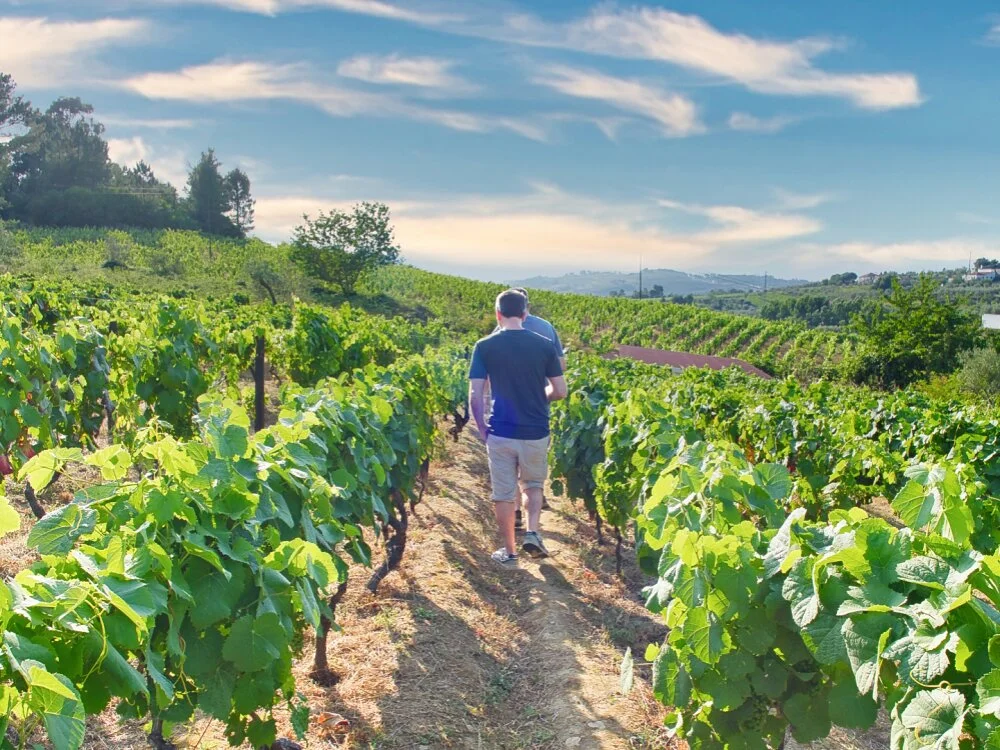
You can see photographs of the terraced hills and the river winding between them, but they never quite prepare you for the scale of the landscape. The vineyards seem to climb endlessly up the slopes, following the curves of the land, while the Douro moves quietly through the valley below.
Then there are the old quintas, the stone walls, the little villages and the narrow roads that disappear around the hills.
Every time I return, I have that same feeling of stepping into another world.
I have been visiting the Douro for more than three years now, and during that time I have visited more than 30 quintas. I have travelled through the valley in many different ways, from long days walking through vineyards and photographing the landscape to taking the train, travelling along the river, and sitting down for more wine tastings than I could possibly count.

And still, the Douro surprises me.
Sometimes it is the light falling across the vineyards in the afternoon. Sometimes it is the view from a road I have never taken before, or the quiet of a quinta surrounded by vines. Other times, it is simply sitting beside the river in Pinhão and watching the valley change color as the day begins to fade.
The Douro is not somewhere I like to rush through.
How far is the Douro Valley from Porto?
The Douro Valley is close enough to visit on a day trip from Porto, which is one of the reasons it is such a popular addition to a Porto itinerary.
Pinhão is around two hours from Porto by road, while Régua is a little closer. The journey itself is part of the experience, particularly once you leave the flatter landscape around Porto and begin to see the hills becoming steeper and the vineyards appearing on the slopes.
There is a point when the landscape suddenly changes.
The roads begin to curve, the river appears below you and the terraces become more dramatic with every kilometre. It is difficult not to slow down and look.
The Alto Douro is a landscape shaped by wine and by generations of people who worked these hills. Wine has been produced here for around 2,000 years, and the terraced vineyards form part of the UNESCO-listed cultural landscape.
That history is still very visible today.
Small Group Douro Valley Day Tour from Porto
For a first visit, my favorite option for visiting the Douro Valley from Porto is a small group tour.
I know that may sound like the obvious recommendation from me. I still work with Cooltour Oporto as a photographer and videographer and have also joined their Douro tours many times. But that experience is also exactly why I feel comfortable recommending a small-group tour.
I have seen how different the day feels when you are travelling with people who actually know the region.
The Douro is not simply a place where you arrive at a winery, taste a few wines and take a photograph before moving on to the next stop. The landscape has a story behind it, and the people who live and work here are part of that story.
A good local guide can tell you which roads are worth taking, explain the difference between the vineyards you are passing and introduce you to places that you might never find on your own.
There is also the practical side.
You can taste the wine without worrying about driving afterwards, and you do not have to spend half your day deciding which quinta to visit or trying to navigate the winding roads between them.
The small-group tour I know best takes up to eight people and includes visits to family-run wineries, wine tastings, regional food and a river cruise from Pinhão. It is a full day, but it never feels like the point is simply to see as many places as possible.
That matters in the Douro.
I would much rather spend time in two good quintas, walk through the vineyards and have a proper conversation about the wine than spend the day jumping from one stop to another.
For a first visit from Porto, particularly if you only have one day, this is the option I would choose.
Staying overnight in the Douro Valley
If you have more time, I would seriously consider staying for a night or two.
A day trip gives you a wonderful introduction to the Douro, but staying overnight changes the feeling completely.
You no longer have to watch the clock for the journey back to Porto. You can have dinner in the valley, wake up among the vineyards and spend the morning watching the light move slowly across the hills.
The Douro has a different atmosphere in the early morning, before the roads become busy and the day really begins. There is something particularly peaceful about looking across the river with a coffee while the hills are still touched by softer light.
This is also when the valley begins to feel less like a destination and more like a place.
Where to stay in Pinhão
If I were choosing where to stay, I would pick Pinhão over Régua.
Régua is larger and has more practical things to do, but Pinhão has a feeling that I prefer. The river is right in the centre of the village, boat trips leave from the waterfront, and several quintas are close enough to reach without spending another hour in the car.
For me, Pinhão simply feels more like the Douro I come back for.
One option is The Vintage House, which sits beside the river in the centre of Pinhão. The hotel occupies the site of a former wine estate and is particularly well placed if you want to explore the village on foot.

Another option I particularly like for the setting is Quinta de la Rosa, a family-owned wine estate where you can stay among the vineyards rather than simply visiting them for a tasting.

For travellers who prefer Régua, I would include Feel Discovery Casa DAlice as another option.

Whichever you choose, I think the extra night is worth it.
The Douro is one of those places where having nowhere else to be can be part of the experience.
Want to see more hotels in the Douro?
Use the map below to explore accommodation by location and compare what is available around each neighbourhood.
Porto to Douro Valley by train
My first experience of the Douro was by train, and it ended up changing much more than the way I travelled into the valley.
I took InterRegional train 861 from Porto Campanhã at 7:25 in the morning, travelling towards Pinhão. The carriages were Swiss-built and dated from the 1950s, while the diesel locomotive pulling the train was built in the UK in 1967. There was something special about travelling through the Douro in a train with that much history.
I filmed the journey and made a YouTube video about the experience. I never expected it to lead anywhere beyond sharing the trip, but the video was seen online by Cooltour Oporto. They got in touch with me afterwards, and that was the beginning of our collaboration.


That was three and a half years ago. Since then, I have returned to the Douro many times, visiting more than 30 quintas and joining Cooltour Oporto on numerous occasions as their official photographer and videographer.
So, in a way, that early morning train from Porto-Campanhã was the beginning of my Douro story.
Related-✨Click Here to Watch Full Video on YouTube✨
The journey itself is still one I would recommend to anyone who enjoys slow travel. Watching Porto gradually disappear and the Douro River begin to accompany the railway is a lovely way to arrive. The landscape changes slowly, with steeper hills, vineyards and the old terraces appearing along the valley.
If you wish to visit several quintas in one day, I would still choose a good small group tour. The train gives you the journey, but a well-organized tour makes it much easier to experience the wine, food and vineyards once you arrive.
If you have more time, or simply enjoy travelling for the sake of the journey, taking the train to Pinhão is a wonderful way to visit the Douro Valley from Porto.
Porto to Douro Valley by car
Driving through the Douro gives you freedom that a tour cannot.
You can stop when the landscape catches your attention, take smaller roads and spend longer in places that interest you. The famous N222 is one of the best known roads in the region. But some of my favorite moments in the Douro have happened away from the main routes.
There is one important consideration, though.
If wine tasting is one of the reasons you are coming to the Douro, driving means someone has to stay responsible for the road. After a day of tasting wines in beautiful quintas, that can be a less enjoyable way to finish the afternoon.
There is also the question of knowing where to go.
The valley is full of wineries, but they are not all the same and in most cases you need to book you tasting in advance. Some are large commercial producers, while others are smaller family estates where the experience is much more personal.
For someone who already knows the region, driving can be wonderful.
For a first visit, I think a knowledgeable guide makes the day easier and, often, much more interesting.
Private driver or transfer
A private driver gives you another option, particularly if you are travelling as a couple, family or small group.
You have the flexibility of having your own car without having to drive it yourself, and the day can be built around the places that interest you most.
For wine lovers, this can be particularly appealing because you can spend more time at the quintas that matter to you rather than following a fixed itinerary.
The most important thing is choosing someone who knows the Douro well.
The roads are only one part of it. Understanding the region, knowing the estates and being able to explain what you are looking at makes a huge difference.
Pinhão or Régua?
If you are wondering whether to stay in Pinhão or Régua, I would choose Pinhão.
Régua is larger and has more things to do, so it can be a good base if you want more restaurants, shops and museums nearby. But I prefer Pinhão. It feels smaller and more relaxed, and the river and vineyards are always close by.
Pinhão is also very convenient if you are travelling without a car. The train station is right in the centre, with the river, restaurants and boat trips within easy walking distance. Two excellent quintas are also about a three-minute walk from the station: Quinta do Bomfim and Quinta das Carvalhas (crossing the bridge). Both are worth visiting, especially if you arrive by train and want to explore the Douro without organising a car.
As mentioned above, I filmed my train journey and visit to Pinhão, including some of these experiences. If you would like to see what the journey and the area are really like, you can watch the full video by using the link above.
For me, Pinhão is the better choice if you want to slow down and enjoy the Douro for a night or two. You can take a boat from the river and walk around the town. You can also visit a couple of quintas without spending your time driving from one place to another.
Régua is worth visiting too, especially if you are interested in the history and wine culture of the Douro. But if I had to choose one place to stay, I would still pick Pinhão.
My favourite viewpoint: Casal de Loivos
One of my favourite viewpoints in the Douro is the Miradouro de Casal de Loivos, high above Pinhão. From here, you can look down over the town and see the Douro River winding through the valley. The vineyards and terraces stretch across the hills on both sides. For me, the view is unbeatable.
While you are in Casal de Loivos, I also recommend visiting the D’Origem Olive Oil Museum. It is housed in a traditional olive-oil mill and explains how olive oil was made in the region. You can also taste local olive oil and Douro wines with a view over the valley. It is a lovely little experience and a good reminder that a visit to the Douro Valley from Porto is about more than wine and well worth the day tour.
Another place worth considering is Quinta do Jalloto. I have visited three times, and the setting is spectacular. The terrace has wonderful views across the Douro, and I have always enjoyed the wines. It is a good place to sit down for a tasting and take your time with the view.
I should add one small personal note. My experiences with the service here have been a little mixed, so I would go mainly for the setting and the wines rather than expecting the warmest welcome in the valley. That said, I still think the quinta is worth visiting if you are in Casal de Loivos. The views alone make it a memorable stop.
Casal de Loivos is about a 10–12 minute drive from Pinhão. If you do not have a car, you can take a taxi from outside Pinhão train station. The ride up costs around €10.
If you enjoy walking, you can walk back down to Pinhão after your visit. It is a long downhill walk and takes about an hour, with lovely views along the way. The road is steep in places, so take your time. If you prefer not to walk, you can simply take a taxi back to Pinhão.

Visiting the quintas of the Douro Valley
For me, visiting the quintas is one of the best parts of the Douro.
Over the last three and a half years, I have visited more than 30, and even after all those visits, I still enjoy discovering another estate and seeing how differently each one approaches its wine and its landscape.
Some quintas are large and well known internationally. Others are smaller family-run estates where the experience feels much more intimate.
I think it is worth knowing that difference exists.
Seeing familiar Port brands in supermarkets at home can sometimes make Port seem like one large industry. Once you visit the Douro, you realise how much variety there is between producers. Many of these families have worked these vineyards for generations.
Among the quintas I have visited, Quinta de Santa Julia, Quinta do Cume, Quinta de Santa Eufémia and Quinta Val Moreira are four that I would happily recommend.
But you do not need to visit five or six in one day.

One of my favourite things to do is simply walk through the vineyards before sitting down for a tasting. You notice the heat of the valley, the steepness of the terraces and the stone beneath your feet. Then you sit with a glass of wine made from grapes grown on those same hills.
The wine becomes much easier to understand when you have just seen where it came from.
And perhaps that is what I love most about visiting the quintas. They make the Douro feel personal.
Visit the Douro Valley from Porto in One Day
If you only have one day, I would resist the temptation to fill every hour.
Start early from Porto and allow the journey into the valley to become part of the experience. Once you arrive, spend time at a good quinta, walk through the vineyards and have a proper wine tasting rather than trying to collect as many stops as possible.
Pinhão is a natural place to pause for lunch and spend some time beside the river. If you have time, a one-hour boat trip gives you another perspective on the terraces and is particularly relaxing after a morning among the vineyards.
A viewpoint such as Casal de Loivos can then give you the bigger picture before you make your way back towards Porto.
It sounds simple, and that is intentional.
The Douro does not need an exhausting itinerary.
It needs time.
When is The best time to visit the Douro Valley from Porto?
My favourite months are May and June.
I have visited the Douro in May, June and July, and I love the way the valley looks during late spring and early summer. The vineyards are green, the days are long and the temperatures are generally easier to enjoy than during the hottest part of summer.
July can be very warm, particularly when you are walking among the vineyards.
Harvest is another fascinating time to consider. I have not personally visited during the harvest, so I cannot give you a first-hand account, but the atmosphere must be extraordinary when the vineyards are full of activity and the grapes are being brought in.
Autumn changes the colours of the valley, while winter brings a much quieter atmosphere.
There is no single best time for everyone.
For me, though, May and June are difficult to beat.
Is a Douro Valley day trip from Porto worth it?
Absolutely.
But I think the secret is not trying to squeeze the entire Douro into one day.
The valley is at its best when you allow yourself to notice it.
That might mean stopping at a viewpoint and looking across the river for longer than you planned. It might be walking between the vines at a family quinta, sitting down to taste a wine while the hills stretch out behind you, or travelling slowly along the river and watching the terraces change with the light.
This is why I think a small-group tour works so well for a first visit. Someone else takes care of the roads and logistics, while you have the freedom to concentrate on the landscape, the wine and the stories behind the places you visit.
If you have more time, stay overnight in Pinhão and let the valley set the pace.
And if you love independent travel, take the train and make the journey part of the adventure.
However you arrive, I would leave some room in your plans for the Douro itself.
Because that is the part you cannot put into an itinerary.
How much does a visit to the Douro Valley from Porto cost?
It is worth looking at the total cost before deciding that travelling independently will always be cheaper.
If you take the train from Porto, you still need to pay for your wine tastings, transport around the valley and, if you stay overnight, your accommodation. Add a taxi up to Casal de Loivos or between different quintas, and the costs can add up quite quickly.
A good small-group tour can actually offer better value. Tour companies often have established relationships and negotiated rates with the quintas they visit. The price usually includes transport, tastings and other experiences, so you know what you are spending before you leave Porto.
There is another advantage that is easy to overlook. The experience at a quinta is not always the same when you simply arrive and book a tasting yourself. A well-organised tour can take you to smaller family-run estates and arrange tastings that are not always available in the same way to individual visitors.
If you choose to visit the Douro Valley from Porto with Cooltour Oporto, use my discount code when booking. I have been working with Cooltour for almost four years as their photographer and videographer, so this is a company I know very well and have experienced many times myself. The small-group Douro tour is one I have joined on numerous occasions, and it is the option I would recommend to many first-time visitors.
If you are watching your budget, I would not assume that travelling independently will save money. In fact, it can cost you more. A small-group tour can be better value overall.
For me, that is one of the reasons a good small-group tour makes so much sense for a first visit to the Douro. You are paying for convenience, but you are also getting the benefit of local knowledge and relationships that can make the day much better.
✨Frequently Asked Questions
How many days do you need in the Douro Valley?
Two or three days is ideal if you want to explore the Douro Valley at a relaxed pace. If you have less time, a day trip from Porto is also a good option.
How to Visit the Douro Valley from Porto?
You can visit the Douro Valley from Porto by train, car, boat or organised tour. A day tour is the easiest option if you want to see the valley without planning everything yourself.
Can you visit the Douro Valley as a day trip from Porto?
Yes. A day trip from Porto is a good way to experience the Douro Valley if you are short on time. However, staying for a night or two gives you more time to enjoy the region.
What is the best place to stay in the Douro Valley?
Pinhão is one of the best places to stay if you want to explore the Douro Valley without spending too much time driving. It is also a good base for visiting nearby quintas.
Do you need a car to visit the Douro Valley?
No, you can visit the Douro Valley without a car. Trains, boats and organised tours make it possible to explore the region without driving.
What should you wear in the Douro Valley?
Wear comfortable shoes and light, practical clothing for exploring the Douro Valley. Bring a jacket for cooler evenings and layers for changing temperatures.
Final Douro Valley chapter
The Douro Valley is one of those places that stays with you long after you have left.
After more than three years of coming back, and more than 30 quintas visited, I still find new reasons to return. Sometimes it is a vineyard I have never photographed before. Other times it is the light on the river, a conversation over lunch or simply a road I have not taken before.
That is part of what makes the Douro so special. There is plenty to see, but you do not need to see everything in one visit.
For a first visit to the Douro Valley from Porto, a good day tour takes much of the organization away. You can concentrate on the landscape, the wine and the stories behind the places you visit, without worrying about the roads or who is driving after a wine tasting. A small group also makes the day feel very different from simply following a sightseeing itinerary.
And if you have more time, stay for a night or two. The valley changes when you are no longer watching the clock for the last train back to Porto. Mornings become slower, evenings stretch a little longer and there is time to explore beyond the main stops.
Whether you come for one day or stay longer, I would leave some space in your plans for the Douro itself.
The river, the vineyards and the old terraces have their own rhythm.
It is worth slowing down enough to notice it.
Até já,
Marcelo, Go Travel Planet
Read More From the Archive: Deepen Your Portuguese Journey
⭐Things to Do in Porto, Portugal: The City I Know
I lived here for almost a year and this gave me time to understand its rhythms beyond a sightseeing route.
⭐ Where to Stay in Porto: Discover Porto’s Neighborhoods
For a first visit, I would stay fairly central. That gives you more time for wandering, eating and simply enjoying the city…
⭐ Best Towns in Northern Portugal: A Photographer’s Map
It is a land of medieval bastions, walled towns, deep river valleys, and vineyard slopes falling to the sea.
Keep exploring, discovering and choosing the journey over the destination. We would love to hear your thoughts, drop a comment below. 🌍
All editorial photography © Go Travel Planet. All rights reserved. Property imagery and architectural photography courtesy of our hotel partners and Booking.com
Some links in this guide are affiliate links, which means we may earn a small commission at no extra cost to you. Where available, you’ll find discount codes on the linked page. Thank you for supporting our independent travel blog!