
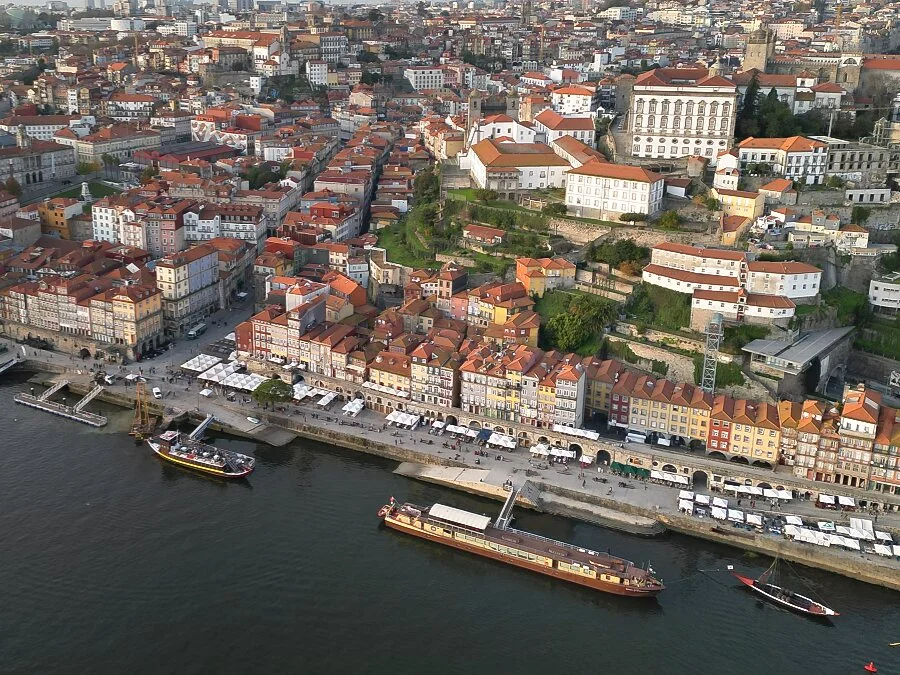
There is something about Porto which unveils itself slowly.
Perhaps it is the way in which granite buildings catch the afternoon light or the quiet of footsteps crossing old stone streets towards the Douro. Or maybe it is a tiled church, appearing unannounced around a corner.
Porto is not a city which I discovered quickly in a weekend.
I lived here for almost a year and this gave me time to understand its rhythms beyond a sightseeing route. Today, I live a little further south, in Nazaré but Porto remains a place which I know well and return to easily.
The city rewards curiosity.
You can spend a morning wandering the historic centre, stop for lunch and not worry that you will miss your chance to cross the river into Vila Nova de Gaia and still have time to watch the light transform over the Douro.
If you are wondering what to do in Porto, try these kinds of places first then leave room for the unknown.

Exploring Porto’s Historic Centre
Porto’s historic centre is where I would begin.
It is a UNESCO World Heritage Site and home to many of the city’s landmarks but the charm comes from walking through this living, breathing city which continues its rhythm through centuries.
Start at São Bento and although the building itself is beautiful, look up the grand entrance hall and see the circa 20,000 painted azulejos by Jorge Colaço which depict scenes of the history of Portugal and everyday life.
Now walk towards Porto Cathedral and allow yourself to be slightly lost.
The streets of Sé district are steep and uneven but that’s part of the charm and as you walk through some wonderful granite walls, old balconies and narrow passages, you find yourself discovering the character which makes Porto so different.
Continue walking through Rua das Flores, one of the most enjoyable streets of the historic centre.
From here you can continue your walk to the Palácio da Bolsa, a stunning 19th-century monument close to the river. Inside, the building has an unexpectedly grand feel and the Arab Room and the Pátio das Nações are definite highlights.
Finally, continue on your descent until it opens towards Ribeira.

This is one of Porto’s most photographed areas but photographing a place can only take you so far because the charm of this area really comes by walking in and seeing the brightly painted buildings which rise from the Douro and the boats which pass through the bridges and under the terraced restaurants.
Take your time here as Porto is a city which rewards slow wandering rather than a sightseeing marathon.
Clérigos, Carmo and the city above you
Porto has plenty of viewpoints but some places are created simply by walking uphill.
The Clérigos Tower is one of the city’s most famous monuments and this towering Baroque-style building reaches 75 metres above the city.

The building features a staircase which leads to panoramic views but make sure to take your time on the more than 200 steps!
From the top you can see across the city until the view reaches the Douro and Gaia.
Close by look out for the Igreja do Carmo with its blue and white azulejos on the building’s façade.
Again, this is one of those scenes almost made for photography but the streets around also lead towards cafés, independent shops and the creative Miguel Bombarda area.
This is a wonderful place to explore with a slightly less structured route.
Walk down one street and turn onto another and see where you end up.
The city centre is compact enough to enable this type of wandering but Porto’s hills will occasionally remind you that compact does not always mean flat.
Crossing the Douro
Eventually, Porto will bring you back to the river.
The Dom Luís I Bridge brings together Porto with Vila Nova de Gaia and is one of the most iconic images of the city.
Crossing it will give you a completely different viewpoint to the city.
From Gaia, see Porto rise before your eyes in layers of ochre, grey and terracotta and the historic centre feels almost theatrical from the other side of the river.

Gaia is also home to the historic Port wine cellars.
For wine lovers this is a definite recommendation to discover beyond simply ordering a glass with dinner. The Douro and Port wine traditions are deeply rooted in history and identity of northern Portugal and the official Porto tourism guide even includes the Gaia cellars among the central attractions of the historic district.
And for those who prefer not to plan around wine, simply walking along the river is the best option.
Sometimes the best thing to do in Porto is nothing more complicated than finding a place to sit and watching the city move.
Slow down for food, markets and everyday Porto
Porto has plenty of famous dishes to choose from but I think food becomes more fascinating when you stop treating it as just another attraction to tick off.
Visit Mercado do Bolhão and spend some time watching what people are buying. Markets give you a true insight into the everyday rhythm of a city in a way that monuments and attractions cannot.
The restored Mercado do Bolhão is a sensory temple to the real Porto. Walk past the bright fruit stalls to find the inner food counters. Get a glass of local wine and some artisanal cheese or seafood tapas. Spend some time simply sitting and enjoying that moment.


From here you can continue on to Rua de Santa Catarina and explore the local streets.
Try a local dish when something looks good. Stop for a pastry and a coffee. And when lunchtime comes, sit down and enjoy it instead of rushing off to the next attraction.
Porto’s food culture is hearty and deeply rooted in the north of the country. Francesinha is perhaps the city’s most famous dish, but cod, octopus, grilled meats and traditional soups appear throughout local menus.
The famous Francesinha requires a slower pace to fully enjoy. Do not rush this hearty, layers-deep local northern tradition. Sit down at a quiet wooden table and let lunch stretch out into the late afternoon.
I am not claiming it is the best in town. However, I lived in Porto for a full year. I tried several different places for Francesinhas during that time. The version from Cervejaria Nortada is easily on my top list.
They also make super good artisanal beer. Even better, the beer house sits just two blocks from Bolhão Market.

Port wine is an obvious part of the story but northern Portugal’s wine culture goes far beyond Port.
If you have a few days, leave room for longer lunches.
That is one of the easiest ways to experience the city at its natural pace.
Where Porto Meets the Atlantic
As you head west through Porto, the city gradually opens up towards the sea.
Continue west towards Foz do Douro, where the river meets the Atlantic.
Here, the granite streets and historic buildings give way to sea air, promenades, beaches and a wider horizon.
The trip out to Foz is worth taking slowly. You can follow the waterfront, take the old tram, or simply wander along the promenade when you arrive.
One of the nicest ways to reach Foz is by tram, following the waterfront towards the Atlantic. The official tourism guide also recommends that you take the tram journey and spend an easy sunset by the sea.
If you like contemporary culture, then give yourself time for Serralves.
The museum, gardens and spaces surrounding it completely contrast with the medieval streets of the historic centre.
These are good reminders that Porto is not preserved within its old centre but it is also living city with a strong contemporary identity.
How I would spend two days in Porto
If you only have the option of two days, resist the temptation to see everything.
On your first day focus on exploring the historic centre.
Begin at São Bento, walk towards the Cathedral, continue with Rua das Flores and visit the Palácio da Bolsa. Spend your afternoon around Ribeira and cross the Dom Luís I Bridge into Gaia.
On your second day explore Clérigos, Carmo and the streets around Cedofeita.
Now choose your afternoon according to your mood.
You could opt to head towards Foz and the Atlantic, visit Serralves, spend more time around Gaia or simply find a good restaurant and slow down.
Much of Porto is best explored on foot, just be prepared for a few hills along the way.
And remember that you do not need to see every attraction.
A good Porto itinerary should leave space between the places.
Seeing more of northern Portugal
If you have more than two days, I would seriously consider spending one day exploring the landscape outside of Porto.
This is where my professional experience with Cooltour Oporto comes into play.
I have worked as the company’s official photographer and videographer for the past three and a half years and have taken part in many of their tours with the small groups, seeing how the experiences unfold first-hand. That is why I am able to mention them here.
For wine lovers the Douro Valley Wine Tour from Porto is the first thing I think of. It is a full-day small-group experience which has a maximum of eight people and includes winery visits, tastings, regional food and a scenic river cruise.
Vineyards climb the hillsides above the Douro River, with winding roads and beautiful views around almost every bend. It is a landscape made for taking your time.
If wine is not for you, Cooltour Oporto also offers a Fado Dinner Show & Porto Night Tour. It combines a traditional dinner and Fado performance with an evening drive through illuminated Porto.
For those with more of an interest in history, the Guimarães & Braga Tour is another option. The full-day experience takes you to both Braga and Guimarães, including a visit to the beautiful Sanctuary of Bom Jesus do Monte in Braga.
Where to stay in Porto
A good place to stay makes exploring Porto that much easier. Here are a few hotels I would consider, in locations that make it easy to get out and enjoy the city. Where you stay can change the way that Porto feels.
For a first visit, staying close to the historic centre makes exploring some of the city’s main sights easier on foot.
Pestana Vintage Porto Hotel & World Heritage Site $$$$
Right on Ribeira, this is an option for those who want the Douro to come out to their door.The property’s location makes it especially convenient for exploring the waterfront, Gaia and the historic centre on foot.

Torel Avantgarde Hotel $$$
Set slightly away from the busiest streets, Torel Avantgarde offers a more relaxing base which is still within walking distance of the centre. It is suitable for those who would rather have a calmer atmosphere at the end of the day.

Moov Hotel Porto Centro $$$
For a more straightforward base, Moov Hotel Porto Centro is centrally located near Praça da Batalha.It can work well for those who prefer the location and practicality over the elaborateness of a hotel.

PortoBay Flores Hotel $$$$
Set on Rua das Flores in the heart of Porto’s historic centre, PortoBay Flores is housed partly in a beautiful 16th-century palace. It is a lovely choice if you want to stay right in the middle of the old city, with many of Porto’s main sights within easy walking distance.

Find Your Perfect Porto Stay
If you prefer to chart your own path or explore other options, use our interactive guide map below to discover a space that fits your personal journey:
✨Frequent Asked Questions
How many days do you need in Porto?
I would give Porto at least two full days. That gives you enough time to explore the historic centre, walk down to Ribeira, cross the bridge into Gaia and still have time to stop for food and coffee along the way.
If you have three days, even better. You can take things a little more slowly and spend some time in Foz, visit Serralves, or simply wander without feeling like you need to tick another sight off your list.
Porto is not a city I would rush through. I always like leaving some time to simply wander around Porto. Some of the places I remember most are the ones I found without looking for them.
What should you not miss in Porto?
For a first visit, I would start with São Bento Station and walk from there through the historic centre. Porto Cathedral, Rua das Flores, Clérigos, the Carmo churches and Ribeira are all easy to include in the same day.
Then cross the Dom Luís I Bridge and spend some time in Vila Nova de Gaia. The view back towards Porto from the river is one of those moments where it is worth putting the camera away for a minute.
And leave some space for food. Try a francesinha, stop for a pastel de nata, have a long lunch, and don’t feel that every hour needs to be filled with sightseeing.
Is Porto easy to explore on foot?
For the most part, yes. I walked a lot when I lived in Porto, and walking is still how I prefer to experience the city.
Just be prepared for the hills. They are part of Porto, and some of them are steeper than they look on a map.
The historic centre is compact enough that you can walk between many of the main sights, but you can always use the metro, bus or tram when your legs have had enough. If you are heading towards Foz, taking the tram along the waterfront is one of the nicest ways to get there.
What food should you try in Porto?
The francesinha is probably the dish most visitors associate with Porto, and it is worth trying at least once. It is filling, so don’t make the mistake of ordering one when you have already had a big lunch.
I would also look out for traditional Portuguese dishes rather than only searching for restaurants aimed at visitors. Porto has plenty of good places where you can sit down for a simple meal, order the day’s dishes and take your time.
And don’t forget the smaller things. A coffee and pastel de nata, fresh bread, a glass of wine or a plate of petiscos can become some of the nicest parts of a day in Porto.
Is the Douro Valley worth visiting from Porto?
If you have a full day to spare, I think it is well worth making the trip.
Vineyards climb the hillsides above the Douro River, with winding roads and beautiful views around almost every bend. It is a beautiful area to explore, particularly if you enjoy wine, food and landscapes.
I have worked with Cooltour Oporto as their official photographer and videographer for the past three and a half years, and I have joined many of their small-group tours. The Douro Valley is one of the trips I would look at if you want to experience the region without hiring a car.
If wine isn’t really your thing, there are other day trips from Porto too, including Braga and Guimarães.
Where should you stay in Porto?
For a first visit, I would stay somewhere around the historic centre. It makes life easier when you want to walk out of your hotel and start exploring without having to think about transport first.
Baixa, Aliados, Bolhão and Ribeira are all convenient areas, although they each have a slightly different feel. Cedofeita is another good option, with plenty of cafés, restaurants and small shops and a quieter feel than the busiest parts of the centre.
You can also stay across the river in Vila Nova de Gaia, especially if you like the idea of waking up to views over Porto.
One thing I would check before booking is the exact location on the map. Porto is hilly, and a hotel that looks close on a map can involve quite a climb.
Is Porto safe?
Yes, I have always felt comfortable walking around Porto. I lived there for almost a year and never felt that I needed to be overly cautious.
That said, it is still a city, so I would use the same common sense you would anywhere else. When places are busy, just be a little more aware of your belongings, particularly around Ribeira, São Bento and on public transport.
The main thing I would mention is the hills. Some streets are steep, and the pavements can be uneven, so comfortable shoes are much more useful than anything else.
I would happily walk around Porto during the day and in the evening, but as anywhere, if a street feels quiet or unfamiliar late at night, use your judgement and take a taxi or Uber.
Final chapter
Porto is not a city that I would recommend rushing through.
Its beauty lies in the layers. Granite by painted tiles, ancient streets by contemporary galleries, the Douro between Porto and Gaia and the Atlantic waiting at the end of the city.
I lived here for almost a year, and I still felt like there was more of Porto to discover. I also keep coming back around five or six times a year for work, which gives me another reason to explore the city.
Seeing Porto through my camera lens has made me notice details, streets and moments I might otherwise have missed.
Perhaps that is the point.
Come for the famous places but leave enough time to wander further beyond them. Sit with a coffee, cross the river and follow a street because the light looks beautiful.
Let Porto unfold at its own pace. When you stop trying to see everything, you have more time to simply enjoy being there.
Até já,
Marcelo, Go Travel Planet
Read More From the Archive: Deepen Your Portuguese Journey
⭐Guimarães Travel Guide: The Cradle of Stone and Soul
This is no ordinary provincial town walled in medieval stone, but the very birthplace of the concept of Portugal.
⭐ Porto, Where Smoke Meets Sea: The Art of Grilling | Portugal
The air along the northern coast of Portugal carries a distinct, sharp salinity, a constant reminder of the Atlantic’s proximity
⭐ A Guide to the Best Day Tours From Porto
Skip the stress of navigating tight mountain curves and let a trusted local guide curate your regional map.
Keep exploring, discovering and choosing the journey over the destination. We would love to hear your thoughts, drop a comment below. 🌍
All editorial photography © Go Travel Planet. All rights reserved. Property imagery and architectural photography courtesy of our hotel partners and Booking.com
Some links in this guide are affiliate links, which means we may earn a small commission at no extra cost to you. Where available, you’ll find discount codes on the linked page. Thank you for supporting our independent travel blog!